Showing posts with label Pennsylvania. Show all posts

Sunday, January 29, 2023

Go Iggles!


The Philadelphia Eagles, or "Iggles" as true Philadelphians call them, have won the NFC championship, and so will face the AFC champion Kansas City Chiefs in the Super Bowl. After the Eagles won the NFC championship game, the Empire State Building was illuminated with green and white, the Eagles' colors. The New York Daily News demurred, noting that the Eagles are "locally despised". 

I'll confess that I'd rather see another team that wears green, the New York Jets, heading to Arizona in February. Still, I'm casting my lot with the Eagles this year. I have nothing against K.C.; I've had some good times there; sampling, among other things, Arthur Bryant's Barbecue. But I'm a Keystone State native (albeit from closer to Pittsburgh than Philly). Thanks to my wife's genealogical research I know that my great-great-great-great grandfather Samuel Miles served for a year as mayor of Philadelphia. He declined to serve a second term, probably to devote his attention to business matters. Also, my daughter, her partner, and my granddaughter live in Chester, Pennsylvania, part of the Philadelphia metropolitan area.

So, go Iggles!

UPDATE: It looks like I cursed them; never seems to fail. It was an exciting game, anyway. 

Sunday, October 28, 2018

Tree of Life: a massacre of the aged.

When I saw that the names of those who died in yesterday's mass murder at the Tree of Life Synagogue in Pittsburgh had been published, I turned to it with trepidation. "Any children, teenagers, young parents?" I wondered. There were none of those, but what I found was deeply saddening in another way. The youngest victims were two brothers, Cecil and David Rosenthal, both in their fifties. There were several people in their sixties and seventies, and three in their eighties, including a married couple, Bernice and Sylvan Simon. The oldest was Rose Mallinger, 97. The full list is here.

By coincidence, this afternoon my wife and I attended a memorial service for a woman we had known for years at Grace Church and through events at the Beaux Arts Society. She was 97 when she died. She had suffered illness for some time before her death, but she passed peacefully, in the company of her son, daughter, grandchildren, and great grandchildren, all of whom gave moving testimonials at the service to her loving effect on their lives.

Hearing that our friend was 97 at her death made me think of Rose Mallinger. She would have been a young adult at the time of the Holocaust, though she may have passed that time in the safety of Pittsburgh. If so, she would have learned about it later. perhaps not until several years after VE Day. I have a copy of Life magazine's Picture History of World War II, published in 1950, which includes a photo taken in a just liberated Nazi concentration camp, that shows emaciated bodies in a heap. The caption describes them as "people Hitler didn't like." The notion that Jews were the principal, though not the sole, victims of the Nazi extermination program, was slow to be publicized. Rose may have learned early on, by informal channels of communication through family members who escaped in time. However and whenever she learned, she almost certainly felt a mixture of profound sorrow and relief that she had passed that time in a safe place.

What were her last few moments like? Hearing gunshots, trying to urge her aged frame to safety, the searing pain as the bullet, or bullets, invaded her body. What was her last thought? I can't imagine. I do know she was denied the death our friend had, and those who loved her, as I'm sure there were many, were denied the chance to be with her in her last moments.

Image: "The Kaddish Prayer" in My Jewish Learning.


Thursday, April 30, 2015

TBT: The Dovells, "You Can't Sit Down"

Sometime in 1963 I was with the Robinson High School debate team at a tournament held on the campus of Florida State University in Tallahassee. The evening after we arrived, my teammates and I were in a student cafe, having burgers and cokes. The cafe had a juke box and a small dance floor. A couple looking much like those in the photo, except that the woman was wearing a tartan skirt and black-on-white saddle Oxfords with white bobby socks, got up; the man put a coin in the juke box, and a very lively tune began. The couple did a frenetic jitterbug with lots of twirling and, if I recall correctly, the man lifting the woman by the waist and swinging her around.


.The song was "You Can't Sit Down," a '63 hit for the Dovells, a Philadelphia group whose biggest hit was "The Bristol Stomp" and who recorded on Cameo Records, part of the Cameo-Parkway group that was central to the Philly rock and R&B scene in the late 1950s through the '60s.

Monday, October 14, 2013

Zagat's fifty state sandwich survey: beef on weck gets its due, as does the Connecticut lobster roll.

When I was an associate at LeBoeuf, Lamb, "fifty state survey" was a dreaded assignment. It meant going to the library (no Lexis or Westlaw in those days) to determine the law governing some abstruse matter--say, eligibility of liability insurance on exterminators for export to the unlicensed or "surplus lines" market--in each of the fifty states and the District of Columbia. The good people at Zagat (yes, I really do like them) had a much more enjoyable task: finding the "unique regional sandwich" that best characterizes each state, as well as D.C. For the New York sandwich, I expected them to choose pastrami on rye with mustard, served with a half-sour pickle, and would have considered that a worthy option. Instead, I was surprised and delighted that they looked to the western end of the state and chose beef on weck (photo above). As I've posted here before, I came to love this sandwich years ago, during my tenure at LeBoeuf, when I was working on client matters in the Buffalo area.
In our neighboring state of Connecticut, Zagat picks another favorite of mine, the Connecticut lobster roll (photo above). There's more about it here. Not surprisingly, the Maine version gets the nod as the Pine Tree State's characteristic sandwich.

My old home state, Florida, gets what it ought to: the Cuban sandwich. The one Zagat chose to feature, however, doesn't look like any Cuban I've ever had. That's probably because it comes from a cafeteria in Miami, not from my old home town, Tampa, the Ur of el Cubano. My first, and therefore iconic, Cuban came from the Silver Ring Bar in Ybor City, an establishment that failed to survive the transformation of Tampa's Latin Quarter into a corporatized tourist mecca. There's a lively discussion in the comments on the Zagat piece about what a proper Cuban should, or should not, include. The Zagat description fails to mention what I consider the sine qua non: that the sandwich be pressed in a plancha, a device resembling that used to press panini.

My wife wanted to know what Zagat considers the characteristic sandwich of her home state, Massachusetts. She was amused and pleased to know that it's the fluffernutter, a variant of the PB&J with Marshmallow Fluff in place of the jelly. Evidently the  General Court (what they call the legislature in the Bay State) and Governor made it the Commonwealth's official sandwich. Zagat tells us that Marshmallow Fluff was invented in Somerville (though it's now made in my wife's hometown, Lynn) by a man named Archibald Query, who sold it door-to-door. Somerville now has an annual Fluffernutter Festival, and it seems we just missed National Fluffernutter Day. Did Congress and the President actually agree to proclaim that? Ah, for the days when they could find common ground on important matters.

The Zagat folks threw a few curves. For my native state, Pennsylvania, one might well expect the Philly cheesesteak, no? No. The "cheesesteak" award goes to...drumroll...Idaho. I put cheesesteak in quotes because the version Zagat chose is made with chicken and bacon. Turning to Philly, Zagat anoints as the Keystone State's sandwich a hoagie made with roast pork, melted provolone, and broccoli rabe. It looks and sounds delicious, so the next time I'm down there I'll try to find time to visit Tommy DiNic's at the Reading Terminal Market.

Tuesday, July 02, 2013

Pirates best in MLB?

My Mets have been showing some signs of life lately, so my earlier speculation that they might give the 1962 Mets a run for the season loss record has pretty much gone a-glimmering. Right now, they're at bat and leading the D-backs 2-1 in the bottom of the seventh with the bases loaded and no outs, and there's a rain delay. If they manage to win, they'll be ten games under .500 and in fourth place in the NL East, a familiar place for them. I can take some comfort in the fact that the Yanks are now in the same position in the AL East.

This would seem to be a good time to stop thinking about baseball and concentrate on important stuff, like the question posed by Dennis Overbye in his New York Times column yesterday:
Is the truth of the world to be found in the ways things change, like the river that you cannot step into twice, or the ways they remain the same, like the law of gravity or, indeed, the name of that river?
Well, "the way things remain the same" brings me back, unhappily, to the Mets. But "the way things change" brings to mind this startling fact: the Pittsburgh Pirates now have the best record in Major League Baseball. I can remember, back in the late 1980s and early '90s, when the Pirates were a respectable team, my thinking, "If only the Mets could have Bobby Bonilla." Since 1992, when they finished first in the NL East (they have since been moved to the Central) the Pirates have had twenty straight losing seasons, an MLB record.

We're not quite to the All Star break yet, and things could change drastically between now and October. Still, I can't help but think about 1960 when the "Beat 'em Bucs!" Pirates, emerging from another long period of mediocrity, won the NL pennant, and took the heavily favored Yankees to game seven, decided by Bill Mazerowski's walk-off homer (see video above).

Should the Pirates win the Real Baseball League pennant, as a Pennsylvania native I'll root for them against just about any Phony Baseball League champion.  Possible exceptions are the Red Sox, out of spousal loyalty, and the Rays, out of old hometown loyalty, although Tampa had no Rays until long after I left and had formed my loyalty to the Mets.

Monday, March 12, 2012

Tugboats galore.

My "Red Tugboat" post on Brooklyn Heights Blog has drawn enough favorable mention to make me want to post some more of my tug photos. Above is K-Sea's Solomon Sea passing Pier 1 at Brooklyn Bridge Park a few days ago.
Here is Henry Marine Service's trim little Dorothy J. making good speed as she approaches the southern tip of Manhattan at Battery Park in the fall of 2006. This Staten Island Advance story from June 9, 2010 tells of Henry Marine's filing for reorganization under Chapter 11 of the Bankruptcy Act, but also recounts Dorothy J.'s heroic role in the 2003 disaster involving the Staten Island Ferry Andrew J. Barberi.
The very small tug W.O. Decker is part of the South Street Seaport Museum's collection of historic vessels. Here she's seen tied up to the lightship Ambrose, also in the Museum's collection.
Another historic tug that has been preserved is Jupiter, shown here docked at Penn's Landing in Philadelphia.
This tug, spotted from the Brooklyn Heights Promenade, has a low profile, indicating that she probably works on inland waterways where low bridges limit clearance, such as the Erie Canal.
Seen from Pier 6 at Brooklyn Bridge Park, McAllister Towing's powerful McAllister Sisters has made fast to Bouchard Transportation's barge B.No.204.

Wednesday, February 29, 2012

The Baldwin "Centipede" Diesel

www.toytrains1.com
In the summer of 1954, when I was eight years old and we were visiting my grandmother in Tyrone, Pennsylvania, my father and I went down to the Pennsylvania Railroad station to do some train watching. When we got there, a diesel locomotive heading a passenger train was idling with its front end projecting past the station. It was a kind I'd never seen before. Dad said, "That's a Baldwin." I heard, "That's a bald one," which seemed to make perfect sense, as its low-topped cab, projecting from the front of the high-cowled engine covering, gave it the appearance of having a shaved head. The photo of the model below shows this more clearly:

Tony's Toy Trains
Indeed, the Baldwin DR-12-8-1500/2, as it was officially named, was sometimes nicknamed the "Babyface." It was more commonly called the "Centipede" because of the twelve-axeled phalanx of directional and driving wheels that undergirded each unit's body.

Baldwin Locomotive Works was one of the most successful builders of steam locomotives, but had difficulty making the transition to diesel. The Centipede was its first serious attempt at a road (as opposed to switcher) diesel. The location of Baldwin's plant, at Eddystone, Pennsylvania, made the Pennsylvania Railroad a logical customer, and it was one of only three roads (the others being the Seaboard and the National Railways of Mexico) to buy Centipedes. Unfortunately, they proved too unreliable for regular train service (the one I saw at Tyrone in 1954 must have been near the end of its days pulling trains) and they were relegated to "helper" duty, providing added rear-end power to trains heading west from Altoona, going around the Horseshoe Curve and up through the Gallitzin tunnels to the top of the Allegheny Plateau.

Saturday, May 07, 2011

Steam Action on the Pennsylvania Railroad


Today is National Train Day. As I've mentioned here before, I'm a train enthusiast. During my childhood, I spent many hours watching traffic on what was then the four track main line of the Pennsylvania Railroad, which passed my mother's home town, Tyrone, Pennsylvania. The 1950s were the era when U.S. railroads were replacing steam power with diesels, and I witnessed the last of steam power on the Pennsy. The clip above, courtesy of dcoursey82 and taken from Pentrex's "Pennsylvania Railroad Collection", gives a comprehensive overview of types of steam locos used by the "Standard Railroad of the World" in its heyday. I can remember seeing I-1s, J-1s, K-4s, L-1s, M-1s, and, on one occasion, a T-1.

Saturday, February 19, 2011

Two Pennsylvania beers: Yuengling and Lionshead

I decided to do a comparison tasting of these two beers because (1) they're both from my native state and (2) they're both available at Key Food, a block from my apartment, at $6.99 a sixer, plus tax. I'm not unfamiliar with either. I first had Yuengling several years ago at a local bar, and was delighted, in October 0f 2009, to find that its popularity had spread from the Northeast to the Tapper Pub in Tampa. I spotted Lionshead a few months ago at Key Food, and had to give it a try because (1) it has a name similar (one word instead of two) to that of one of the two greatest bars that ever existed, and (2) the price was right.

So, here are my tasting notes:

Yuengling Traditional Lager:

Color: rich amber (I later found that it's described just so on the brewery's website, but, I swear, this was my description without any prompting).

Head: ample and long-lasting.

Aroma: floral, with yeast undertones.

Flavor: crisp start, toasty finish with some lingering hop bitterness; good hop/malt balance.

Summary: A satisfying, well-made lager with good body and flavor.

Lionshead Deluxe Pilsner Beer:

Color: deep gold.

Head: modest; collapsed quickly.

Aroma: sweet, with malt and yeast undertones.

Flavor: hops and malt both subdued; overtones of honeydew melon.

Summary: As we say in Brooklyn: meh! (This is a step above feh!) Not bad, but nothing special. According to the brewery's website, corn is used along with barley in making this beer, as in many mass-market American pilsners.

Sunday, May 24, 2009

The uncle I never met.


Photo: Tyrone Daily Herald / Christina Pryor
Thomas Jefferson Lane Jr. was my mother's younger, and only, brother. I never knew the pleasure of his company. A little less than two years before I was born, he decided to get some coffee. He was on an LST that was taking him and the rest of his Army Corps of Engineers unit from England to the Normandy beaches, and the coffee urn was near where the ship's hull struck a mine. He died the way most people who die in war do, not in the performance of some valorous act, but just by being somewhere at the wrong time. So, my only visits to him have been in Grandview Cemetery, on a hillside overlooking Tyrone, the small central Pennsylvania town where he and my mother were born and raised. The photo above, from TyronePA.com, shows volunteers removing flags from Grandview after Veteran's Day last year, one of which may well have decorated my uncle Tom's grave.

When I was about fourteen, my parents and I visited Tyrone to go through the effects of my just deceased great aunt Nina. Among her papers was a letter from Uncle Tom, sent from England, where he was stationed before the invasion. It was several pages long, typewritten, single spaced. He had no education past high school, but his prose was precise and vivid. He wrote about crossing the Irish Sea in a cattle boat, and about a girl who had caught his eye. She wasn't the one who ultimately won his heart, though. That was a young Londoner named Hazel. He married her, and she was pregnant with my cousin, also to be named Tom, when my uncle died.

Friday, September 22, 2006

Penn's Landing

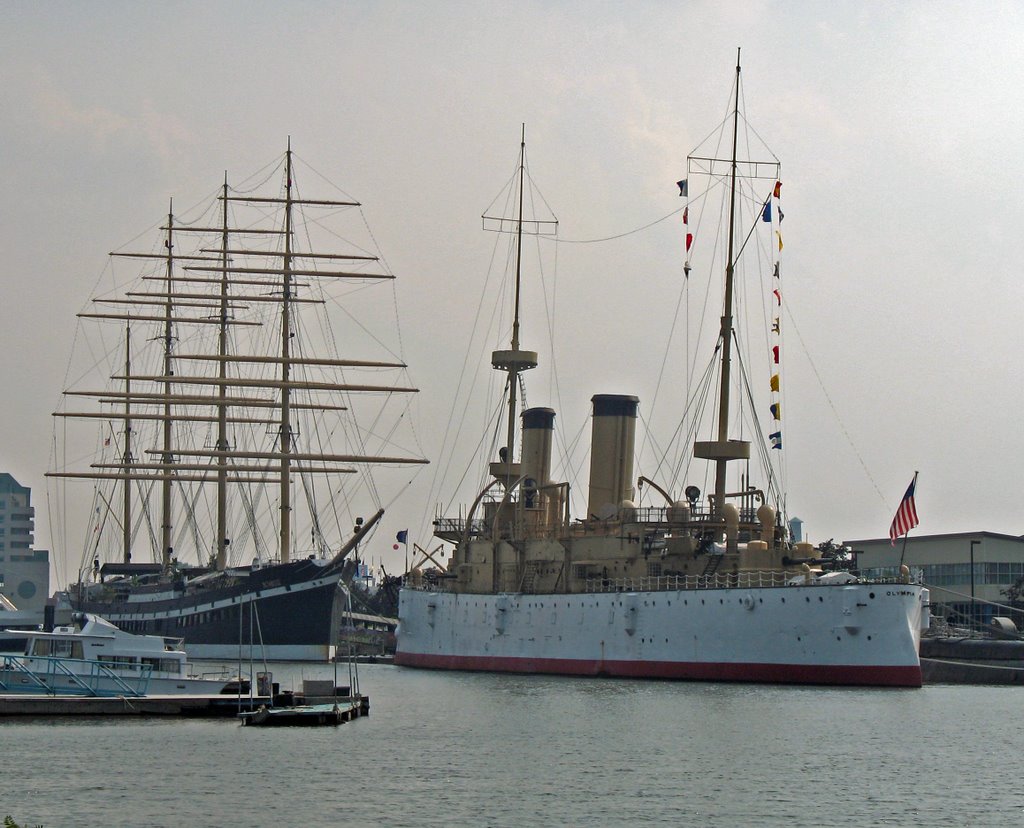
My hotel in Philadelphia was just a couple of blocks from Penn's Landing, a stretch of riverfront just south of the Ben Franklin Bridge that has been made into a waterside promenade and entertainment venue, as well as a permanent dock for a couple of historic ships, the cruiser U.S.S. Olympia, flagship of Admiral Dewey's "Great White Fleet" in the Spanish-American War, and the square rigger Mosholu, now made into a restaurant at the cost of having picture windows cut into her hull (see below):


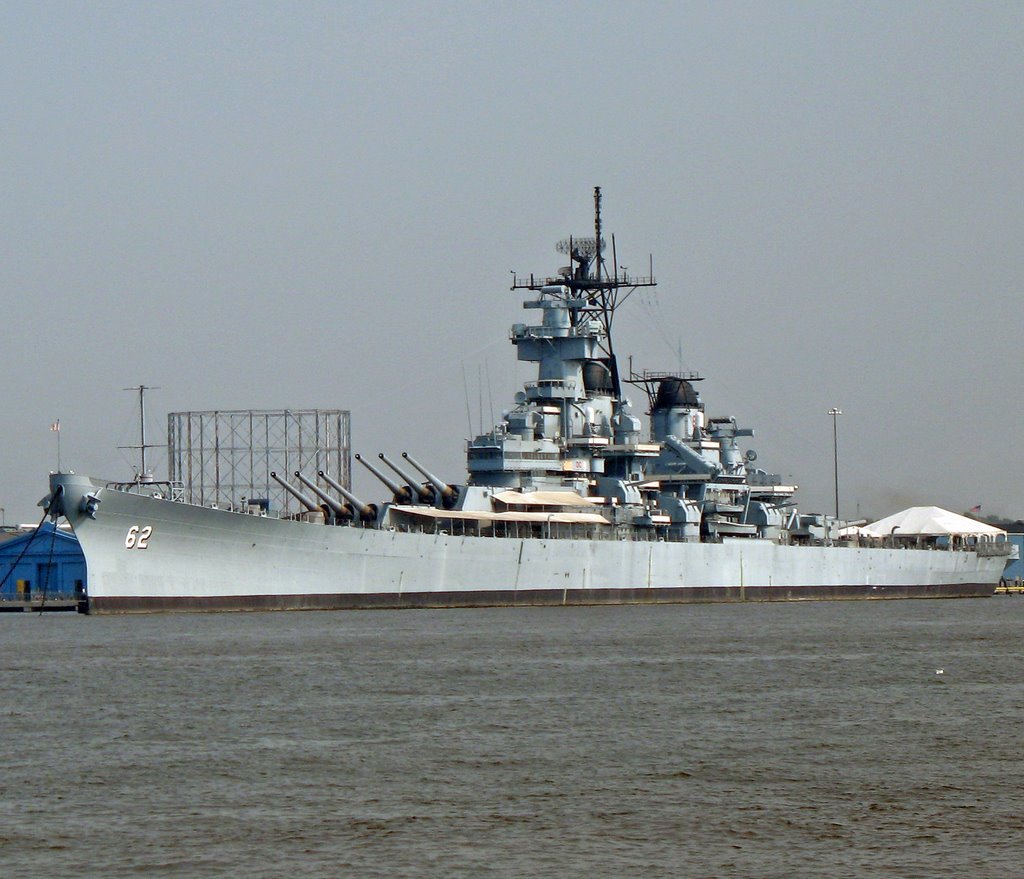
Across the Delaware, at Camden, the World War II veteran battleship U.S.S. New Jersey entertains visitors to her namesake state.


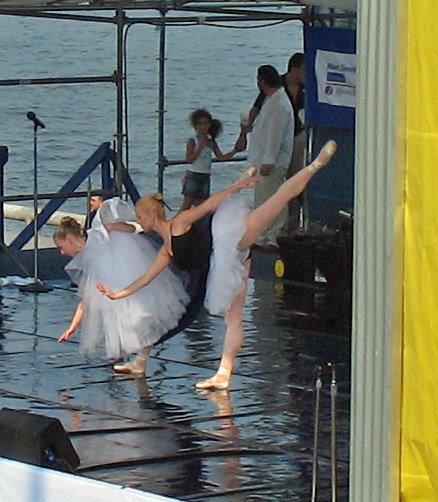
When I visited the Landing, the outdoor theater was presenting a festival of Russian culture.


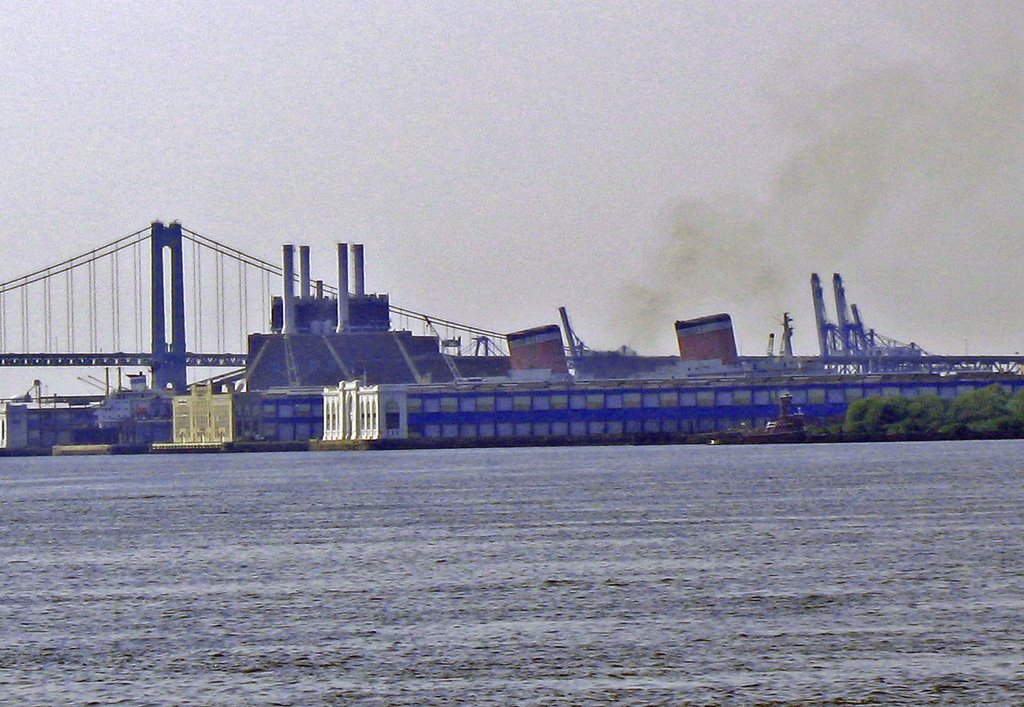
Looking downriver, I could see the distinctive funnels and upper superstructure of the S.S. United States, last holder of the Blue Riband of the North Atlantic, docked at an otherwise disused pier. As explained in this fan website, her present owners, NCL America, hope to restore her to service as a cruise ship.


Near the upriver end of the Landing, the pretty barquentine Gazela was docked.


A rushing sound made me look up and see this commuter train going eastward across the Ben Franklin Bridge.


On the Landing's North bulwark, the old tug Jupiter, nicely preserved, sat tied to a barge.


Crossing the bridge that connects the Landing to Market Street, I got this shot of the Center City skyline.


Update: Topazz demands that I provide my account of the Philly Fraymeet itself, so here goes: The food and drinks were sublime, the ambience divine, the conversation scintillating, Chango looks just like his photographs on FrayMates, and Topazz's hair shimmers like a Magellanic cloud.

But seriously, folks -- I can't thank Rundeep and Topazz enough for putting together a superb event.

Saturday, September 16, 2006

The Philly cheesesteak quest.

As I noted before, last weekend I went to Philadelphia for a meeting of Fray particpants from across the country. After arriving at 30th Street Station around 11:45 A.M., I took a cab to my hotel at Arch and 4th Streets, in the historic district. Once I had unpacked, I was ready for lunch. Not any lunch. I wanted the real Philly cheesesteak sandwich. Fray friend Topazz had recommended Pat's for the quintessential version. I consulted a tourist guide and map, and determined that Pat's was a good 45 minute walk away. Being as keen to see the city as I was to fill my belly, I decided to take the walk.

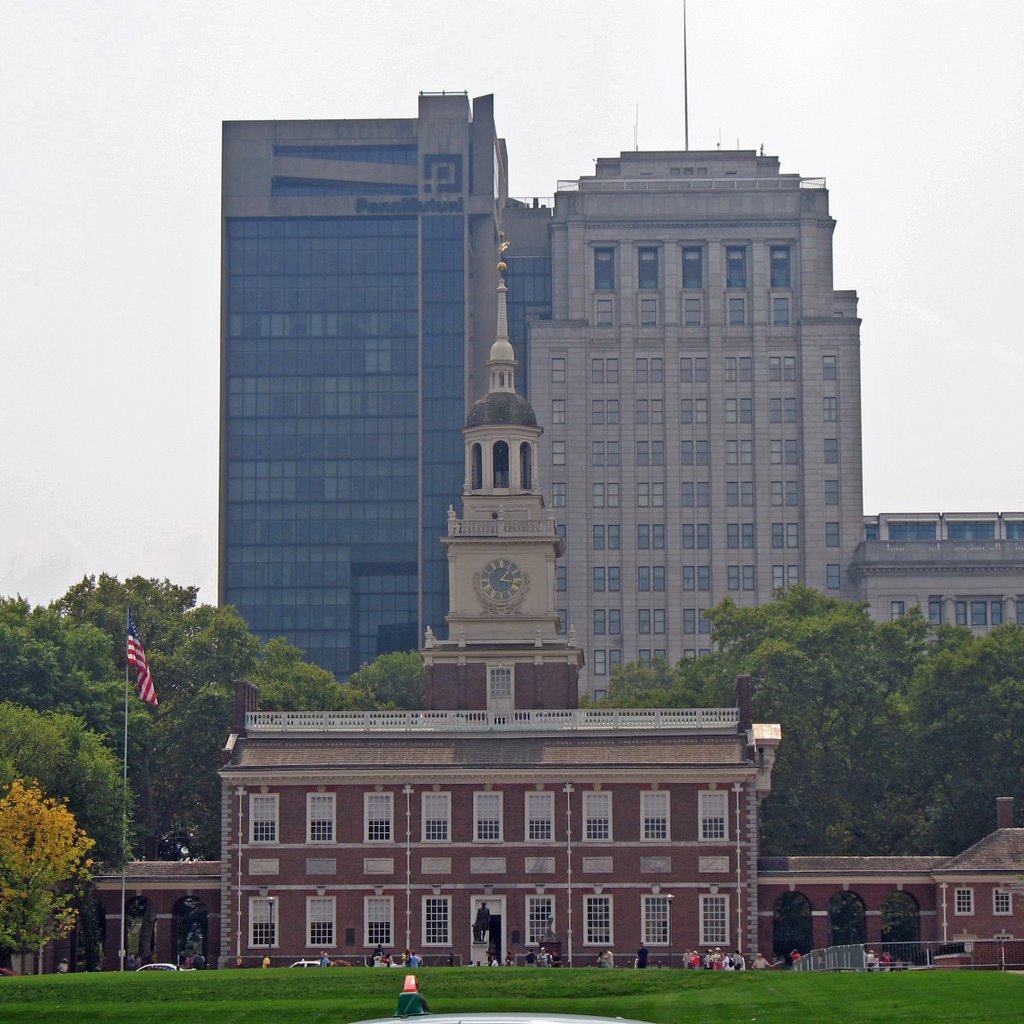
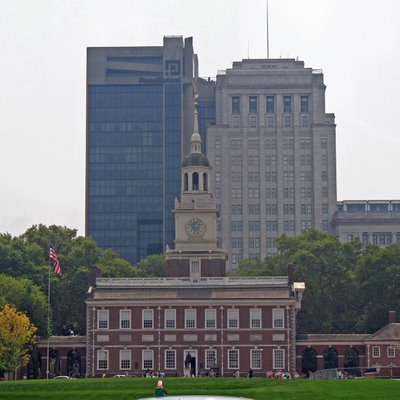
I walked westward across 4th to Market, then turned right to head towards 9th. After a couple of blocks, I paused to get my obligatory shot of Independence Hall.
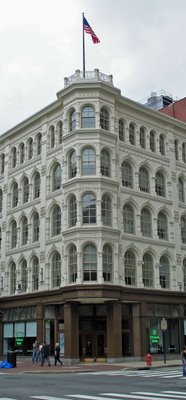


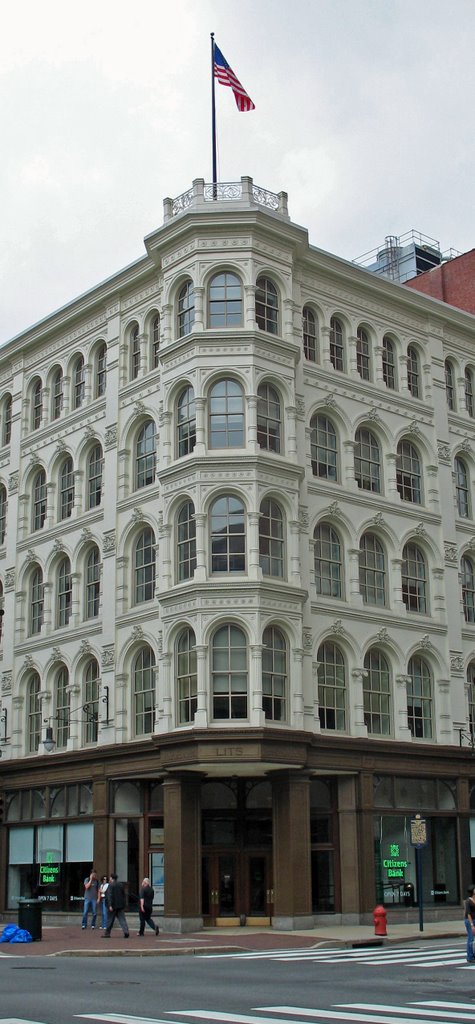
Continuing across Market, I came to a magnificent example of late 19th century cast iron department store architecture. There are many buildings in this style in the "Ladies' Mile" section of New York, but I reckoned this an especially fine specimen. It is the former Lit Bros. store, now subdivided into a few street level chain shops and offices above.

Fortunately, the building has been preserved.

To the right of the "Lit's" sign facing the intersection is a sign that reads, "Hats trimmed free of charge." I wonder if Carmen Miranda ever came to Philly to take advantage of that offer.
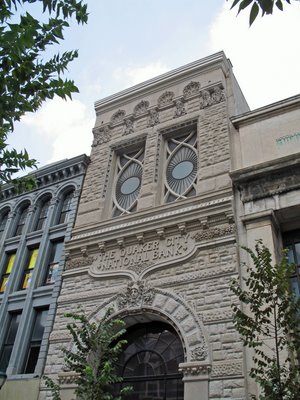


I'm not sure why, but smaller cities like Philadelphia seem to have much more exuberant vernacular architecture than New York. Perhaps it's because architects working in cities with less critical oversight felt less inhibited.

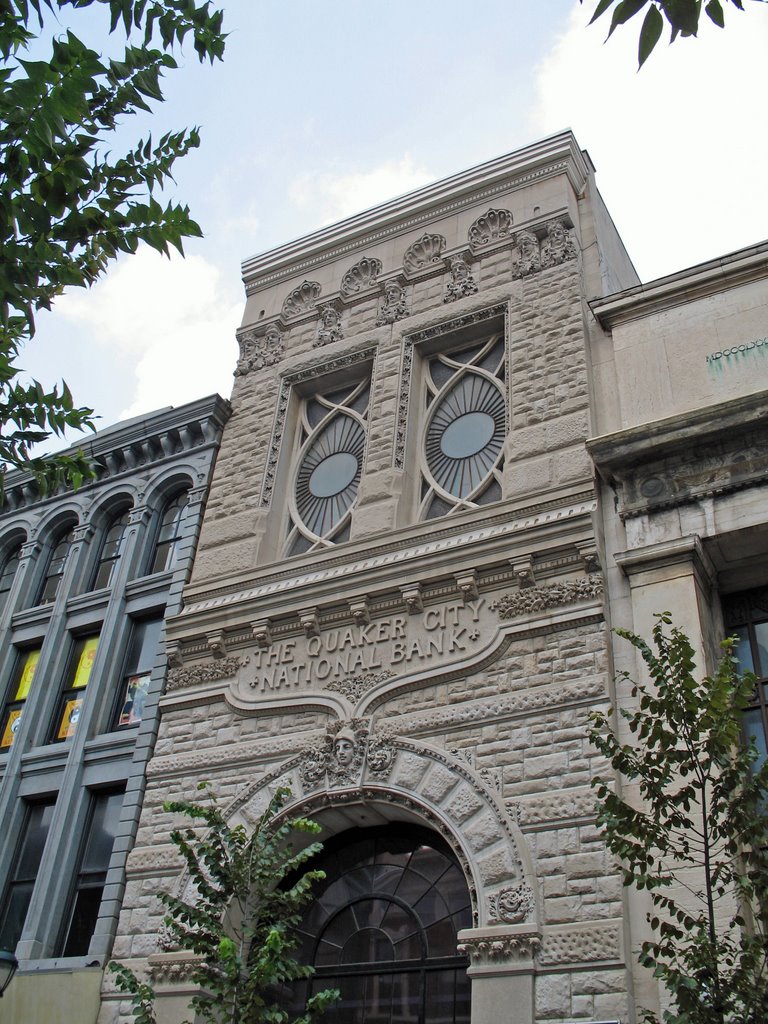
In any event, note the "eyes" on The Quaker City National Bank Building. Revel in the playful texture of the facade, and the "thought balloon" containing the institutional name, suspended above the helmet of the figure on the keystone of the arch.

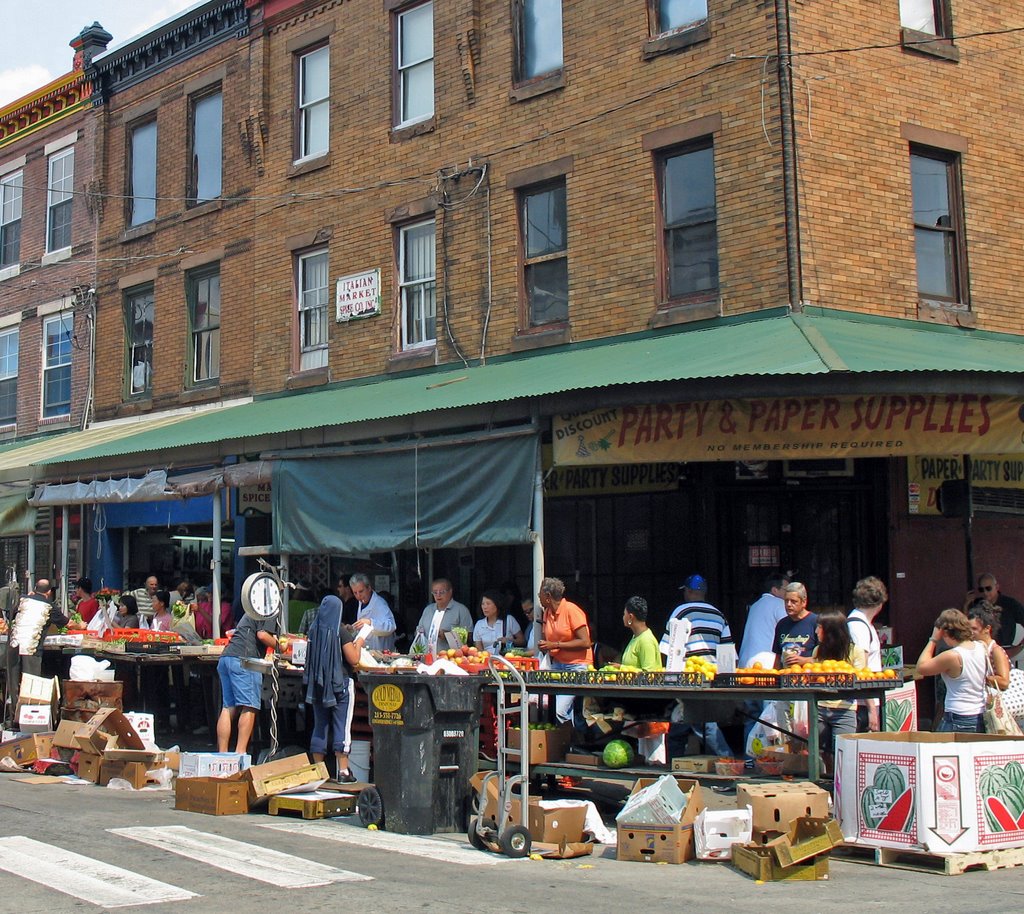
I turned left off Market onto 9th and walked southward. After a few blocks, I started to get into the heart of old Italian South Philly. Several blocks were taken over by outdoor market stalls selling produce of all descriptions.
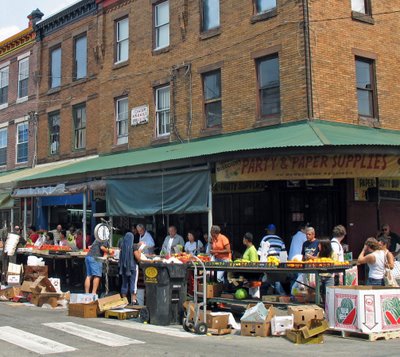

Finally, I arrived at my destination, and found the end of a long, but fairly rapidly moving line.
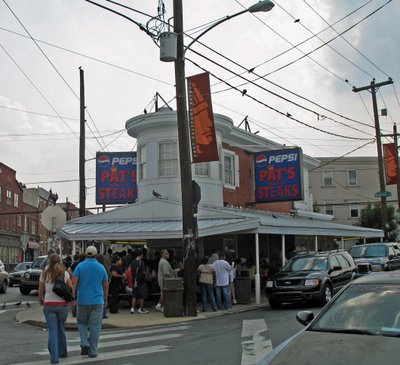

The questions of the moment were Cheez-Whiz or Provolone, and "with" (or, as Topazz had coached me, "wit") or "without". (The last refers to onions.) I had read that cheesesteak cognoscienti prefer "Whiz"; the issue of onions is left to individual taste. When I got to the window, and a little, brush-cut pitbull of a man barked "Next!", I said, "One Whiz wit, please." (The last word probably gave me away as a tourist.)

The sandwich proved worth the walk and the seven bucks. The meat was sliced thin and a bit overdone for my taste. The logic of "Whiz" was readily apparent; its semiliquid state allows it to permeate every crevice, and its unsubtle flavor perked up the beef nicely. The bread was an ideal companion for these ingredients; soft and spongy, but still firm enough to keep its shape and hold the filling, while absorbing the cheese and the meat juice. The onions were a bit of a letdown -- heavily sauteed and droopy, like those you get from hot dog carts. Next time, I may try a "Whiz witout". Nevertheless, I was more than satisfied.

As I started back to my hotel, I noticed Passyunk Avenue heading off at a northeastward angle, forming a hypoteneuse to the triangle whose legs of Market and 9th I had walked to get here. At the apex of the triangle sat Pat's gaudy competitor, Geno's.
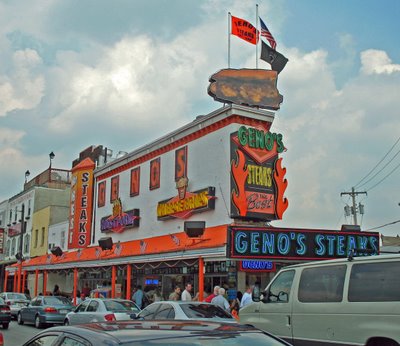

I decided to take the Passyunk shortcut, which would afford me the opportunity to see some different things on the way back. After walking a few blocks, I became very thirsty. I was sure I'd soon come to a little deli where I could get a bottle of water, but all I could find were residences and auto supply stores.

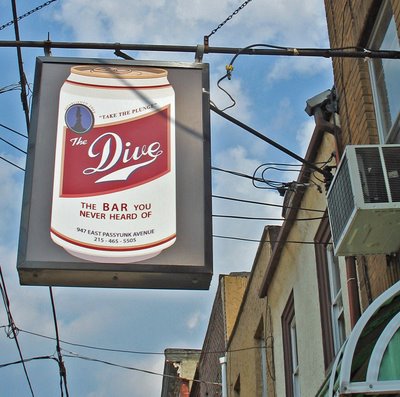
Finally, after many blocks, I saw this sign. I was ready to "take the plunge", but the plunge wasn't ready for me, as a sign on the door said the place didn't open until 5:00 P.M., and it was only 2:15.


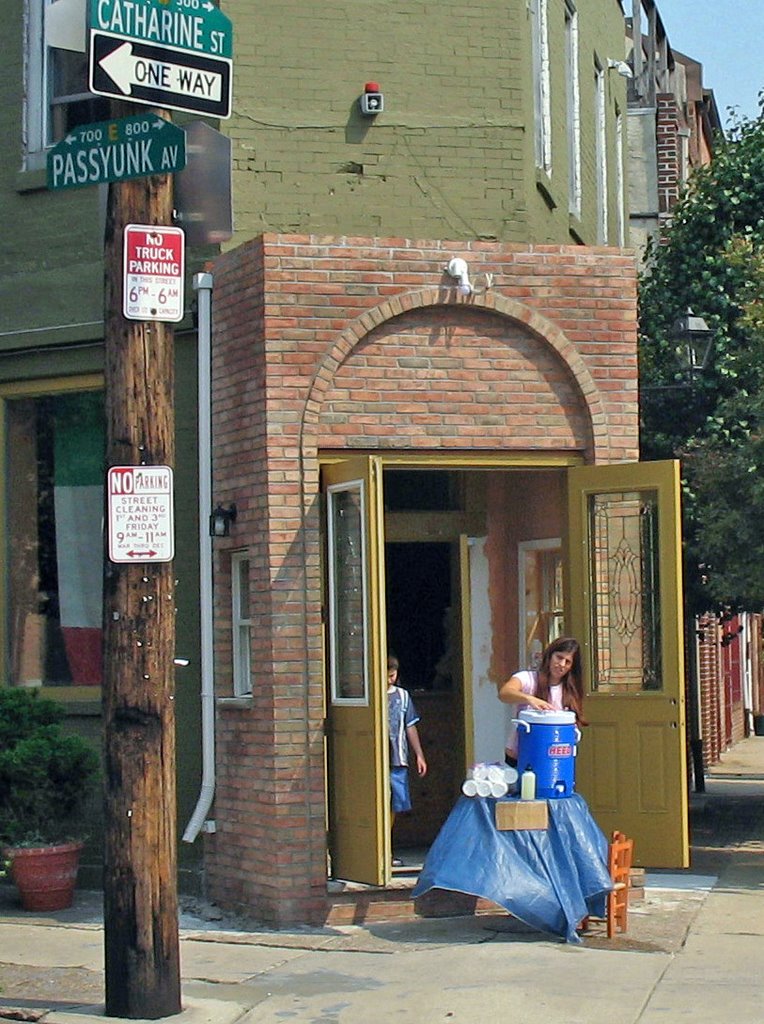
Fortunately, after another couple of blocks, I found this angel of mercy, attended by two cherubs (one of whom is visible just inside the door) at the corner of Passyunk and Catherine.
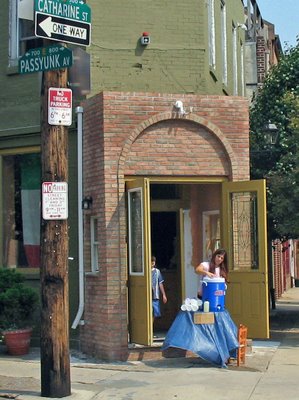
The lemonade they vended was a perfect chaser to a Pat's cheesesteak, having a crisp tartness that banished the lingering salinity of the Cheez-Whiz and onions.

Passyunk Avenue came to an end a few blocks later, near this building, on which two more cherubs fluttered in attendance on an unlikely monarchy.
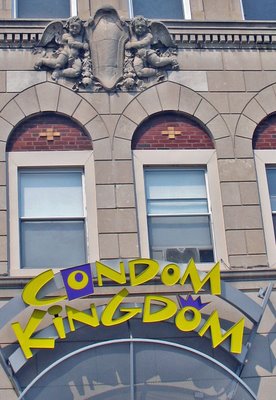


Just beyond that building, an unknown philosopher proclaimed dislike of any Categorical Imperative.