"[A] delightfully named blog", (Sewell Chan, New York Times). "[R]elentlessly eclectic", (Gary, Iowa City). Taxing your attention span since 2005.
Friday, April 01, 2022
Does time show the wiser? Fairport Convention from 1967 and 2017
Monday, March 21, 2022
Happy 337th, Johann Sebastian Bach
Wednesday, March 16, 2022
Pete Hamill and the Clancy Brothers -- a St. Patrick's Day reflection.
They would all be there, moving among the living, as if it were just another packed, dense night in the late 1960's. They would reach past shoulders for fresh drinks or curse some politician or wander to the big table in the back room where Tommy Clancy of the Clancy Brothers was singing, ''Castles are sacked in war, chieftains are scattered far/truth is a fixed star, Eileen Aroon . . .''
Sunday, February 13, 2022
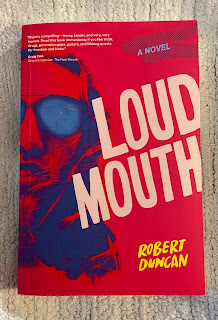
Loudmouth by Robert Duncan
But enough about me; what did I think of the book? First, it's bracketed by rivers. The brief "Chapter 0" at the beginning has the title "Cuyahoga," that being the river that flows through Cleveland and is notorious for having once caught fire. It concerns a tour arranged by Tom Ransom for "Bruce," identified only as such but obviously The Boss, and guided by Charlie, a Cleveland native and friend of Tom's. Charlie shows them a series of dive bars, a record store, and the radio studio where Allen Freed held forth back in the day. At this point I can't resist another personal anecdote. One afternoon in 1970 I was in a law school friend's room when he tried to return a call from his brother, a writer for Cleveland After Dark. When there was no answer at home he called information for Cleveland (remember those days?) and got an operator who, asked for the number of Cleveland After Dark, said something like, "You've got to be kidding." Anyway, at the end of the tour, Charlie takes three 45 caliber bullets, gives one each to Bruce and Tom, then holding his says, "This is how we'll remember."
At the book's end comes "Chapter 00," even shorter than "0," with the title "Hudson." In it, Tom removes the bullet from his Rolodex, in which it's rested for some time. He worries that the gunpowder might be deteriorating in a way that will cause it to discharge spontaneously, with possible fatal consequences. He takes it to a nearby pier and throws it into the Hudson.
"Like most debut novels, there's a lot of non- in Loudmouth's fiction. But it's still not an autobiography or memoir. And if only a part of it is fact, all of it is the truth -- perhaps the deeper truth, arrived at by reimagining a life at slightly different times and places, in a slightly different order, with slightly different characters, blurring the physical reality to bring the metaphysical into slightly sharper focus."
My writing problem was that I never got started, except for a few short pieces in professional journals, at least until I started this blog. Loudmouth gave me a view of what life was like for a music writer in the 1970s. More than that, it gave me a sense of what my life might have been like had I decided to jettison my desire for conventional respectability and indulge that for artistic renown. It wouldn't necessarily have turned out badly; things didn't turn out badly for Rob.
"I hope that readers think it's funny, sad, surprising and maybe, in parts, lovely. I hope they enjoy the words, sentences, and paragraphs, the rhythms and music, as much as the characters and scenes. I hope they pick up on what's going on between the lines and among the lines, the wordplay, inside jokes, compulsive allusions to songs, bands and pop culture."
I found it funny, sad, surprising, and, yes, lovely. I can't say I caught all the inside jokes and allusions, but did get enough to give myself a figurative pat on the back. Then there's this:
"Ultimately, I hope it gives the reader a fresh glimpse of the wonderous/disastrous complexity of life."
That it gave to this reader. I commend Loudmouth without reservation.
Monday, January 17, 2022
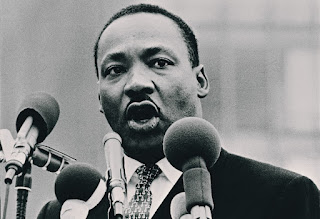
How best do we honor Dr. King today?
The John Lewis Voting Rights Advancement Act, now combined with the Freedom to Vote Act, would effectively overturn Shelby and Brnovich, as well as providing new protections for access to the polls and governing the redistricting process. However, the likelihood of passage is now close to zero, given Sen. Kyrsten Sinema's opposition to changing the filibuster rule. Meanwhile, many states have been busy enacting legislation to restrict access to the polls. As of last July eighteen states had enacted some such legislation. Texas has since enacted its omnibus bill that places many restrictions on voting.
Monday, January 03, 2022
Remembrances and appreciations, 2021
Wednesday, December 29, 2021
Rick Danko, Vince Martin, Erik Darling, and Blondie Chaplin: how many names can I drop in one post?
Rick was unpretentious and welcoming. When I went to hear him and his post-Band group at the Lone Star Cafe, I was invited to join him and the other musicians upstairs during their break. Rather than breaking from singing, Rick picked up an acoustic guitar and sang "Cindy, Oh Cindy", a song that had been popular in 1956, when I was in fifth grade. When Rick finished, I said, "That's a great old Vince Martin song." Vince had done it with the Tarriers, a group that included Erik Darling, whom I had met at a party on the Upper West Side about ten years before, but that's another story. When I mentioned Vince's name, the man next to me turned and said, "Hello; I'm Vince Martin." I told him I loved Tear Down the Walls, a folk album he'd done with Fred Neil. Vince invited me to sing a song from the album with him. Rick handed Vince his guitar and we sang "Dade County Jail", me struggling to try to match Fred's rich baritone.
Sunday, December 26, 2021
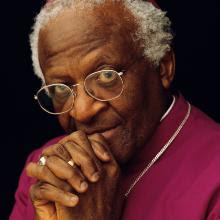
Archbishop Desmond Tutu, 1931-2021
Friday, December 24, 2021
"Once in Royal David's City"
Thursday, December 16, 2021
Beethoven, "Pathetique" Piano Sonata, Op.13, 2nd Movement
Tuesday, October 26, 2021
The World Series is underway; I'm casting my lot with the Braves
It didn't turn out the way I wanted. My Mets had a promising start, then, as has long been their wont, imploded. That left me with two possibilities: my old home town's team (although it didn't exist until long after I left there), the Rays; and my wife's team, the Red Sox. The Sox knocked the Rays out of contention, then were knocked out by the Astros. Meanwhile the Braves won the National League pennant.
How do I choose? Atlanta and Houston are both cities in which I've spent some time, and like. They're both islands of progressivism in otherwise mostly conservative states, although Texas has a proud liberal tradition (I remember Governor Ann Richards giving the keynote address at a convention I attended in Houston in which she suggested the insurance industry needed more effective regulation and, when only one man clapped, said, "You're a lo-o-onely feller!"). I also remember hearing some great blues at a little place called the Reddi Room on White Oak in Houston.
I'll forgive Atlanta for having, at the height of the civil rights struggle in the 1960s adopted the most tone-deaf slogan imaginable - "The city too busy to hate." (Sorry, can't make it to the Klan rally; my company has to file a 10-K.) I have fond memories of an "Ecumenical Conference on Urbanization and Technology" I attended in 1966 at the Emory University campus, during which I met and had a short but inspiring conversation with the then head of the Student Non-Violent Coordinating Committee, a young firebrand named John Lewis. Years later, I had my blues experience at Blues Harbor in Underground Atlanta, where I heard Clarence "Gatemouth" Brown and got to meet and talk with him after his set.
So, who do I pick to win the Series? I'm a Mets fan, and they're a National League team, so, despite the Braves' often having been the Mets' nemesis, I'm going with the Braves. For what it's worth (probably not much), as I write this they have a 5-0 lead in the bottom of the third in game one. Oh, and since the Braves started as a Boston team, my wife has some skin in this game, too.
Whoever wins, though, I won't be that disappointed.
Monday, October 18, 2021
Colin Powell, 1937-2021
Tuesday, October 05, 2021
Some pet peeves I can't give up.
Friday, September 10, 2021
Twenty Years
I'm adding to my post to mention two others who weren't close friends but who also perished on 9/11. I enjoyed some conversation with Kristin Gould White at the Lion's Head. She was on Flight 93, which crashed in Pennsylvania. The story at the close of her linked tribute of how her daughter learned of her death is heart-rending. I met Joe Lostrangio at a reinsurance related event less than a week before 9/11, and we had a tentative lunch date for the week after. Having read his linked tribute, I wish I'd had the chance to get to know him better. For those of you who didn't know Charlie McCrann, here's his obituary.
Sunday, September 05, 2021
"Union Maid"; a song for Labor Day
Saturday, August 07, 2021
The Mets are no longer first in their division.
The Mets showed tenacity in holding on to first place through most of the season to date, although for most of the season this has been enabled by their being the only team in the NL Eastern Division with a winning record. The Phils and Braves now have records in the winning column, both thanks in part to the Mets, and the Mets are now a mere two games over .500.
As the All Star Break ended, it was widely believed that the Mets were facing bleak prospects, as both ace pitcher Jacob deGrom and hard hitting shortstop Francisco Lindor had gone onto the disabled list. Coming off the break, they lost two of three to the Pirates, then won two of three from the Reds and two of three from the Blue Jays. Things weren't looking so bad. Then they lost three out of a five game series with the Braves, two out of three to the Reds, then three out of four to the Division's bottom dwellers, the Marlins. During this unhappy period, Taijuan Walker, the pitcher who had shown early promise with seven wins, was tagged with two losses. This brought them to the series with the Phils, in which they have now lost two straight.
Mike Petriello analyzes the Mets' stats for the year, and gets rid of some theories about why they underperform on offense. I've long thought they are particularly bad in "clutch" batting situations, but he shows they aren't especially so compared to other teams this season. What he brings it down to is something that has bedeviled the Mets over the years: injuries. Why are the Mets so prone to injuries? I attempted an answer here.
What are the Mets' chances now? I think they're pretty slim. Things may improve a little when de Grom and Lindor come back. If the Braves and Phils both fade, there's even a possibility the Mets could be divisional winners. If they don't win the division, there's hardly any chance of their being a wild card team, given the records in the other divisions. If they do get to the first round of the playoffs, they will be up against a team, whoever it is, with far better statistics. Do statistics tell all? Not always.
That all said, I gotta believe!
Update: the Mets are down 3-0 to the Phils in the bottom of the 7th, while the Braves are leading the Nats 5-1 at the top of the 7th. Barring late inning magic in both games, the Mets will be relegated to sole possession of third place in the NL East.
Image: Meet the Matts
Friday, July 30, 2021
The Economist's "Johnson" beckons me off my usage high horse.
Well, at least a little. This week's issue of The Economist, in its "Johnson" column, a regular feature dealing with usage matters and named in honor of Dictionary of the English Language author Dr. Samuel Johnson, is captioned "Death nails and foul swoops". It so appears in the print edition; the on line edition linked above, which may be fully available only to Economist subscribers, gives the title as "Sometimes solecisms can reveal linguistic ingenuity." Merriam-Webster's first definition of "solecism" is "an ungrammatical combination of words in a sentence: also a minor blunder in speech."
This all makes me reconsider something I posted here twelve years ago, about what I called "the rein vs. reign syndrome." My first objection in that post, to the Wall Street Journal's referring to an effort to "reign in" instead of "rein in" a jury award, is one I stand by. The intended meaning here is to check or decrease the award, as one checks the speed of a horse by pulling on a rein. The problem comes with the expression "to give [or allow] free rein." This is now frequently changed to "free reign." To give a horse free rein is to allow it to proceed at its own chosen pace. To allow a person free rein is a metaphorical way of saying they are free to do as they choose. As for "reign," I resort once again to Merriam-Webster, which gives several definitions of reign, both as a noun and as a verb. I'm more interested in the verb definition, the third of which is "to be predominant or prevalent." The question then becomes whether the giving of "free reign" refers to oneself or to another. In the contexts in which I've seen it, I think it mostly, if not entirely, means the latter. Consequently, I now believe "free reign" for "free rein" is a true eggcorn.
Sunday, June 27, 2021
Another journey, to Edith Wharton's country house.
This past Monday and Tuesday we took another brief vacation, this one a small group tour led by our friend Louise Devenish, to the Berkshires of western Massachusetts; to the house, The Mount, that Edith Wharton and her husband, Teddy Wharton, had built as a country retreat. Above is a photo of The Mount, looking from the courtyard to its main entrance. Credit for the architecture of The Mount is given to Ogden Codman Jr. and to Francis L.V. Hoppin. Edith fired Codman as the exterior architect early on, as she didn't like his designs. He did remain to design the interior spaces. Edith herself was very involved in design decisions, following the precepts expressed her book, The Decoration of Houses, co-authored by Codman.
We spent Monday afternoon and night, and Tuesday morning, at the Seven Hills Inn, a short and walkable distance from The Mount. This is a view of Seven Hills from the grounds in back.This is a view looking from Seven Hills' patio toward the grounds and the forest beyond.Esther, a fellow member of our tour group, produced a hat that could come from one of Carmen Miranda's wildest dreams.Our tour of The Mount began Tuesday morning and ended early in the afternoon. This is the drawing room. Our guide asked how many of us knew the origin of that term. A few hands, not including mine, went up. It was originally "withdrawing room", to which ladies would withdraw after dinner to socialize while men remained in the dining room to enjoy port and cigars.None of the furniture in these rooms is original. It was chosen based on what was popular at the time, as well as by any accounts surviving of what was there.
This is the dining room. The table is small, as the Whartons preferred to have intimate dinners with close friends, such as Henry James.This is the kitchen.This is Edith's office, used for correspondence and conversation about business matters concerning her writing, family concerns, and the household.According to our guide, this is where Edith did all of her creative writing; in the bed, not on the couch. The portraits above the headboard are of her father flanked by her two brothers.This is the sewing room.This is Edith's library. A photograph of her is at left. The Mount's librarian said that many of the books were obtained from a London book dealer who had purchased them from various sources after ascertaining their having been part of Wharton's collection. After a buffet lunch on the terrace we were scheduled to tour The Mount's gardens. Unfortunately, it was raining, so we stayed on the terrace, covered by a canvas awning, and heard a lecture on the gardens' design. I got this photo of the walled, or Italian garden from where I was standing on the terrace.As we were leaving The Mount, I took this photo of the entrance hall, with its succession of arches, seen from the stairwell.
Edith and Teddy lived at The Mount for only nine years, from its completion in 1902 until 1911, when Edith separated from Teddy and later moved to Paris. They were divorced in 1913. During their time at The Mount it was hardly a House of Mirth, to refer to one of Edith's more popular novels. Teddy was subject to bouts of severe depression compounded by other health problems. As our guide put it, today he would probably be classified as "bipolar."
Kudos to Louise for putting together a most enjoyable and educational tour.