Showing posts with label Politics. Show all posts

Saturday, September 06, 2025

Will the eagle face the arrows again? Notes on the Department of War, how it went away, and what might happen if it comes back (besides a huge government expenditure)


 In the summer of 1971 I was at Fort Sill, Oklahoma, going through U.S. Army Field Artillery Officer School. A few of my several hundred classmates were U.S. Marines, who relied on the Army for artillery officer training. A few others were German, Thai, or Vietnamese. One of my Marine classmates was Mike, a genial Texan and Aggie. Mike knocked on the door of my Bachelor Officers Quarters room one afternoon and asked if he could see my notes from a class he had missed. I was glad to help.

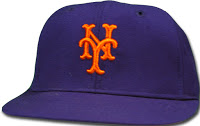
After looking at my notes he picked up my "flying saucer" dress cap with a device like that in the image above. He said, "You know, there was a time when the eagle faced the arrows instead of the olive branch. That was before nineteen and forty eight when these liberals took over the government and changed the name of the Department of War to the Department of Defense, so nobody would think we were the kind of country that would stand up and fight for what we believe in." I let this pass instead of challenging his assertion that liberals had taken over the government in 1948. At the time, I knew that there had been Democratic presidents (FDR and Truman) from 1933 until 1952. I also knew that Truman, who became president when FDR died in 1945, won the 1948 election, remembered for the erroneous Chicago Daily Tribune headline declaring Dewey the winner. What I didn't know is that the Republicans had controlled both the House of Representatives and the Senate from 1945 until the 1948 election gave the Democrats majorities in both houses, along with the White House. Whether this amounted to liberals taking over the government is debatable. 

What neither Mike nor I knew was that the name Department of War was eliminated in 1947 as a result of legislation, the National Security Act, that passed the GOP controlled Congress and was signed into law by President Truman. Until then there were two cabinet level agencies that controlled the military: the Department of War, which controlled the Army; and the Department of the Navy. The National Security Act put the Army, Navy, and newly created Air Force under the control of a new cabinet level agency, the National Defense Establishment, headed by a Secretary of Defense. In 1949 the National Defense Establishment was renamed the Department of Defense. The direction the eagle faces on the cap device, which is modeled on the obverse of the Great Seal of the United States, was changed by presidential order in 1945. 

If President Trump succeeds in renaming the Department of Defense the Department of War, will he think to reverse the direction of the eagle's gaze? If so, Mike, if you're still with us, and I hope you are, congratulations. Despite our differences on political matters (I prefer DoD to DoW and olive branches to arrows), I enjoyed our time as classmates and hold you in great respect.


Thursday, July 13, 2023

I can't give up on the Mets


The All Star Break is a traditional time to assess a team's performance and its prospects for the rest of the season. On May 21 I expressed optimism based on the Mets' seeming to have recovered from a deep slump that, in typical fashion, followed a hot start. That optimism was quickly proved unfounded as the Mets went into a vertiginous tailspin that included a three game sweep by their divisional archrivals, the Braves. 

Recently, they showed some improvement. Their record over the last ten games before the break is 6-4. Still, at the break they are in fourth place in their division, six games under .500, and 18.5 games behind the NL East leading Braves. They are also ten games behind the second place Marlins and six behind the third place Phillies. There is still a miniscule chance they could be a wild card team but, "Ya gotta believe!" aside, it stretches credulity.

Nevertheless, I'm yet to be in a funk as bad as I was in June of 2008. The presence of a very deep pocketed owner who is happy to sign checks but by and large willing to let the baseball pros make decisions, even if they're not always the best decisions, helps. I also took some cheer from this New York Times column by David Brooks. No doubt I'll take some brickbats from my compatriots on the left for this, but I've long liked David Brooks. Knowing he's a fellow Mets fan confirms and strengthens my liking him. We disagree on some very important things, principally that described by David Coates here:
"David Brooks’ recent essay on 'The Character Factory' would have us believe that 'nearly every parent on earth operates on the assumption that character matters a lot to the life outcomes of their children' while 'nearly every government anti-poverty program operates on the assumption that it doesn’t.'”
It's the statement about anti-poverty or, as I think of them, "safety net" policies, not that about parents, with which I disagree. I'll have more to say about that in a future, non-baseball post. I must also note that there are some things, other than Mets fandom, about which I agree strongly with Brooks; for example, I believe in, and identify with, his notion of a "second mountain," on which I find myself now.

I've ascribed my Mets fandom to a penchant for supporting underdogs, one that, in baseball, was first manifest in my decision to cheer for the Brooklyn Dodgers -- I lived nowhere near Brooklyn at the time -- in the 1955 World Series against the Yankees. It was re-awakened in 1985 when I attended my first Mets game with my friend Pat Carroll, who said, "What you have to know about the Mets is that they're the Brooklyn Dodgers continued by other means." (I have friends who were New York Giants fans in their childhood who would dispute that claim.)  My timing was impeccable; the following year I got to see the Mets win their second, and to date last, World Series. 

At 77, I think I have a fair chance of living long enough to see another Mets championship. If I do, it's likely to come about in a way that can be described by the adjective used by their first manager, Casey Stengel, to describe a first season expansion team that set new records for futility, "Amazin'.
"


Monday, June 19, 2023

Some thoughts concerning the legacy of Daniel Ellsberg (1931-2023)

First, I consider Daniel Ellsberg a hero. He broke the law. but did so not out of desire for personal gain but to expose to the public a pattern of deception concerning U.S. involvement in Vietnam that spanned both Democratic and Republican presidential administrations. He was willing to face the legal consequences of his action, which could have included a long prison sentence. Largely because of prosecutorial misconduct, the charges against him were dismissed. He spent the rest of his long life in a campaign to warn against the danger of nuclear war. 

My first reaction on learning of Ellsberg's death was sorrow. Soon after, though, it struck me that his re-emergence into public consciousness could provide an argument, in the form of "whataboutism," for those defending the former President's purloining of classified documents. I believe the cases are easily distinguishable. Ellsberg's motive was clear, and while his disclosure didn't reflect well on some government and military officials, "there was not a single secret damaging to national security" anywhere in the Pentagon Papers, as is admitted by Gabriel Schoenfeld in a New York Times opinion piece that is otherwise critical of Ellsberg's disclosure. Schoenfeld puts his thumb on the secrecy-as-"crucial"-adjunct-to-statecraft side of the scale; I put mine on the transparency-except-where-vitally-necessary side.

Former President Trump's motive for taking classified documents isn't clear. Bill Barr, his own Attorney General, attributes it to Trump's narcissism. Mark Esper, who served as Trump's Secretary of Defense, said that Trump's action not only endangered national security but put service members' lives at risk.

"Whataboutism" aside, what troubled me more deeply was the contribution that Ellsberg's release of the Pentagon Papers had made, if unwittingly, to a corrosive cynicism about the very legitimacy of our liberal small "d" democratic system of government. As David Brooks puts it in his Times essay:
"This cynical attitude has become pervasive in our society. Proper skepticism toward our institutions has turned into endemic distrust, a jaundiced cynicism that says: I’m onto the game; it’s corruption all the way down."

Ellsberg responded to this concern when he was interviewed by Christiane Amanpour three months ago: 

"I.F. Stone, the journalist, used to say, 'All governments lie, and nothing they say is to be believed.' That doesn’t mean that everything they say is a lie. It does mean that anything they say could be a lie, and it’s not the last word. You have to look for other sources of information and check it against your common sense."

If the National Weather Service tells me a hurricane is headed my way, "common sense" tells me to take precautions without looking "for other sources of information." Still, I think Ellsberg's advice is generally correct. We should be skeptical without being cynical.

Monday, January 17, 2022

How best do we honor Dr. King today?

On May 15, 1957, on the steps of the Lincoln Memorial, Dr. Martin Luther King, Jr. gave a speech to a group assembled for a Prayer Pilgrimage for Freedom. The theme of that speech was "Give Us the Ballot". Eight years later Congress passed and President Johnson signed the Voting Rights Act of 1965, which banned practices concerning eligibility or ability to vote that disproportionately affected racial or linguistic minorities. 

However, in two decisions the Supreme Court has drastically limited the Act's effectiveness. Shelby County v. Holder, 570 U.S.529 (2013) declared the Act's section 4, which determined which jurisdictions should be subject to the Act's section 5 empowering the federal government to pre-clear any proposed changes to voting regulations in jurisdictions that historically practiced discrimination, unconstitutional on the grounds that the conditions that justified it in 1965 had been eliminated and that it therefore constituted an infringement on the states' power to regulate elections under the Tenth Amendment. There were strong arguments that the Court's decision lacked a factual basis.

Last year the Court delivered an even stronger impediment to the efficacy of the 1965 Act in Brnovich v. Democratic National Committee, 594 U.S. __, 141 S. Ct. 2321 (2021). This decision held that Arizona's statute prohibiting third party collection of ballots and out-of-precinct voting, despite having disparate impact on minority voters, could not be invalidated under the Act's section 2 or the Fifteenth Amendment. In its decision the Court proposed "guidelines" for evaluating voting restrictions that would allow those having disparate impact where the burden imposed is seen as small in comparison to the state's interest in imposing the restriction. The Court's analysis of section 2 has been characterized as "ahistorical and atextual". 

The John Lewis Voting Rights Advancement Act, now combined with the Freedom to Vote Act, would effectively overturn Shelby and Brnovich, as well as providing new protections for access to the polls and governing the redistricting process. However, the likelihood of passage is now close to zero, given Sen. Kyrsten Sinema's opposition to changing the filibuster rule. Meanwhile, many states have been busy enacting legislation to restrict access to the polls. As of last July eighteen states had enacted some such legislation. Texas has since enacted its omnibus bill that places many restrictions on voting.

What can be done, given the almost certain unavailability of legislative relief and the Supreme Court's (and many lower courts') hostility to challenges of state voting restrictions? Given the new landscape, the best we can manage - and it will be a challenge - is to do all we can to assure that all prospective voters, minority or not, get whatever assistance they need to jump through whatever hoops are raised between them and access to the ballot, and to get their votes counted accurately. By doing so, we will be honoring Dr. King's legacy.

Monday, January 03, 2022

Remembrances and appreciations, 2021

A year ago I did a separate post to show 2020 the door. I'm sure we can all agree that 2021 has, on balance, been less than delightful. There were many good things that happened, including in our neighborhood. Still, the emergence of Omicron, some severe weather disasters, and inflation driven by, in my view, a combination of manufacturers' misestimation of demand, supply chain problems largely caused by COVID, and concentration of economic power in some important industries, have made it a trying year indeed.

There are plenty of remembrances. Those most personal to me include Ron Jones, who was a valued mentor during my early years of law practice and a friend for years after; Wally Brewer, friend and fellow Grace Church parishioner; friend Leonard Ryan; and Martha's cousin and our friend Alice McFarlane.

2021 saw the passing of many people prominent in matters of government and statecraft; local, national and international. I remembered Colin Powell and Desmond Tutu on this blog. They were joined by F.W. de Klerk, Bob Dole, Frances "Sissy" Farenthold, Vernon Jordan, Walter Mondale, Harry Reid, George Shultz, and John Warner. Special mention goes to Sarah Weddington, the lawyer who, at the age of 26, successfully argued for appellant "Jane Roe" before the U.S. Supreme Court, and who went on to serve as a Texas legislator and, later, advisor to President Jimmy Carter, in which roles she continued to be an effective advocate for women's rights. There are others I've failed to mention, for which I trust you'll forgive me.

Music suffered many losses. Those most keenly felt by me are Don Everly, who joined younger brother Phil among the departed; Maestro James Levine; Mary Wilson of the Supremes; Nanci Griffith; Paddy Moloney of the Chieftains; Stones drummer Charlie Watts; Michael Nesmith, best known for having been one of the Monkees but who had a fruitful solo career as a singer and songwriter; and Chick Corea. One musician we lost whom I wish I had known better is the rapper DMX. 

Straddling the worlds of music and the stage was the magnificent Stephen Sondheim. The worlds of stage and screen lost, among many, Ed Asner, Ned Beatty, Olympia Dukakis, Hal Holbrook, Cloris Leachman, Christopher Plummer, Cicely Tyson, Melvin Van Peebles, and Michael K. Williams. I wasn't a Betty White fan, not because I disliked her (who could?), but because I rarely watched the TV sitcoms and game shows on which she made many of her appearances. If anything, I associated her with commercials. I'm now delighted to learn that in 1954 she defied demands from Southern viewers that she remove Arthur Duncan, a Black dancer from her variety show. 

The literary world had its share of losses. Those the impact of which I feel most are novelist, essayist, and social critic Joan Didion, poet Lawrence Ferlinghetti (whom I once saw, bent over his manual typewriter, during a visit to his City Lights bookstore in San Francisco), and Larry McMurtry, realistic chronicler of the old and contemporary West.

Space exploration lost Michael Collins. As pilot of the Apollo 11 command module, "Iron Mike" remained aboard while crew members Neil Armstrong and Buzz Aldrin took the Lunar Excursion Module to the moon's surface and back.

Among baseball's losses were Hank Aaron, who broke Babe Ruth's long standing career home run record in 1974 and held it for thirty years; Jim "Mudcat" Grant, the first Black twenty game winning pitcher who enjoyed a post-baseball career as an R&B singer; and Tommy Lasorda, who began as a pitcher for the Brooklyn Dodgers and went on to manage the L.A. Dodgers for twenty years, winning four league championships and two World Series. 

True to form in recent years, the Mets started hot but soon cooled off, again largely thanks to their injury proneness.  Owner Steve Cohen, looking for a quick turnaround next season, said "Fie to you, luxury tax; I'll pay" and opened his wallet to acquire ace pitcher Max Scherzer. The Mets also have a new manager, veteran Buck Showalter, three time American League Manager of the Year: once with the Yankees (1994); once with the Rangers (2004), and once with the Orioles (2014). The best I can say now is, I'm cautiously optimistic.

As always, I must begin my list of appreciations with my wife, Martha Foley, now not just for her encouragement of and suggestions for my blogging, but also for her self sacrificing help as I recover, slowly but surely, from my ankle injury. I also thank our daughter, Liz, and her boyfriend, Drew Rodke, for summoning help to deal with my injury, caring for me for two days - including a sumptuous Thanksgiving dinner - and driving me home to Brooklyn. Thanks to the physicians and nurses at Riddle Hospital in Media, Pennsylvania for stabilizing my fractures, and to the physicians, nurses, and physical therapists at NYU Langone Orthopedic Hospital for surgery, post operative care, and therapy. Finally, thanks to all my friends, too numerous to mention individually, who have provided support and encouragement, either in person, on the phone, or in writing.

Friday, June 13, 2014

Some odd observations about Cantor's loss.

There were a couple of things on the New York Times editorial pages for Thursday, June 12 that I found interesting concerning the outcome of the Virginia Republican Congressional primary that spelled the end of Eric Cantor's incumbency as House Majority Leader. One was a letter from Jonathan Ansell, of Henrico, Virginia, which I quote in full:
In Virginia, anyone can vote in primaries, regardless of party affiliation. I am a Democrat who lives in the Seventh District, and I voted for David Brat as an anti-Eric Cantor vote. I know there were many Democrats who did the same thing. I don't know if people like us swung the vote or not, but we're happy he's out.
Mr. Ansell seems content with the fact that Cantor has been punished; though he doesn't say so, he may believe that replacing Cantor with Brat, even though the latter is probably more intransigently reactionary, is a net gain. As another Times letter writer, Joan White, notes, "he will not have Mr. Cantor's power."

The conventional wisdom is that the Seventh District is so deeply Republican that Brat is all but assured of victory in the general election. Josh Israel in Think Progress believes the race is "potentially competitive", based on polling that suggests a majority of residents of the district hold views on subjects like immigration that are different than Mr. Brat's. Still, another bit of conventional wisdom is that, in midterm elections, voter turnout is usually low and dominated by the voters who are angriest with the incumbent administration. So, while an upset by Brat's Democratic opponent, Jack Trammell,* isn't inconceivable, it's a very long shot and would almost certainly require an Herculean get-out-the-vote effort by the Democrats.

But then, there's another intriguing bit of information I got from yesterday's Times op-ed column by Gail Collins, who often makes my day brighter.** It seems that Cantor's attack ads against Brat called him a "liberal college professor." As an adjective, "liberal" seems to stick to "college professor" the way that "devout" does to "Catholic," or "hero" does to "cop" if you're a headline writer for a New York tabloid. Still, Milton Friedman was a college professor (OK, maybe he was the exception that proves the rule, whatever that means.) And Brat a liberal? Well, before I give Cantor four Pinocchios, I have to remember that he can plead the truth of his characterization, if only by referring to a definition of "liberal" that was current in the nineteenth century. That definition drew upon the etymological root of "liberal" which is shared with "liberty." The project of the nineteenth century liberals was to achieve what has come to be called "negative liberty": the freedom to conduct one's trade and one's life unfettered by the arbitrary power of the monarchy or hereditary aristocracy. This classic liberalism comes close to what is today called libertarianism. In today's usage, "liberal" as a political descriptor has taken on a second meaning of "liberal" as used in non-political discourse: "generous" or "munificent." (Here some of my Republican friends will want to add, "...with the taxpayers' money!" That leads to an argument we can have later. I'm working on a post that discusses how the meaning of "conservative" has changed as much, if not more, than has that of "liberal.") Today's liberalism embraces what has come to be called "positive liberty," as well as recognizing what it believes to be necessary limits on negative liberty. For more of my views on this subject, see "Genghis Kahn: the first liberal?" Anyway, Collins's column had me wondering how many people voted for Brat thinking he really is a liberal, in the contemporary sense. Well, maybe some of those Democrats who crossed over to vote in the GOP primary did.

Brian Beuteler, in that reliable scourge of conventional wisdom The New Republic,*** writes that Cantor's loss is really no big deal.

I was amused to see Cantor, in the photo above, wearing a Spitzer tie. Someday the word will get out that it's the cravat of political calamity.
__________
*  Both Brat and Trammell are professors at Randolph-Macon College. Whatever happens in November, we know that Randy Mac will be represented in Congress.

**Consider this, from Collins's Cantor column:
[W]e really do not need the Republicans in the House to become even more paranoid about a primary from the right. They’ve been nervous for a long time, but this is a whole new scenario. It’s the difference between worrying about burglars and hearing that a gopher in your neighbor’s backyard suddenly grew to be 6 feet long, broke down the door and ate all the furniture.
***Reliable, that is, until you get comfortable with the notion that conventional wisdom is usually wrong. Then TNR publishes a piece by Franklin Foer with the title "In Defense of Conventional Wisdom."

Saturday, December 15, 2012

The Newtown massacre.

News.Yahoo.com
Around noon yesterday I took a short break from work to get something to drink with the sandwich I'd brought to eat at my desk. I also checked my smartphone for new e-mails, and saw a breaking news item about a shooting at a school in Connecticut. One dead, one wounded was the initial report. I mentioned this to a fellow worker, who said he'd seen a report that the principal had been killed and one student wounded, and that it was believed the shooter was a parent of a student at the school. As time went by and we kept getting updates, it became evident that we were in a "fog of war." The shooter was 20. No, he was 24. His name was Ryan Lanza. He drove to Connecticut after killing his father in New Jersey. No, he was Ryan Lanza's younger brother, Adam. He lived in Connecticut. He went to the school to kill his mother, a kindergarten teacher, then started shooting children. There were eighteen dead. No, twenty.

As the extent of the horror was revealed, I became more distracted and depressed. I imagined as yet unwrapped presents hidden in a closet and the anticipation of a delighted smile on a young face. I imagined myself, at age five, cornered in a room and frozen in terror as a gun is pointed at me.

"What can be done?" is the natural, the inevitable reaction. Adam Lanza was not a deranged person who was able to buy guns; the weapons he used belonged to his mother, who became a victim of the firepower of her own arsenal. Is it understandable that someone in suburban Connecticut would want a weapon for self-defense? Well, yes. Did she need two 9mm pistols and a carbine? Probably not. Have similar mass murders occurred in countries with stricter gun controls than ours? Yes, although the Dumblane massacre led to the enactment of even more stringent legislation in Britain. Could school security have been better?  It's reported in today's New York Times that the principal, who was one of the victims, buzzed Adam Lanza in because she recognized him as the son of a colleague.

I didn't write the paragraph above as an argument against gun control or any other measures that may be proposed in response to this tragedy, but just to observe that, if you'll forgive a perhaps inevitable expression, there is no magic bullet.

Update: This story continues to develop. It's now reported that Lanza was not buzzed in by the principal, but instead forced his way in. According to the same Gothamist story his mother, Nancy Lanza, was not a teacher at the school, was a "gun enthusiast" who owned a large collection of firearms in addition to those used in the massacre, and taught her sons how to shoot.  The story also reports that on Tuesday before the massacre Adam Lanza tried to buy a rifle "but was turned down because he didn't want to undergo a background check or abide by the state's waiting period for gun sales."

Monday, November 05, 2012

Vote!

This video is four years old, which is why the wall poster says "November 4." I remember Tuesday, November 4, 2008 very well. I had voted early in Brooklyn, and spent Saturday through Tuesday in the suburbs of Buffalo, ringing doorbells, handing out literature, and giving my spiel about voting for the candidates I favored. I spent election evening in a campaign headquarters in East Aurora, New York (which is roughly 130 miles west of Aurora, New York; go figure) and had a mouthful of pizza and a delightful endorphin rush when the projection for Ohio was announced, as I hope I will tomorrow night. But, and I do mean this, whoever you're supporting, please vote. Join my daughter, who just turned 19 and is voting for the first time. If you don't vote, well, you just might feel like you got hit by a linebacker.

Monday, October 22, 2012

George McGovern, 1922-2012

I cast my second presidential ballot for him; my first was for his fellow upper Midwesterner Hubert Humphrey. So, I began my voting career with two swings and misses, before I connected for a hit with Jimmy Carter in 1976. When the Watergate scandal broke in '73, I would occasionally see cars with bumper stickers that said "Don't blame me, I'm from Massachusetts" (the only state McGovern carried). I couldn't claim that; I voted for him by absentee ballot from Florida while stationed at Fort Polk, Louisiana. The South was solid for the Trickster.

Later, I could claim an indirect connection (besides the voting one) to him: I had some brief but pleasant conversation with his sister, who was married to the minister of my parents' church.

He served in World War Two as an Army Air Corps bomber pilot, flying the B-24 Liberator, and was awarded the Distinguished Flying Cross for a safe emergency landing which he and his crew survived, despite the B-24's vulnerability in such situations because of its high-mounted wing.

He was brought up in the traditions of prairie populism and, through his Methodist minister father, the Social Gospel, both of which, along with McGovern, are eulogized in today's New York Times by Josh Garrett-Davis. Goodbye to a very good man.

Saturday, January 14, 2012

Austin Lounge Lizards, "Gingrich the Newt"

Arthur Boehm's posting of this Gingrich campaign ad made me remember the Austin Lounge Lizards' song from the 1990s, performed a cappella (I wonder if Newt also objects to Italian?) in the clip above. The video is a bit, uh, psychedelic, but the sound is comme il doit être.

Saturday, September 03, 2011

Songs for Labor Day: Pete Seeger and Billy Bragg

I first heard this song on Pete's album I Can See a New Day, which I acquired during my first year of college. I loved the passion Pete brought to the lyrics, and the way his twelve string guitar clanged like a bell on the second round of the song. The clip above is of a performance in Australia in 1964. I next heard it on the Byrds' first album, Mr. Tambourine Man, in a cover version that featured the group's ethereal harmonies and jangling Rickenbacker guitars. The Byrds changed one word in the song. Where Pete sang, true to the words written by Welsh coal miner turned teacher and poet Idris Davies*, "Who robbed the miner?", the Byrds asked "Who killed the miner?" The notes to I Can See a New Day said the song was about a strike, while those to Mr. Tambourine Man claimed it was about a "mining disaster". I suspect the folks at Columbia, the Byrds' label, mandated the change because they thought a song about a disaster was less politically sensitive than one about a strike.** Then again, maybe they just thought "killed" was more compelling than "robbed".

Now, for a rousing Labor Day anthem, here's Billy Bragg:


This was made at the Shrewsbury Folk Festival last year; thanks to shrewsburyfolkfest for the clip.

Addendum: Will Van Dorp sent me this clip of Tom Morello: The Nightwatchman doing "Union Town":


__________

*The notes to the Byrds' album credited the lyrics to "I.D. Ris Davies".

**To be fair, Columbia was also Pete's label for some of his albums, including I Can See a New Day, which included "robbed" and the strike reference in the notes. But a Seeger album was made for a niche market of hard-core folkies, presumably mostly of leftish political views.

Monday, June 06, 2011

It pains me to admit this, but...

...if you do a web search for "Weiner" (yes, that Weiner) and "class act," the first thing you'll find is a link to this blog.

Tuesday, April 12, 2011

Egyptian Blogger Gets Three Year Sentence for Criticizing Military

Just before Hosni Mubarak's capitulation, I wondered what kind of government might succeed his. This story from today's New York Times (thanks to Andy Bachman for bringing it to my attention) is, to say the least, not an encouraging portent. Maikel Nabil Sanad, a 25 year old blogger, has been given a three year prison sentence by a military tribunal for posting material, often quoting established human rights groups like Amnesty International, exposing abuses by the military against protesters.

I'm glad Mubarak is gone, but I hope the Egyptian people will find the strength to bring their military under civilian control, where it belongs in any decent society.

Friday, February 11, 2011

Egypt: what kind of democracy?

Yesterday's New York Times op-ed page includes a piece by Essam El-Errian, a member of the Guidance Council of Egypt's Muslim Brotherhood, with the title "What the Muslim Brothers Want". It includes many reassuring (to those of us who want to see Egypt emerge from its crisis as a robust democracy) declarations: "we have persistently demanded liberation and democracy"; "the Muslim Brotherhood is committed to...reform and progress"; and, most significantly, "We aim to achieve reform and rights for all: not just for the Muslim Brotherhood, not just for Muslims, but for all Egyptians."

I don't question the sincerity of these declarations. I do pause, nevertheless, at this paragraph, which I think may reflect a misunderstanding:
As our nation heads toward liberty, however, we disagree with the claims that the only options in Egypt are a purely secular, liberal democracy or an authoritarian theocracy. Secular liberal democracy of the American and European variety, with its firm rejection of religion in public life, is not the exclusive model for a legitimate democracy.
I'm heartened by Mr. El-Errian's evident rejection of "authoritarian theocracy" (which I take to mean no imposition of Sharia as civil law); but I claim a misunderstanding because he characterizes American and European democracies as having strictly excluded religion from the public sphere. In America, religious references abound both in our governmental ceremonies (yes, nonbelievers and religious objectors--there are those--are given the opportunity to omit references to God or "affirm" rather than to "swear"), and, more importantly, in our political discourse. Our First Amendment prohibits the establishment of a particular religion, but in its succeeding clause guarantees the right to "free exercise" of religious beliefs. This point is also made in a letter, published in today's Times, by Regan McCarthy in response to Mr. El-Errian's column (see here).

European democracies offer even stronger counterexamples. Britain, for instance, still has an established church, and the Archbishop of Canterbury, who is formally appointed by the monarch, takes part in ceremonies of state. Nevertheless, adherents to faiths other than that of the Church of England are allowed to practice their religion, and no one, including nonbelievers, is excluded from public life, including the holding of office.

Also troubling to me is Mr. El-Errian's apparent rejection of "liberal" democracy. I'm sure what he means by "liberal" is not what that has come to mean in American political discourse, i.e. the belief that government should intervene in the economy to prevent abuses of private power and to maintain a strong social safety net, but rather the classic meaning, which is that the establishment and preservation of individual liberty should be the fundamental principle (for more discussion of this, see "Genghis Khan: the first liberal?").

In conclusion, despite Mr. El-Errian's encouraging words, I'm perplexed as to what role he proposes for religion in public life, and what scope he is willing to allow for individual freedom.

Update: Aljazeera English has just reported Mubarak's resignation.

Tuesday, January 25, 2011

My state senator's message to Jets fans.

I got to know Daniel Squadron (photo above) early in his campaign to become state senator from my district, and was able in a small way to help him win the Democratic primary against a thirty year incumbent. For this, my reward was four days in Buffalo. I later attended his swearing in ceremony in Albany and have kept in touch with him and his staff since. Today, I got a message from his chief of staff that impressed me greatly. In the aftermath of the Jets' defeat by the Steelers in yesterday's AFC championship game, Senator Squadron declared himself a Jets fan. Given that New York has two NFL teams, that was an act of political courage. What impressed me more is what he posted on ESPN's website, which included the following:
To be a Jets fan is to be a believer. It’s to ignore the conventional wisdom or the odds, even logic. If you can wake up each Jets game day believing that this time will be different ... well, you can wake up believing anything. Jets fans start each season believing in the infinite possibility of a changed future. We begin each game believing in the limitless opportunity to shake off past failures and make today the beginning of something new and special.
Inspiring words, indeed. And it struck me how true they would also be if you substituted an "M" for every "J" in that passage. Could the Senator also be a Mets fan? It would be in character to root for both "-ets" teams, both underdogs with long histories of breaking their fans' hearts.

But for a New York City politician, at least one whose district does not lie entirely in Brooklyn or Queens (Squadron's includes lower Manhattan as well as a small part of Brooklyn), to come out as a Mets fan would be uncommon valor. There isn't nearly the intensity of contempt between Giants and Jets fans as there is between Yankees and Mets partisans. Yankee fans are a majority in three of the five boroughs, which is why Rudy Giuliani could proclaim his Yankee loyalty without endangering his chances in citywide elections, and why Hillary Clinton made the claim that she had "always been a Yankee fan", which she quickly qualified by saying she was a Cubs loyalist, but the Bombers were her favorite AL team.

Sunday, January 23, 2011

Palin free February? You betcha!

Wikimedia Commons
Dana Milbank has made the challenge. I'll gladly take it up. After all, I've only posted about her three times. The first was in 2008, when she was a candidate for Vice President and I, like many, was shuddering at the "heartbeat away" prospect. Another was an apology. The third was here. Anyway, it doesn't seem that big a sacrifice for me.

How about you?

Tuesday, January 04, 2011

Phil Ochs, "There but for Fortune".

Back in 1978, when I was (as I often did in those times) spending an evening at the Bells of Hell, I slipped a quarter into the jukebox and played Dylan's "Positively Fourth Street". The music had barely started when Lee, the pretty Gypsy waitress, confronted me with blazing eyes. "I thought you were a nice guy."

"I try," I said, with a shrug.

"How could you play that song?"

"I know it's a bitter song, but I guess I'm in a bitter mood now."

"That's not the point. Don't you know? That song drove Phil Ochs to suicide."

I expressed my regret, and promised never to play the offending song again, a promise I kept so long as Lee was around. She stayed until a shrewish little woman who drank there for a time ratted her out for getting state benefits that partly covered the cost of her treatments for breast cancer while she worked off the books for a paltry wage plus tips.

I told some friends who had been involved in the Village folkie scene in the 1960s and early '70s about my confrontation with Lee, and they assured me she was mistaken. Dylan and Ochs had been friends to the end; the song was about someone else. I was relieved to be able, when the mood struck me, to wallow in self-pity with "Positively" and not feel guilty.

Phil Ochs was never my favorite folk singer. I liked "There but for Fortune" but I thought his voice was too pretty and precious. I didn't like "Here's to the State of Mississippi," which I thought unfairly ignored the presence of a large number of good people, white as well as black, in that much-maligned state, and perversely supported Ross Barnett and his ilk by making it seem that the whole state was under attack by "outside agitators."

Since I wasn't much of a fan, I didn't closely follow Ochs's career or music in the years leading up to his death. Today I received an e-mail from my friend Michael Simmons in L.A., with a link to his article about Ochs, written in conjunction with the release of Kenneth Bowser's documentary, Phil Ochs: There but for Fortune.


Having read Michael's piece, and seen the trailer for Bowser's movie (which I will certainly see), I now realize Ochs was a much more complex (dare I say "nuanced"?) and interesting character than I'd thought, and I regret (even more than the incident with Lee) not having paid more attention to him. For those in the New York area, the movie premieres tomorrow at the IFC Center, 323 Sixth Avenue at West Third Street. Call (212) 924-7771 for times.

Monday, November 29, 2010

Bulls crush 'Canes in OT; Boise State unhorsed.

My alma mater has a way of pleasantly surprising me on the gridiron, as the South Florida Bulls did Saturday with their 23-20 overtime victory, at Miami, (the AP story includes the interesting factoid that the Bulls have never lost in overtime) over a demoralized Hurricane team whose coach was fired shortly after the game. Miami was 7-4 going into the game, and regarded well enough to have been ranked in the AP top 25 two times this season. Next Saturday, the Bulls have a home game against the Connecticut Huskies who, at 7-4, aren't ranked, but could still get a BCS bid by beating USF. The Bulls, also at 7-4, could likewise get a major bowl bid if they win.

In the other major intra-Florida game, Florida State beat Florida for the first time in seven tries. I had expected the Gators, who are having a miserable season, especially by their recent standards, to play spoiler, but they didn't.

I have friends on both sides of the Iron Bowl, so I had no favorite, but it proved to be a great game to watch.

I was pleased to see Boise State booted from the ranks of the unbeaten, if only because I can't forgive Idaho for giving us Sarah Palin. It was nice to see the job done by Nevada, a state that had the good sense not to send Sharron Angle to the Senate.

Texas Christian is joining the Big East, a move that's about as geographically logical as, say, Nebraska joining the SEC or Minnesota the Pac 10. Nowadays, though, it's all about getting that automatic BCS bid. I look forward to the first Bulls versus Horned Frogs game.

Thursday, November 25, 2010

Thanksgiving is a contested holiday. Enjoy it anyway.

First off, let's talk turkey. Actually, let's discuss whether we should be eating turkey at all. Back in the early 1980s, Calvin Trillin wrote a piece titled "Spaghetti Carbonara Day", later anthologized in Third Helpings (1983) and in The Tummy Trilogy (1994). The gist of his argument is as follows:
In England, along time ago, there were people called Pilgrims who were very strict about making everyone observe the Sabbath and cooked food without any flavor and that sort of thing, and they decided to go to America, where they could enjoy Freedom to Nag. The other people in England said, "Glad to see the back of them." In America, the Pilgrims tried farming, but they couldn't get much done because they were always putting their best farmers in the stocks for crimes like Suspicion of Cheerfulness. The Indians took pity on the Pilgrims and helped them with their farming, even though the Indians thought that the Pilgrims were about as much fun as teenage circumcision. The Pilgrims were so grateful that at the end of their first year in America they invited the Indians over for a Thanksgiving meal. The Indians, having had some experience with Pilgrim cuisine during the year, took the precaution of taking along one dish of their own. They brought a dish that their ancestors had learned from none other than Christopher Columbus, who was known to the Indians as "the big Italian fellow." The dish was spaghetti carbonara--made with pancetta bacon and fontina and the best imported prosciutto. The Pilgrims hated it. They said it was "heretically tasty" and "the work of the devil" and "the sort of thing foreigners eat." The Indians were so disgusted that on the way back to their village after dinner one of them made a remark about the Pilgrims that was repeated down through the years and unfortunately caused confusion among historians about the first Thanksgiving meal. He said, "What a bunch of turkeys!"
But, were the Pilgrims (who weren't actually called that until some years after 1620) really such an unpleasant lot? David D. Hall, a professor at the Harvard Divinity School, in his op-ed piece "Peace, Love and Puritanism" in yesterday's New York Times, blames their bad rep in part on a novel written many years after they arrived:
Nathaniel Hawthorne, who came along a couple of centuries later, bears some of the blame for the most repeated of the answers: that Puritans were self-righteous and authoritarian, bent on making everyone conform to a rigid set of rules and ostracizing everyone who disagreed with them. The colonists Hawthorne depicted in “The Scarlet Letter” lacked the human sympathies or “heart” he valued so highly. Over the years, Americans have added to Hawthorne’s unfriendly portrait with references to witch-hunting and harsh treatment of Native Americans.
Hall then argues:
Contrary to Hawthorne’s assertions of self-righteousness, the colonists hungered to recreate the ethics of love and mutual obligation spelled out in the New Testament. Church members pledged to respect the common good and to care for one another. Celebrating the liberty they had gained by coming to the New World, they echoed St. Paul’s assertion that true liberty was inseparable from the obligation to serve others.
Ah, but here's another point of controversy: did this notion of an "obligation to serve others" manifest itself in a kind of pre-Marxian "socialism" that, as argued by some "conservative"* writers in recent years, led to indolence and crop failure which was alleviated by a decision to allow individuals or families to own and farm private property, thereby giving them the incentive to produce more and leading to the bumper crop that was the basis for the first Thanksgiving feast? The British historian Godfrey Hodgson observes of this argument, in his article "Thanksgiving and the Tea Party" in openDemocracy, that "there is a certain historical basis for it."
When the settlers had first arrived at Plymouth, all their slender property was held in common, and food distributed to each according to his need. In spring 1623, they decided to allow each family to grow its own food on its own plot. [Edward] Winslow [one of the settlers who arrived on the Mayflower] describes the motive thus: “considering that self-love, wherewith every man, in a measure more or less, loveth and preferreth his own good before his neighbour’s, and also the base disposition of some drones”.
Hodgson notes, contrary to Hall's suggestion of a religious motive for the holding of property in common, that
...[A]ll of them, godly or profane, were engaged in a capitalist enterprise. They had borrowed money for the expedition from financiers who would have to be repaid. Their agreement over sharing land and property was the internal arrangement of a company of adventurers, of whom there were many such in 16th and 17th century England; this one just happened to include men and women with religious convictions.
Kate Zernike in her November 20 Sunday Times article, "The Pilgrims Were...Socialists?", quotes New York University historian Karen Ordahl Kupperman concerning a similar common holding agreement among the settlers of Jamestown, Virginia: “It was a contracted company, and everybody worked for the company. I mean, is Halliburton a socialist scheme?”

There is also dispute over the timing and nature of the first Thanksgiving feast. Hodgson notes that there are two extant accounts of the earliest years of the Plymouth settlement written by original settlers. One of these, Good Newes from New England, by Winslow, was published in 1624, just four years after the Mayflower arrived; the other, Of Plimothe Plantation, by William Bradford, governor of the colony, was written and published a quarter of a century later. Both Winslow and Bradford, the latter perhaps relying on Winslow's earlier account, describe an event in the summer of 1623, which Hodgson summarizes thus:
A drought causes the crop planted by the settlers - corn and beans - to fail. They respond by humbling themselves before the Lord in prayer and fasting. “Oh, the mercy of our God”, Winslow writes, “the clouds gathered together on all sides, and the next morning distilled such soft, sweet and moderate showers of rain” that the corn and the beans revived. The settlers thank their God for His mercy.
This comports with the notion of the motive for the first Thanksgiving: gratitude to God for a good harvest. It also fits with the "Tea Party" account chronologically, since the "common course" of property holding was abolished by Bradford in the spring of 1623. Nevertheless, it doesn't support the notion that a newfound industriousness on the part of the settlers caused a bumper crop; instead, it was a change in the weather that the settlers ascribed to their pious supplications to God.

The other account, as found in Bradford's narrative, agrees more closely in its details to what has become the traditional Thanksgiving story, in that it takes place late in 1621 and involves Native American guests. Hodgson describes it as follows:
Bradford’s account [is] of a feast in 1621 - a sort of frontier diplomatic dinner - between the people Bradford later called “Pilgrims” and the local “Indian” tribe and their “king”, Massasoit. Bradford describes how the colonists sent four men out to hunt, who returned with a large quantity of “fowl” (not necessarily turkeys); and how the Indians contributed the carcasses of five deer. That event is widely remembered as the First Thanksgiving (see [Hodgson's] A Great and Godly Adventure: The Pilgrims and the Myth of the First Thanksgiving [PublicAffairs, 2007]).
Randy Patrick, in "The Myth of the First Thanksgiving," relying on Hodgson's A Great and Godly Adventure, notes that the Native Americans were party crashers, not invited guests.
When about 100 Wampanoag warriors showed up uninvited at the Pilgrims’ festival with freshly killed deer as a gesture of goodwill, they were angling for a treaty with the Anglo-Saxon tribe.
Patrick also notes Hodgson's "convincing" argument that the 1621 feast was not one of "thanksgiving" to God, but rather (quoting from A Great and Godly Adventure):
...“a harvest-home celebration, of the kind familiar from centuries of observance in rural England, interrupted by a force of Indians …”

In the first place, Hodgson says, the Separatists (they weren’t called Pilgrims) showed their gratitude to God not by feasting, but by fasting.

Being radical Protestants, they didn’t celebrate holy days (i.e. holidays) such as Christmas and Easter, because they considered them superstitious relics of Catholicism.

Being English, however, they did celebrate the secular Medieval harvest festival, which involved eating, drinking beer and wine, and playing games.
However, Patrick disputes Hodgson's contention that turkey was not likely to have been on the menu because they were scarce in the vicinity of Plymouth. He cites Nathaniel Philbrick's Mayflower (2006), which quotes Bradford to the effect that wild turkeys were abundant in the area, and that the settlers hunted them in winter when they could track them in the snow.
One thing’s for sure: If the Pilgrims did encounter a turkey, they would know what it was because the Spanish had introduced the American species to Europe by way of the Ottoman Empire (thus the name “Turkey”) in the time of the conquistadors. By the 1620s, it was a familiar dish on the English table.

As for the pumpkin pie and cranberry sauce, Hodgson says, the English colonists didn’t have sugar until decades later.
So, what can we conclude from all this? Attempts to use history to prove gastronomic, political, or religious contentions must always be examined carefully. Meanwhile, enjoy your turkey with all the trimmings.

__________
* I've put "conservative" in quotes for the reasons given in the first footnote to this post. In particular, I think that advocates of largely unregulated "free markets" are anti-conservative, if "conservative" is understood to mean protective of a stable social order, as untrammeled markets are erosive of such stability.