As I noted twelve years ago, and gave the reason there, actors, artists, and musicians I have loved over the years are dying with frequency. The latest is Tina Turner, a two time Rock and Roll Hall of Fame inductee.The first was in 1991, as Ike and Tina Turner, with her ex-husband, Ike, who got her career started in 1958, and gave her the name Tina (she was born Anna Mae Bullock, and took the name Turner when she married Ike). The second induction was in 2021 as a solo artist.
I'm not sure when I first heard Ike and Tina Turner. It may have been 1960, when "A Fool in Love" made it to number two on the pop chart, and I could have heard it on WDAE in Tampa. I know I heard "River Deep, Mountain High", probably on Boston's WRKO during my first year of law school. She was not a bel canto singer; her voice had a rasp that conveyed struggle and the grit to overcome. "River Deep" gave her more melodic structure and a chance to broaden her vocal ability.
After she separated from and divorced Ike, she went through several years of struggle. Her big break came in 1984, with the release of her album Private Dancer, which includes "What's Love Got to Do with It?" (clip above), her first song to go to number one on the pop chart. Although the song was co-written by Graham Lyle and Terry Britten, it seems almost autobiographical. Much recording and touring success followed Private Dancer, She also appeared in two movies, including a leading role as Aunty Entity in Mad Max Beyond Thunderdome.
She died on Wednesday, May 24 at her and her second husband, Erwin Bach's, home in Küsnacht, Switzerland. She has received many tributes from fellow musicians. My favorite is from Beyoncé, as quoted in the Daily News
“My beloved queen,” Beyoncé's post reads. “I love you endlessly. I’m so grateful for your inspiration, and all the ways you have paved the way. You are strength and resilience. You are the epitome of power and passion. We are all so fortunate to have witnessed your kindness and beautiful spirit that will remain forever.”
Elvis Presley was born on this date, January 8, in 1935.
In 1956 I was ten years old and riding with my father in our '55 Chevy on a two lane blacktop in the pine woods of Northwest Florida. Dad had the radio tuned to a station that played country music. The DJ said, "And now, here's Elvis Presley." I'd heard of him, and seen his photo on the cover of a magazine. I presumed, from the way he wore his hair, and his clothes, and that he drove girls crazy, that he was a crooner; perhaps a next generation version of Frank Sinatra. But what I heard was the clang of a single guitar chord, followed by, "You ain't a-nothin' but a hound dog!" in a voice that snarled. I thought, "This is a song this guy has done as a joke, but I love it!"
Edward Hopper's "A Room in Brooklyn" (1932) came to me courtesy of my friend Adrian Rice. My first reaction was, "Wow! Here's a view of some row houses seen from a bay window, just as I have from mine here in Brooklyn." I've long been a Hopper fan, and eagerly await a visit to "Hopper in New York" at the Whitney Museum.
In accordance with my love for connecting visual arts with music -- see here and here -- the painting immediately brought to mind a song I first heard on the radio some time around 1968 to '69, Neil Diamond's "Brooklyn Roads":
The odd thing is, when I first heard the song, I understood the title to be "Brooklyn Rows". I knew that Brooklyn, like Cambridge, Massachusetts, where I was at the time, was characterized by row houses. Besides, "rows" was a perfect rhyme with "those", which ends the preceding line. Also, "rows" is the way he sings it, with no noticeable "d" at the end of the line.
What I think happened was that someone at MCA, Neil Diamond's label at the time, thought that "Brooklyn Rows" would sound odd to the suburban detached houses or college dorms audience to whom the song would be pitched, so changed it to "Brooklyn Roads." This wouldn't be the first (or certainly last) time a record company exec would change a song's lyrics; consider how I think Columbia Records changed the Byrds' version of Welsh poet Idris Davies' "The Bells of Rhymney".
I wanted to do a TBT about Sir George Martin, who died last week, but responsibilities to work, family, and the Brooklyn Heights Blog got in the way. My natural first impulse was to use something he'd done with the Beatles, since his career was so intertwined with theirs. In the Rolling Stone piece linked above, Sir George is quoted as saying he had initial doubts about the four Liverpudlian lads, but that one of the things that impressed him was that "there was more than one person singing." There were harmony vocals in doo-wop and girl group pop at the time, but straight ahead rock, with the exception of the Everly Brothers, was dominated by solo singers.
I was delighted to discover the clip below, which documents a meeting of Sir George and Brian Wilson of the Beach Boys. Sir George credits the Beach Boys as an influence on the Beatles; surely there was a complementary one in the opposite direction. The Beach Boys' early work was built on Chuck Berry riffs and vocal harmonies from quartets like The Four Freshmen, whose music today would be classified as "easy listening". The Beatles were influenced by Berry (they covered "Roll Over Beethoven") and other American rock and rockabilly stars, but also by skiffle--the Beatles grew out of a skiffle group led by John Lennon called the Quarrymen--and by something that didn't come to the fore until Sgt. Pepper, the British music hall tradition.
.
In the video, Brian begins the conversation by talking about songwriting; about how songs seem to burst from his chest. Then they repair from the piano to the mixing board, where Sir George plays with the knobs, first reducing the song "God Only Knows" to its bare essential: Brian's vocal. Sir George then plays with the knobs some more, adding bits back in and changing the balance, until he creates a mix that Brian credits as better than the one that was used on the Beach Boys' most critically acclaimed album, Pet Sounds.
Oh, and I do love Sir George's early 1960s red Caddy convertible.
Photo: By Adamsharp (Own work) [CC BY-SA 3.0 (http://creativecommons.org/licenses/by-sa/3.0)], via Wikimedia Commons
As a leading edge member of the baby boom generation, I've been witness to how the dominant themes of advertising have changed over the course of my long (I'll be 70 in a week and a half) life. It has followed an arc largely defined by my "pig in the python" generation, though with some deviations aimed at older and younger cohorts. Here are my observations:
1950s to mid 1960s: ads were aimed at my parents' ("The Greatest") generation. The basic theme was, "If you use our product, your family will adore you, and your neighbors will turn green with envy."
Late 1960s through early 1970s: my generation reached puberty and beyond. Ad message: "If you use our product, you will be attractive to the opposite sex, and maybe even get laid" (or, if you don't, vice versa). There was an undertone of "If you use our competitors' products, you will be perceived as queer." (I'm thinking of Camel Filters ads circa 1970-71: "Do you have any of those oval cigarettes?")
Late 1970s through 1980s: my generation graduated, got jobs, got married, got kids, got mortgages. Ad message: "If you don't use our product, you will fail in your career." (Think of the Hertz "Not Exactly" ads: "'Still expecting that promotion, Jones?' 'Not exactly.'")
1990s: "If you use our product, you will prosper and enjoy a comfortable retirement, and your car will make neighbors and old friends turn green with envy."
Today: "If you use our product, your digestive system will function properly, and you can still get laid (but watch out for those side effects)."
She was a Brooklyn native, but her family moved to New Jersey, where she attended the private Dwight School for Girls in Englewood. She was a sixteen year old junior at Dwight when Jones signed her to Mercury Records and she recorded "It's My Party," which went to the top of the Billboard pop chart in 1963. Her recording and performing career continued through high school and Sarah Lawrence College, where she studied drama and literature. She later did some acting; the photo above shows her as Catwoman's sidekick Pussycat in the TV series Batman.
My favorite of her early hits (she continued to record, perform, and write music through much of her later life; her last album, Ever Since, reviewed favorably in The New York Times, was released in 2005) is "You Don't Own Me," described as an "empowering, ahead-of-its-time feminist anthem" by Daniel Kreps in Rolling Stone. The video clip above shows her performing it as part of the T.A.M.I. Show in 1964, when she was eighteen.
While "You Don't Own Me" could be seen as an "answer song" to Joanie Sommers' 1962 hit "Johnny Get Angry" ("I want a brave man; I want a caveman"), Gore didn't see it that way, at least not when she recorded it. She thought of it as something a man could have as easily sung to a woman. Like all of Gore's early songs, it wasn't written by her. It was written by two men, John Madera and Dave White.
Gore was in college when she first realized that she was a lesbian. She didn't announce this to the public until 2005, when she was hosting In The Life, a PBS show about LGBT issues. Her death was announced by Lois Sasson, her partner of 33 years.
Addendum: Friend Eliot Wagner has this observation:
While "You Don't Own Me" was not an answer to any particular song, it responded to an entire era. The late 50s and early 60s were full of songs which instructed women on their role viz a viz men in society: not only "Johnny Get Angry", which you mentioned, but also "Love and Marriage", "Wives and Lovers", and probably the most egregious of the lot, "Bobby's Girl". The fact that "You Don't Own Me" was on the air was a grand signal that even if that era was not over, it would, in fact, soon be history.
It also occurred to me that 1963, the year "You Don't Own Me" was released, was also the year that Betty Friedan's The Feminine Mystique was published.
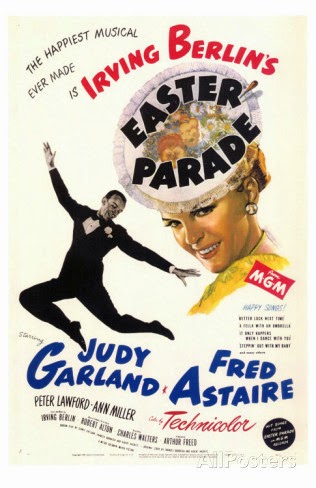
I never saw the movie Easter Parade, which was made two years after I was born, but I've always imagined this Irving Berlin song being sung by a man to a woman. The original version was the reverse, it's Judy singing to Fred about his top hat with a fancy pink ribbon for the band.
"On the Avenue, Fifth Avenue, the photographers will snap us, and you'll find that you're in the rotogravure." So, what is "the rotogravure"? It's a process developed in the nineteenth century that allowed newspapers to print color photographs and artwork on cheap newsprint paper, using rotary cylinders.
Fred Astaire intended to retire before Easter Parade was made, but agreed to take the male lead when Gene Kelly became unavailable.
India Pale Lager? I've long been a fan of India pale ales, or IPAs as they're usually called. I like their intense hop bitterness balanced, in the best of them, by a rich barley malt flavor. I didn't know quite what to expect from this lager offering by Coney Island Brewing Company. "India Pale" made me expect big flavor, so I paired it with a Vietnamese bánh mì from Hanco's, doused with some extra hot sauce.
I poured, and was rewarded with a full, foamy head. The color (photo above) was a golden amber. I took a whiff: the aroma was powerfully hoppy, with some floral notes. My first sip made my taste buds confirm the evidence of my nose. The hops have it! A few bites of the sandwich convinced me it was a good pairing. Still, I thought, while this beer goes well with spicy, flavorful food, is it something I'd want to drink by itself?
After a few minutes, though, the beer started to open up. I began to get some of the "[b]ig citrus and passion fruit aromas" promised on the label and on the brewer's website. The flavor also became more rounded, with fruit overtones softening the hoppy edge. I realized that I should have taken the beer out of the fridge and poured it a few minutes before tasting.
I checked the ingredients on the website. Five kinds of hops are used: Galena, Warrior, and Simcoe, all of which are considered "bittering" hops; Cascade, which is moderately bitter and gives a floral aroma; and Citra, a fairly new variety that has quickly become popular (with some dissenters) and that accounts for the notes of passion fruit. There are four malts: two row barley (commonly used in the best beers and ales), malted wheat, oats, and biscuit malt (I had to look that up). The last three would, I believe, tone down the flavor of the two row barley, and, set against the assertiveness of the hops, explains the beer's lack of any noticeable malt flavor or aroma.
On balance, this is a good beer. It would go very well with spicy food like bánh mì, Hunan or Szechuan cuisine, and the more picante of Mexican dishes. At a moderate 4.8 percent alcohol by volume, it shouldn't get you in trouble too quickly. My preference continues to be for IPAs that balance the hops with malt. Still, I would drink this again, maybe with my next takeout vindaloo curry.
So, what about this Coney Island Brewing Company? Is the beer made on Coney Island? No, it's brewed upstate, in Clifton Park, just south of Saratoga Springs. Coney Island Brewing is owned by Alchemy & Science, a "craft beer incubator" that is , in turn, owned by Boston Brewing Company, makers of the Sam Adams line of brews.
Next on my beer tasting agenda is Coney Island Brewing's Mermaid Pilsner. I'll be reporting on it soon.
Note: I've updated the post to reflect the fact that Coney Island Brewing is now owned by Alchemy & Science.
WHY, WHEN THE CREEDENCE CLEARWTER PUT OUT WITH THEIR "TRAVELIN' BAND" EVERYBODY SAY WHEEE-OO BUT I KNOW IT CAUSE THEY ONLY DOING "LONG TALL SALLY" JUST LIKE THE BEATLES ANDTHESTONESANDTOMJONESANDELVIS....
--Little Richard, on the Dick Cavett show, sometime in the early 1970s, quoted in Greil Marcus, Mystery Train (5th Ed., Plume, 2008).
Today is the King's birthday. In the video above, taken from the movie King Creole (1958), he does his version of "Long Tall Sally."
I first met Lou Reed at the Holiday Fundraiser Fair at Grace Church in Brooklyn Heights, the day after Thanksgiving, 1967.
Lou at the Grace Church Fair? My wife has been a stalwart Fair worker for maybe the last thirteen years or so. Of course, 1967 was well before our time here in the Heights. I was starting my first year of law school in Cambridge, Massachusetts and she was a sixth grader at a Catholic school in Lynn, a few miles away. Had we been introduced at the time, and told that we would someday be married, we would both have been very surprised, perhaps even (at least in her case) horrified. (I would probably have thought: "Well, she's not the upper middle class WASP princess of my dreams, but she is pretty." She might have thought: "What an pretentious, pseudo-intellectual twit.")
Anyway, Lou was not present in person at the '67 Fair. Mr. Philips, fourteen at the time, "met" him in the form of a stack of the first Velvet Underground LPs (you can always get some really good stuff at the Grace Church Fair; trust me), one of which he bought, took home, played, and didn't like. He described Lou's vocal delivery as "Bob Dylan with a Brooklyn hitter accent." Two years later, stoned, and with a friend, he pulled the album out, played it, and SHA-ZAM! He was converted.
Later, Mr. Philips had several in person encounters with Lou, almost all of them in music stores. In one of these, he did manage a brief, inconsequential conversational exchange about a guitar. I was once (apart from the Detroit concert) in Lou's presence. This was at a party, sometime around the '70s-'80s cusp, in the then edgy (now touristy) Meat Packing District. My friend Charlie (not to be confused with Binky's friend Charlie) pointed him out to me, standing maybe twenty feet away. I resisted the temptation to introduce myself, knowing I was not cool enough to merit his attention.
Mr. Philips writes that he was in the Grace Church Choir (by which he presumably means the Youth Choir) for three years. Among his choir mates at that time might have been Robert Lamm, later keyboardist, vocalist, and songwriter for Chicago. Harry Chapin would have preceded him by a few years.
A little weekend silliness. Some of us can remember when a visit to the movie theater began with a newsreel and an animated cartoon, along with previews of coming attractions, before the feature film. The cartoons I remember were mostly from Walt Disney (e.g. Donald Duck and Mickey Mouse) or Warner Brothers (e.g. Bugs Bunny and Porky Pig), but there was another studio, Terrytoons, that gave us some lesser known but interesting characters like Heckle and Jeckle, and a few that became TV staples like Mighty Mouse and Deputy Dawg. I don't know the name (if he had one) of the cat in the toon shown above. He bears some resemblance to Warner's Sylvester, and he has as much trouble with the mice as Sylvester does with Tweety. His adventures in this episode can only be described (despite its 1940 date) as psychedelic.
"Wild Weekend" by the Rockin' Rebels was recorded in 1959 by two Buffalo DJs, Tom Shannon and Phil Todaro, for their Mar-Lee (named for their girlfiends) label. Shannon and Todaro had written "Wild Weekend" as a theme song for their radio show on WKBW. It became a regional hit in the Northeast, securing the band a spot on the Dick Clark show. In 1962, it was re-released on the nationally marketed Swan label, and in 1963 it became a major hit, reaching number eight on the pop charts. This makes it, to the best of my knowledge, the only top ten hit to have originated in Buffalo, a city with which I have some familiarity. You can get the tangled history of both the music and the band and a discography here.
John Fogerty isn't from Buffalo, but listen to "Rock and Roll Girls." Instrumentally, it's practically "Wild Weekend" redux from the get-go, opening with the same hooky run and with sax accompaniment that sounds very similar to the Rebels'. Fogerty nails it in the vocal toward the end of the song with these words:
If I had my way, I'd shuffle off to Buffalo,Sit by the lake, and watch the world go by....
WKBW, home of Shannon and Todaro, also had for a time one of America's best known DJs, Dick Biondi. There's a sample of Biondi's frenetic style in the clip above. Biondi's edgy humor--he adumbrated the "zoo" style that became widespread on pop radio in the '70s--was often directed at station management, which sometimes led to his being fired. He became best known when he moved from WKBW to another 50,000 Watt platform, Chicago's WLS. Later he had a gig with KRLA in Los Angeles.
This video was made in the late 1980s by a band that broke up in 1990, so I may fairly be accused of exhuming a dead horse to flay it. In defense I offer first, it's so screechingly awful (I've never liked the Heartland Records/ Sonic Youth/ "noise metal" genre) that I couldn't resist sharing it (OK, call me a sadist); and second, it unfairly maligns a small city (technically a "town") with which my admittedly tenuous connections are all pleasant. The only time I ever spent there, apart from traversing its outskirts on the Mass Pike, was when I had Thanksgiving dinner in 1969 thanks to a delightful young woman, then a Harvard senior, who worked on floor staff at the now lamented Lincoln's Inn, and her parents, who shared their table with me and several of my law school friends. My continuing connection is through two friends, one of whom grew up entirely (the one who introduced me to Dogfish Head 90 Minute Imperial IPA), and the other partly (the one who introduced me to the Brooklyn Bridge cactus), there.
Framingham, Massachusetts (population 68,318 as of the 2010 census) sits roughly halfway between Boston and Worcester (a city with which my connection is even more tenuous). It's been designated one of America's 100 best small cities by CNN. It has its normal share of annoying inhabitants, both human and animal, but it's certainly no hellhole. It was at least for a time the home of Crispus Attucks, considered by some the first casualty of the American Revolution. In the years leading up to the Civil War it was, in common with my adopted home, Brooklyn Heights, a center of the antislavery movement. It has a large Brazilian immigrant community, so you can probably get goodbacalhauand feijoada there.
The video starts, over a portentous repeated strum, with an aerial view of a treeless suburban spread of Malvina Reynolds' ticky-tacky houses, evidently somewhere in the high plains or desert, certainly not New England. Then, with a hissing snare crescendo, we're transported down to one of these houses, where the protagonist lies asleep, at first still, then agitated. Cut to the band, shot in near darkness, appearing to be the spectral figures who disturb his sleep. A voice begins a droning chant:
He was a company man, on the lifetime plan, He gave them forty years; they gave him a watch...
What follows are evidently stock scenes from 1950s movies or Father Knows Best style TV sitcoms, as our protagonist has breakfast with his pretty wife and adorable toddlers, then leaves for work. We then get, as the droning voice continues, scenes of factory workers lining up to punch their time cards and views of huge industrial plants, mostly of kinds that never existed in or anywhere near Framingham. As we shift to the interiors of these plants and see workers doing repetitive tasks, and the voice drones on, we do get one glance of what appears to be an auto assembly line, something that Framingham actually had for a time. The voice shifts out of its monotonous drone into a shriek, then a bellow:
This is what I DO! This is what I AM! I want to LIVE FOREVER, in FRAMINGHAM!
What, no retirement home in Florida? No, Framinghamforever! Then the yelling ends, and we get keening guitar as the workers leave the plant, our protagonist arrives home, his darling daughter removes his shoes and puts on slippers as he reads the paper, and the family goes to the dinner table. There, Dad seems glum as he picks at his food, perhaps contemplating the Meaninglessness Of It All, or mulling over the gambling debts he's run up without his wife's knowledge, or both. The kids are excused, and Mom looks concerned. Cut to exterior, where we see the bedroom light going out. Nothing like a roll in the hay to chase away those existential blues, but we suspect it ain't in the cards.
What seems odd about this product of the late 1980s is that it mocks an America that was, if not entirely a thing of the past at that time, well on its way out: an America of plentiful manufacturing jobs that paid well enough to provide middle class comfort, and gave a reasonable expectation of lifetime employment.
Nice Strong Arm came from Austin, and moved to New York after the success of their first album, Reality Bath ("Framingham" is from their second, Mind Furnace). What made them pick on Framingham? I suspect they just needed a three syllable name to fill out the measure of those last shouted lines. Allentown would have done as well, but Billy Joel had already claimed it.
Jamestown, New York is a city about half the size of Framingham (2010 population 31,146). I got to know it well in the 1970s when, as a LeBoeuf associate, I did work for a client there. Jamestown was a furniture manufacturing center, and Maddox Table was one of its largest employers. If you follow the link immediately above to the first installment of my LeBoeuf saga, you can read about my first visit to Jamestown and find the "Maddox Table" video embedded there as well.
"Maddox Table" is from 10,000 Maniacs' first album, The Wishing Chair, which was produced by Joe Boyd, who had produced albums by several English folk-rock groups, including Fairport Convention. This should tell you we're a long way from noise metal. The lyrics, by Natalie Merchant, tell of the drudgery of factory labor ("The legs of Maddox kitchen tables/ My whole life twisted on a lathe") by an immigrant worker ("My first English was/ 'Faster, boy, if you want your pay'"). As in "Framingham" we have a contrast with after work life, but here it's a tale of courtship, with Vaudeville, movies, and Sunday trolley rides to Bemus Point, then an amusement park, now a more upscale attraction. Ms. Merchant does give us some inscrutable lyrics: whatever does "Oh, my Dolly was a weak/ Not a burdened girl" mean?
Perhaps the most important contrast with "Framingham" is that "Maddox Table" recognizes the role of unions in factory workers' lives:
To your benefit we strike or bargain, With the waving fist a union man, Not just for Smokes, spirits, candy, and cologne, But for Automobile keys, Cash in the bank, And the deed On a place called home.
Then, there's the video. Instead of stock stuff from various repositories, we have scenes from the real Jamestown, from 1940 according to the text accompanying the video, though apart from the vehicles it looks as if it could as easily be from the 1950s. It shows the people of Jamestown at work and at play, and some of the scenes (particularly of the shirtless guy in the newspaper printing plant) show people who actually seem to be enjoying their work. I'm guessing this was a Chamber of Commerce production, intended to display the city's best side.
"Maddox Table" is a song about a real place, made by people who knew it well. It doesn't shy from the hardships of factory work, nor overly idealize what's to be enjoyed outside of work. The accompanying video may present an airbrushed version of Jamestown as it was, but at least it takes us there.
Listening to Jimmy's song made me think about waterbeds. I've never owned one, and never hope to. I'm sure that, in my cooperative apartment proprietary lease, somewhere in the fine print I read years ago and mostly forgot, there's a clause prohibiting them. The weight can put strain on structural elements, and a leak on a higher floor could send water cascading down. Maybe this is why I haven't heard of waterbeds in years: I live in a city of apartment dwellers. Perhaps I have suburban acquaintances who are frolicking on waterbeds but somehow failing to mention this to me. Out of curiosity, I did a web search for "waterbeds New York" and found one dealer in suburban Farmingdale.
Bing Crosby's rich baritone is one of my early childhood memories. My parents had his Christmas album, from which I especially remember his stirring rendition of Adeste Fideles, sung in Latin and then in English as "O Come All Ye Faithful", and "White Christmas", on which he sounded as if he had a bit of a cold; for a long time I thought it was "Wide Christmas". Dad and Mom, though neither was Irish, also had his album of songs from the auld sod, which included such soulful traditional ballads as "Mac Namara's Band" and " It's The Same Old Shillelagh". One of my earliest cinema memories is The Road to Bali, one of several "Road" movies, made from the early 1940s to the early '60s, starring Bing, Bob Hope, and Dorothy Lamour.
"My Suppressed Desire", for which I thank Mike Pearl for the link, is from much earlier in Bing's career. Bing isn't credited by name on this 1928 record by Paul Whiteman's Rhythm Boys, with whom Bing did his first recordings. On this song, Bing does some scat singing, which I once had the temerity to compare to abstract expressionist painting.
Anyway, I love this song. It's the theme song from a movie titled Gang War, which, coincidentally, was edited by Archie Marshek, who also edited The Road to Bali.
This was a favorite of Nick Tosches. I remember his repeatedly, and unsuccessfully, cajoling Delbert McClinton to do it at the Lone Star Cafe. The sound and video quality on this vintage clip, courtesy of Glauco Malagoli, isn't the greatest, but Louis Prima's talent shines through. Keely Smith sings and acts wonderfully. Nick also gets a credit on the clip.
I clearly remember the first time I heard rock and roll. It was 1956 and I was ten, riding in our car with my father on a two lane road through the pine woods of the Florida panhandle, listening to radio from one of the nearby towns (Crestview? DeFuniak Springs? Niceville?). I'd heard of Elvis Presley, even seen a photo--I think in TV Guide--of him, with his carefully coiffed ducktail, spit curl dangling over his forehead, wearing a frilly shirt that may even have been lavender. I knew girls went crazy over him, and supposed he must be a crooner in the manner of Frank Sinatra. So, when the deejay said, "And now, here's Elvis Presley," I expected a romantic ballad. Instead, I heard "You ain't nothin' but a hound dog," in a voice that was between a bellow and a snarl. "This is a song this guy did as a joke," I thought, "but I love it."
I didn't wonder about the provenance of the song; indeed, I may not even have known the word "provenance" at the time. If I'd been asked, I'd probably have guessed that Elvis wrote it, or that it was a folk song from that mysterious state a little to the west, Mississippi, where Elvis grew up, and which must have lots of really pretty women, since it seemed to produce more than its expected share of Miss America finalists. If I'd been told it was written by two Jewish guys in L.A., I'd have been surprised. Elvis might have been, too. It had previously been recorded by African American blues singer "Big Mama" Thornton, and Elvis would likely have thought it was of African American origin, like his earlier local Memphis hit, "That's All Right", written by Delta bluesman Arthur "Big Boy" Crudup.
Those two guys in L.A. were Jerry Leiber and Mike Stoller. Both came from the East Coast--Leiber from Baltimore and Stoller from Long Island--and met in Los Angeles after their families moved there. Leiber was the lyricist; Stoller the composer. They met at a record store, and became friends because of their shared love for rhythm and blues. "Hound Dog" was one of their earlier joint efforts; "Big Mama" had a minor hit with it on the R&B charts in 1952. They went on to become the most influential songwriters and record producers in American pop music over the second half of the past century. They produced the Drifters' 1959 hit "There Goes My Baby", which introduced production techniques into R&B, such as the use of strings, that foreshadowed Phil Spector's "wall of sound"--Spector got his start in the music business working for Leiber and Stoller--and thereby determined the quality of much of pop music in the early to mid 1960s. Leiber and Stoller also co-wrote, along with former Drifters lead singer Ben E. King, the R&B classic "Stand by Me", which became a number one hit on the R&B charts, and number four on the pop charts, for King in 1961.
Leiber and Stoller didn't limit their work to R&B. They wrote "Is That All There Is", the "existentialist song" with which Peggy Lee went to number eleven on the pop charts, number one on the "adult contemporary" chart, and won the Grammy for best pop vocal by a female singer in 1970. They also wrote "Black Denim Trousers and Motorcycle Boots", a 1955 hit for the Cheers. Considered part of the teenage tragedy genre popular in the late 1950s, it doesn't have the maudlin quality of some later hits like "Teen Angel" by Mark Dinning or "Tell Laura I Love Her" by Ray Peterson (misspelled "Paterson" on the linked video). I was surprised to learn that "Black Denim Trousers" was translated into French with the title L'Homme à la Moto and, as such, was recorded by Edith Piaf. In 1979 contemporary art music composer and pianist William Bolcom and his wife, mezzo-soprano Joan Morris, recorded an album, Other Songs by Leiber and Stoller, that features, along with "Is That All There Is", some of their lesser-known works in which, in the words of a Gramophone review, "the simplicities of rock are abandoned in favour of giving an American accent to approximately the sort of music that was heard in the artistic cabarets of Berlin and Paris during the 1920s."
When I think of Leiber and Stoller, though, I think mostly of their work with the group with whom they are most closely associated, a four man R&B ensemble called the Coasters. They had a string of hits, all written by Leiber and Stoller, from 1957 through 1961. Their songs had wacky, engaging lyrics, mostly done in an upbeat style and featuring occasional spoken breaks. I was a great fan during my junior high and high school years. The clip above is of "Yakety Yak", their only number one hit. This is the original 1958 version, featuring a terrific, snarly sax break by King Curtis.
Jerry Leiber died last Monday, at the age of 78. Mike Stoller survives. As I noted in an earlier post, the people who shaped popular culture in my youth are dying at an increasing rate. Jerry Leiber wrote the lyrics to much of the soundtrack of my salad days.
...or, it may not. You'd have to be well over thirty to remember National Airlines (not to be confused with a cargo and charter carrier based in Ypsilanti, Michigan), which was founded in 1934 and merged into Pan American World Airways in 1980. Pan Am went into bankruptcy and ceased operating in 1991. In its heyday, National was strong on two routes: the East Coast route from the Northeast to Florida, and the Southern Tier transcontinental route connecting Florida, Texas, and California.
AirNikon
The ad shown in the clip at the top, which aired on TV in the early 1970s, continued a tradition of sexual innuendo that began in the '60s and culminated in the 1970s with the "fly me" (perhaps riffing on the old "Coffee, tea, or me?" gag) campaign, during which National painted women's names on its planes (see "Elaine" in photo above), and also aired ads like this:
As this Time article reported, some flight attendants (then commonly called "stewardesses"--male attendants were rare in those days) objected to this campaign; in particular, to the company's requirement that they wear "fly me" buttons on their uniforms. The article quotes National's PR director: "We had no preconceived idea of injecting a suggestive leer into the campaign." Um-hmmm.
According to one of the comments on the "I'm Maggie, Fly Me" video, the campaign was the brainchild of Dick Wolf, who went on to create the TV series Law and Order.
A year ago last May, I did a post here with the title "Jazz and the Visual Arts", which included an image of the cover of Charles Mingus' album Mingus Ah Um. The painting reproduced on the cover was by an artist unfamiliar to me, S. Neil Fujita. I soon noticed, from my Site Meter, that this post was attracting lots of hits off web searches, many of them for generic topics like "album cover art" or "jazz album covers", but also many for Fujita. This piqued my curiosity, and I thought I should do a web search for him, but other matters seemed more urgent. A few days ago, I noticed a spike in visits to S-A B, and, checking the details, saw that many were off searches for Fujita. I did my own search and learned that he died last Saturday at the age of 89.
Fujita was born and raised in Hawaii, the son of Japanese immigrant parents. The initial "S" is for Sadamitsu, his given name at birth; the name Neil was assigned to him when he went to a boarding school in Honolulu. He went to art school in California, but his studies were interrupted after Pearl Harbor when he, like thousands of other Americans of Japanese origin or parentage, was sent to an internment camp. He left the camp by volunteering for the U.S. Army, and served with the 442nd Regimental Combat Team, a unit consisting almost entirely of Japanese Americans, which won many honors for bravery in combat in Italy and France. After the war, he completed his art studies and went to work for an advertising firm, where he produced award winning graphic designs. His success led to a job at Columbia Records designing album covers, including Mingus Ah Um and Dave Brubeck's Time Out (shown above), both of which featured his paintings, and 'Round About Midnight by Miles Davis.
Fujita later formed his own firm, and his commissions included many book jacket designs, the best known of which are probably Truman Capote's In Cold Blood and Mario Puzo's The Godfather. Fujita discusses his career in detail in his 2007 interview with Steven Heller. He has also written an autobiography, Mouth of Reddish Water. Late in life, Fujita returned to his original passion, painting.
Yesterday was the 103rd anniversary of the birth of Barbara Stanwyck, one of the most versatile, and perhaps influential, actresses of the past century. Born Ruby Catherine Stevens here in Brooklyn, she attended Erasmus Hall High School, and worked for a time at the telephone company before entering showbiz as a chorus girl in 1924. Four years later she went to Hollywood and began a career that lasted for nearly six decades. The film role for which she is perhaps best remembered is that of the villainous Phyllis Dietrichson, playing opposite Fred MacMurray in Double Indemnity:
In the 1960s she played Victoria, matriarch of the Barkley clan in the TV western The Big Valley, and twenty years later was Constance "Conny" Colby Patterson in The Colbys. Over the course of her movie career, she was nominated for four Oscars, but never won. She received an honorary Academy Award for "superlative creativity and unique contribution to the art of screen acting" in 1982. She died in 1990.