
Thursday, November 08, 2012
Snow!

Wednesday, November 07, 2012

Monday, November 05, 2012
Vote!
This video is four years old, which is why the wall poster says "November 4." I remember Tuesday, November 4, 2008 very well. I had voted early in Brooklyn, and spent Saturday through Tuesday in the suburbs of Buffalo, ringing doorbells, handing out literature, and giving my spiel about voting for the candidates I favored. I spent election evening in a campaign headquarters in East Aurora, New York (which is roughly 130 miles west of Aurora, New York; go figure) and had a mouthful of pizza and a delightful endorphin rush when the projection for Ohio was announced, as I hope I will tomorrow night. But, and I do mean this, whoever you're supporting, please vote. Join my daughter, who just turned 19 and is voting for the first time. If you don't vote, well, you just might feel like you got hit by a linebacker.
Saturday, November 03, 2012
The boat ride to work; the long walk back.


Arriving at 34th Street, I boarded a free shuttle bus that makes a loop through Midtown, and dropped me off two blocks from where I work. Elapsed time door to door was about an hour and a half, because I just missed a ferry and had to wait twenty minutes for the next one. Also, the shuttle bus had to negotiate heavy traffic.
On Thursday, I left work at 4:15 to avoid the rush, and was able to get on one of the free shuttle buses the MTA was running from Midtown to Brooklyn during the subway blockage. There was a small group waiting for the bus at Lexington Avenue between 54th and 55th streets, so I was able to get on and find a seat. The bus became very crowded when we stopped near Grand Central Station, It took us about an hour to get to Jay Street in Brooklyn, about a ten minute walk from where I live.
On Friday I left work at about the same time, but found the sidewalks near the bus pickup so crowded that I decided to walk down to the ferry terminal. A few blocks below 42nd Street, I noticed there were no more traffic lights, or lights of any kind. I had entered the blacked out zone. When I got to the 34th Street terminal, I found a line of people waiting to get on the ferry that extended as far as I could see. Since ferry service was to stop at 6:00, I decided that it was likely not all of these people were going to get on. My only realistic option was to walk home, something I did before during the December 2005 transit strike.
I walked south on First Avenue, past the blacked out New York University and Bellvue hospitals, both of which had been evacuated. As I passed shuttered restaurants and bodegas, I noticed the pungency of decaying food. After I crossed 14th Street, I passed a little cafe that was lit up and crowded with people. "Does that place have its own generator?" I wondered. Then I noticed that the pedestrian crossing signal ahead of me was working. After four days of blackout, power had been restored to the East Village.
A resident celebrated by playing his electric guitar on the fire escape.

Subway service has now been restored between Brooklyn and Manhattan, so my commuting will no longer be so adventurous.
Sunday, October 28, 2012
Live blogging Hurricane Sandy from Brooklyn Heights
An encouraging omen? Brooklyn Heights Blog reader Jay took this video from the Brooklyn Heights Promenade of a rainbow appearing to extend from the Statue of Liberty to lower Manhattan.
9:30 a.m., Tuesday, October 30: There's still a brisk wind but, at the moment, no rain. Lots of people are out, and the flimsy tape barrier across the Promenade entrance is being ignored with impunity. Our building crew are out clearing leaves from the sidewalk.
Damage to the Brooklyn Heights area has been limited to downed trees and limbs and some minor structural damage. Nearby low-lying areas have been flooded--the storm surge was a whopping thirteen feet above normal--and, in a flooding related incident, there was a fire, evidently caused by electrical problems, in the basement of a large co-op apartment building just below the Heights. Fortunately, no one was hurt.
Other areas of the City were not so fortunate. Probably the worst disaster was a fire that destroyed about eighty houses in the Breezy Point section of Queens. There is extensive damage to shorefront properties throughout the region. As has been widely reported, an explosion destroyed an electrical substation in lower Manhattan, and much of that part of the City, which includes the financial district, will be without power for an indefinite period. A concern for Brooklyn residents like me is that the subway tunnels connecting Brooklyn to Manhattan have been flooded with salt water, which could damage switches and signals and keep trains from running for several days.

Though worlds of wanwood leafmeal lie....
Gerard Manley Hopkins, Spring and Fall (1918).
It's dark outside, and there's a steady rain falling, The wind seems to have abated, but as I type this, there's a strong gust. I'll be back in the morning.
4:40 p.m.: Despite the police barrier, and a cruiser occasionally coming by with a loudspeaker imploring people to get off the Promenade, they keep coming. This is confirmed by the video made by my BHB colleague Karl Junkersfeld today, featuring an appearance by our publisher, Homer Fink.
Update: The Daily Beast has this snarky view of what's going on in the neighborhood.
2:30 p.m.: The wind is stronger and steadier, but there are still people on the sidewalks, some walking dogs.
11:30 a.m.: The wind is picking up again. Tape has been stretched across the entrance to the Brooklyn Heights Promenade, which is part of the New York City Parks system, and therefore subject to an order closing all NYC parks for the remaining duration of the storm. A civilian leaving the Promenade helpfully lifts the tape for an NYPD car to enter.
10:30 a.m.: I decide to take a walk to the Brooklyn Heights Promenade, just across the street from where I live. The wind is minimal, a few desultory drops of rain come down, and lots of people are out. Afterward, I walk back a block and find our local supermarket, Key Food, is open, so I'm able to score two things I forgot yesterday: half-and-half for my coffee and kitty treats.
Fellow Brooklyn Heights Blog contributor Chuck Taylor went out with his camera earlier and got these photos.
8:15 a.m. Monday, October 29. There's a strong, steady wind, and some rain has fallen during the night. A neighbor is walking his French bulldog.
10:30 p.m.: the Jersey lights are still bright, the wind has settled, and The Weather Channel's storm tracker shows the center of the storm still a little south and east of Cape Hatteras. The North Carolina Outer Banks must be taking quite a pounding now. TWC's projected path has it somewhere well east of the Virginia capes tomorrow evening (gad, this thing moves slowly), though we should be feeling its effects pretty strongly by then. Projected landfall is somewhere around the mouth of Delaware Bay Tuesday morning. I hope Cape May's Victorians emerge unscathed.
It's 8:55 p.m. and I can still see New Jersey from my window. The wind seems to have calmed down a bit.
At 6:30 p.m. I realize I've forgotten to put Idaho potatoes in the oven prior to my wife's safe arrival from Boston, so I go on an emergency run for Tater Tots. I find the wind picking up, but still no wet stuff.

At 5:21 p.m., dusk is approaching. The sky is a solid gray overcast. The playground is empty. There is a steady, soft breeze. Sandy, it seems, will arrive after nightfall.

For the duration, I'll be posting updates, including photos when possible, on the storm's progress as seen from my window overlooking Pierrepont Place in Brooklyn Heights. If things get exciting enough, I may include some video snippets. This was the scene at 10:20 this (Sunday) morning: some sunshine, a gentle breeze, and kids in the playground. New York City is taking storm preparation very seriously: evacuation orders have been issued for low lying areas as a storm surge that could be as much as eight feet above normal is possible; and the subway system is shutting down starting at 7:00 this evening. Stay tuned.
Saturday, October 27, 2012
Linda Laurie, "Ambrose (Part 5)"
This was a spooky novelty hit for Brooklynite Linda Laurie in 1959. (There were no parts one through four.)
Happy Halloween!
Happy Halloween!
Monday, October 22, 2012
George McGovern, 1922-2012

Later, I could claim an indirect connection (besides the voting one) to him: I had some brief but pleasant conversation with his sister, who was married to the minister of my parents' church.
He served in World War Two as an Army Air Corps bomber pilot, flying the B-24 Liberator, and was awarded the Distinguished Flying Cross for a safe emergency landing which he and his crew survived, despite the B-24's vulnerability in such situations because of its high-mounted wing.
He was brought up in the traditions of prairie populism and, through his Methodist minister father, the Social Gospel, both of which, along with McGovern, are eulogized in today's New York Times by Josh Garrett-Davis. Goodbye to a very good man.
Saturday, October 20, 2012
Stanley Fish on Gertrude Stein on Cézanne
 |
| Paul Cézanne, Still Life with Apples and a Pot of Primroses, c. 1895 (oil on canvas). |
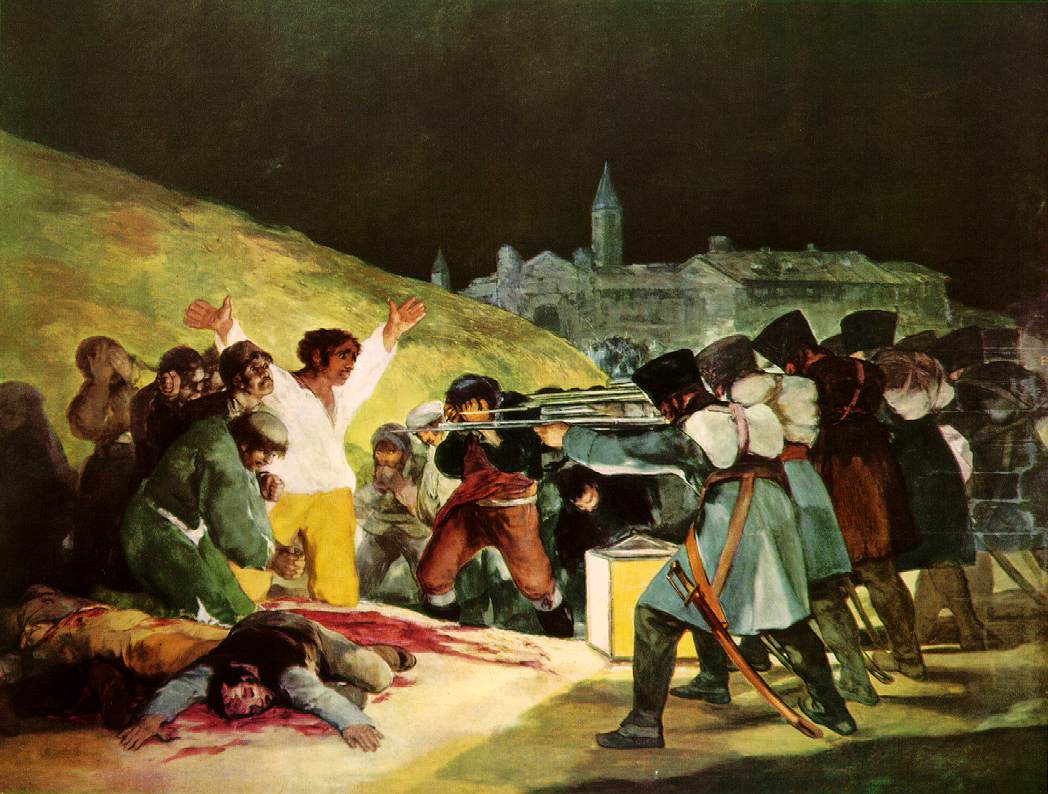
Usually a sentence does not deliver its meaning until the end, and only at the end do its components acquire their significance and weight. But what Stein wants is meaning to be present at every instant, to be always the same in weight and yet different as each word is different. Before Flaubert and Cézanne, she explains, "composition had consisted of a central idea to which everything else was an accompaniment and separate but was not an end in itself." But then "Cézanne conceived the idea that in composition one thing was as important as another thing. Each part is as important as the whole, and it impressed me enormously," and as a consequence, she continues, "I tried to convey the idea of each part of a composition being as important as the whole" ("A Transatlantic Interview," 1946).Is Stein right about Cézanne? In the image of the painting shown above, is the surface of the table as "important" (not in a structural but in a compositional sense) as the fruit, or the white cloth? Is the pot as important as the flowers, or the leaves? Cézanne's painting doesn't have the compositional drama of, say, Goya's The Shootings of May 3, 1808, in which the eye is drawn irresistibly to the man in the white shirt with outstretched arms. Still, one does notice things like the pot, the table, and even the walls, which have a mottled texture, more than one might in the work of many other painters.
What about Stein's writing? Fish gives us this sample:
When I first began writing I felt that writing should go on I still do feel that it should go on but when I first began writing I was completely possessed by the necessity that writing should go on and if writing should go on what had colons and semi-colons to do with it, what had commas to do with it what had periods to do with it what had small letters and capitals to do with it to do with writing going on which was at the time the most profound need I had in connection with writing.
--Lectures in America, 1935Does every part of this long sentence have equal weight? The frequent repetition of the phrase "writing should go on" seems to give it particular importance. The words "completely possessed" and "most profound need" draw attention to what immediately follows them. There's a cute irony in her use of a comma just before "what had commas to do with it [?]" Nevertheless, this sentence is more flowing stream than marble monument. To say that every element of a sentence should "be the same in weight" (Fish's words, not Stein's) brings to mind Mary McCarthy's quip about Lillian Hellman: "Every word she says is a lie, including 'and' and 'the.' " But that, as Fish (and, I suppose, Stein) would agree, is a reductio ad absurdum.
Stein, and perhaps Cézanne, adumbrated the aversion to "privilege" that came to characterize "postmodernism" or "theory" in late twentieth century academic discourse. In painting, this was carried a step further by Pierre Bonnard, whose compositions are, as a whole, much busier than Cézanne's, and who frequently marginalized elements that would have been afforded pride of place in the works of other artists.
Fish continues his commentary on Stein with this observation:
The insight is theological, although Stein probably doesn't intend it that way. In a world created and presided over by an omnipotent God who fills all the available spaces, the distinctions between things, persons, and events are illusory, a function of a partial, divided, and dividing consciousness....If we would only...stop laboring to put discrete significances together in an effort to combine them into a larger whole, we would see, theologians tell us, that the larger whole we seek is already everywhere and that our very efforts to apprehend it themselves signify it.Image thanks to the Metropolitan Museum of Art's Heilbrunn Timeline of Art History.
Monday, October 15, 2012
Campy: The Two Lives of Roy Camapanella, by Neil Lanctot

Homered, flied out, fouled? Our "stylish stout"Roy Campanella was my first baseball hero. I was nine years old, living at Eglin Air Force Base, where my father was stationed, in the northwest panhandle of Florida. Neither of my parents was a sports fan, so I knew little of baseball at the age of five, when we went for a three year stay in England. My formal education began at a county council (what we would call "public") school there, and my first training in sports was in cricket, football (soccer), and rounders, a game that I later found had some similarity to baseball. We returned to the States in 1954, when I was eight, and I had to start re-learning how to be an American kid. I have vague memories of the '54 New York Giants vs. Cleveland Indians Series, the first I ever watched, and in which I had no rooting interest. By '55, though, I had absorbed enough baseball lore to know that the Yankees were the big, bad bullies (and the popular favorite, at least among my schoolmates), while the Dodgers were the scrappy underdogs. This, and the fact that Brooklyn was where I first stepped on U.S. concrete after our return from England, was enough to make me decide to back the Dodgers.
so nimble Campanella will have him out.
A-squat in double-headers four hundred times a day,
he says that in a measure the pleasure is the pay:
catcher to pitcher, a nice easy throw
almost as if he'd just told it to go.
-- Marianne Moore, "Hometown Piece for Messrs Alston and Reese"
I focused on Campy early in the Series. Being a catcher meant that he was on camera most of the time when the Yanks were at bat. His name made me think he must be Spanish or Italian (I was half right regarding the latter) and the shade of his skin, as it appeared on black-and-white TV, did nothing to contradict that. I soon learned, though, thanks to the TV commentator or one of my schoolmates (the games were all played in the afternoon then, and we were let out of class to watch them in the "cafetorium"), that he was a Negro (the polite word in 1955). That also played to my underdog sympathy. What made me a Campy fan, though, was his effusiveness and enthusiasm, the obvious joy that he took in the game, which was evident even on a grainy TV screen; that, and the big hits he got that helped power the Dodgers to their first World Series victory.
Neil Lanctot's Campy: The Two Lives of Roy Camapanella confirms the image of Campanella as a player who loved the game, both for the sheer pleasure of doing it well and for giving him, a mixed-race kid from a scrappy part of Philadelphia called Nicetown, a route to fame and a degree of financial security (player salaries, even for established stars like Campanella, were comparatively modest in the time before free agency, but he earned enough to start the Harlem liquor store that provided a comfortable income in his later years). Yet the portrait that Lanctot draws is of a complex and in many ways troubled man, even before the car crash that ended his playing career and made him quadriplegic (the "Two Lives" of the subtitle refers to the times before and after the accident). For baseball fans, there's plenty of action in this book, but it's more a personal and social history than a sports story.
The social history is that of the struggle for civil rights and racial equality, which was gathering momentum in the years when Campanella's career was taking off, and in which, as the second player of African heritage to make the Majors--the first having been his Dodger teammate, Jackie Robinson--he was perforce a part. "Perforce" because, as was known at the time and as Lanctot emphasizes, Campanella was not comfortable with the role of a racial advocate. In part, this was because of his focus on his career as a ballplayer, which engendered a don't-rock-the-boat attitude summed up in a statement Campanella may never have made--indeed, Jackie Robinson, to whom he supposedly made it, denied that he did--"It's nice up here. Don't spoil it." Lanctot thinks this probably was a broad paraphrase by the sportswriter Dick Young based on his understanding of a conversation between Campanella and Robinson after Jackie was ejected from a game for arguing with an umpire over a called third strike.
Campanella was no stranger to discrimination and racial hostility, having encountered the full panoply of Jim Crow traveling through the South when he played in the Negro Leagues, and later in Dodger training camp in Florida, as well as hostility from opposing fans and players--including many pitches aimed at his head--and from some teammates. It seems, though, that he believed his only effective response was with his bat and his throwing arm (thanks to early mentoring he learned to be very effective at throwing out runners trying to steal). He did lose control once during a game, when pitcher Lew Burdette of the Milwaukee Braves threw hard at his head twice during an at-bat that ended with Campy striking out swinging. When Campy scowled and headed for the dugout, Burdette shouted "Black n----r bastard!" Campy pivoted and headed toward the mound, bat in hand. He was caught by teammates and disarmed before he could reach Burdette, as the benches cleared. He later claimed he wouldn't have used the bat on Burdette, he just hadn't had time to get rid of it.
Lanctot notes one instance in which Campanella spoke out directly against discrimination. This was in the late 1950s, after the auto accident, when he and his family were staying at the Sheraton West on Wilshire Boulevard in Los Angeles, as guests of the Dodger organization. When Campy learned that blacks weren't allowed to use the swimming pool, and after complaints to the management proved futile, he went to Dodger owner Walter O'Malley, who withdrew the Dodgers' business from the hotel. This contrasts with an earlier incident, when Campanella was still a player, involving the Chase Hotel in St. Louis. The Chase had been a whites only hotel until the mid 1950s, when the owners of now-integrated baseball teams, including the Dodgers, convinced its owners to allow black players to stay there when their teams were in town to play the Cardinals. This was allowed under the stipulation that the black players could not use the hotel's public facilities, and would have to take their meals in their rooms. Robinson agreed to accept this arrangement. "Half a loaf, he reasoned," according to Lanctot, "was better than none." Campanella and other black Dodgers, however, chose to stay at the Adams, a black-owned hotel, whose owner courted the players by sending a stretch limousine ("usually with a blonde or two in the back seat", Lanctot quotes Dodger General Manager Buzzy Bavasi as saying) to pick them up, serving them "fat, juicy steaks", and, perhaps most importantly, by putting them in a different venue from the team's white manager and GM, giving them the opportunity to violate pre-game night curfew. This infuriated Robinson, and was a marker in his deteriorating relationship with Campanella.
That relationship, never especially cordial from the start, took a very bad turn when Campanella and some other black major leaguers went on an off-season barnstorming tour organized by Robinson in conjunction with the promoter Lester Dworman. Campanella signed on for a flat $5,000 but felt cheated when the tour drew big crowds and he learned that Robinson was getting a percentage of the gate. He asked to renegotiate his contract, but Robinson and Dworman both refused. After that, the two players barely spoke to each other. Lanctot suggests other reasons for the tension between them. Although Robinson grew up in poverty, he attended a junior college and then UCLA, where he was an athlete in several sports, prominently football and least prominently baseball. After service in the Army, in which he achieved officer rank, and a short time with the Negro League Kansas City Monarchs, he got into the Dodgers' minor league system, speeding his way to become the first African American in the majors. The fact that he had been to college and an Army officer may have made him, in the eyes of Dodger GM Branch Rickey, a better prospect to break the color barrier than someone like Campanella who came from a tough urban neighborhood, never went beyond high school, and had spent years toiling in the Negro Leagues and in Latin American baseball. It's likely that, in Campy's view, Robinson hadn't paid the dues he had, but got the glory of being first. Years after both had retired from baseball, during the height of the 1960s civil rights struggle, Campanella and Robinson publicly reconciled.
Another troubled aspect of Campanella's life was his relationships with women. He was married three times. The first, to his teenage sweetheart, Bernice Ray, was occasioned by her becoming pregnant, and was probably doomed from the start because of his grueling year-round schedule of playing in the Negro Leagues in the summer and in Caribbean or Latin American ball in winter. After six years and two daughters, they separated for good in 1944. Campy met his second wife, Ruthe Willis, while still married to Bernice, After the separation, he and Ruthe, who had a son, David, by a previous marriage, became inseparable. They didn't marry until several years later, but, as Lanctot notes, Campanella presented Ruthe as his wife and David as his natural son before they were married, and after he became a Dodger, sportswriters relying on his account wrote that he and Ruthe had married in 1939, omitting any mention of Bernice and Campy's two daughters, Joyce and Beverly. This exemplifies something Lanctot makes a minor theme: Campanella's occasional stretching or airbrushing of the truth. It's easy to speculate that he believed his unwanted role as a racial standard bearer made this necessary.
His marriage to Ruthe lasted the duration of his Major League career, and produced three children: two sons, Roy Jr. and Tony, and a daughter, named Ruthe like her mother and called "Princess." The marriage lasted some time after the January, 1958 car accident that made Campanella a quadriplegic. Ruthe found out that the accident was occasioned by a wee hours tryst with another woman, which left a tired Campy to drive home on icy roads. Despite this, they stayed married until 1963, although by Ruthe's and her friends' accounts much of the time after the accident he treated her atrociously. By the time of their divorce, Campy had a new woman in his life, Roxie Doles, who would become his third wife and remain with him until his death in 1993.
In the years after the accident, Campy managed to keep a positive public image. He got a daily five minute sports interview program, Campy's Corner, on WINS radio. His largely ghostwritten autobiography, It's Good to be Alive!, was published in September, 1959, received glowing reviews from the Herald Tribune critic Harold Kupferberg and from poet and Dodger fanatic Marianne Moore. He maintained good relations with the Dodger organization, although a hoped for job as a manager never materialized. Most gratifyingly for him, he was elected to the Baseball Hall of Fame in 1969.
For me, for the most part, Roy Campanella will always be what's engraved on my childhood memory: the "stylish stout" catcher with the accurate arm, powerful bat, and ready smile. From Lanctot's book, I know that behind that smile there was a deep sense of insecurity, exemplified by his need to dissemble about aspects of his life he considered embarrassing or inconvenient, and his reticence about speaking out on civil rights. Much of this might be ascribed to being born to a poor family, to being part of a minority subject to pervasive and humiliating discrimination, and to having his teenage years fall during the Great Depression. These were also the parameters of Jackie Robinson's early life, and he became a very different sort of person. Perhaps Campy's mixed racial heritage added to his difficulties. No doubt other factors, including Robinson's having been the beneficiary of some lucky breaks, contributed to the difference. Ironically, a later generation of activists would have applauded Campy's choice of a black-owned hotel and condemned Robinson as an "Uncle Tom" for being willing to accept "half a loaf" from a white-owned one.
Like all childhood heroes, Campy proved to be human. For that, I guess, I'm glad.
Addendum: Oh, yes. Almost forgot to mention. One of Campy's last services to the Dodger organization was to help train a promising young catcher named Mike Piazza.
Friday, October 12, 2012
Judy Dyble and SftBH, "I Don't Know Where I Stand."
I've had a crush on Judy Dyble since I got Fairport Convention's first album in 1970 and heard her sing this lovely Joni Mitchell song. Here is a recent video of her doing it with Songs from the Blue House, "the world's best ever East Angliacana group." Four years ago I posted a video of her, along with Vicki Clayton and a protean version of Fairport, one of Britain's leading folk-rock groups, doing an obscure Dylan song in French (go figure), which you can see here. I also included a video of Fairport from the time of that first album, doing the driving rocker "Time Will Show the Wiser" with Judy on harmony, in my iPod Log 4.
Above is a clip of Judy singing "(In the) Dreamtime," a song she wrote with John Gillies, from her 2009 album Talking With Strangers. She's joined here on vocals by another of the legendary ladies of British folk, Jacqui McShee of Pentangle.
Monday, October 08, 2012
Rich & Dan's Rye IPA, by Harpoon

Color: medium amber.
Head: modest, not long-lasting.
Aroma: hoppy; slightly floral.
Taste: like most IPAs, there is a forward hop bitterness, but here it's not overwhelming. I was wondering what difference the use of rye would make, expecting something that might taste like rye bread. It doesn't, but there is a subtle difference. In comparison to IPAs using barley, I'd say that the rye IPA has a flavor balancing the hops that I can only describe as "deeper." There's a pleasant toasty finish.
Overall: well made and satisfying. It went nicely with the spicy sandwich.
Friday, October 05, 2012
My movie career revived, in Italy.
In the second installment of my Dewey & LeBoeuf saga, I told how my late friend Charlie McCrann wrote a feature length horror movie script as an NYU class project, then later produced, directed, and starred in that film, in which I played a minor role. The movie has been released in various places and formats under various titles: Forest of Fear, Charlie's working title, in Asia; Bloodeaters, by which it was known at movie houses and drive-ins coast-to-coast in 1980-81; Blood Butchers I'm not sure where; and Toxic Zombies, under which it was packaged as a VHS tape, later DVD, and played on the USA Cable network.
Now I've learned that it's been revived in Italy and dubbed in Italian under the title Il ritorno degli zombi. Here is a link to a YouTube video of what is obviously a very negative -- at least I know what "merda" means -- of the movie. The part of the video that starts at 10:51 shows me unwisely asking a zombie who is crouching in the road if he wants a ride to town, then the zombie swinging his hatchet, then stage blood falling on my boots. The first line in my five or so minutes of screen glory, not shown in the video, was "What the Sam Hill happened to you?" I wonder how that came out in Italian? Whoever dubbed me made me sound better than I do in English, though.
Now I've learned that it's been revived in Italy and dubbed in Italian under the title Il ritorno degli zombi. Here is a link to a YouTube video of what is obviously a very negative -- at least I know what "merda" means -- of the movie. The part of the video that starts at 10:51 shows me unwisely asking a zombie who is crouching in the road if he wants a ride to town, then the zombie swinging his hatchet, then stage blood falling on my boots. The first line in my five or so minutes of screen glory, not shown in the video, was "What the Sam Hill happened to you?" I wonder how that came out in Italian? Whoever dubbed me made me sound better than I do in English, though.
Monday, October 01, 2012
Tom Rush and Circus Maximus bring the spring of 1968 to the fall of 2012.
This is a mini iPod log. On my walk Saturday morning, I heard two songs that were both staples of the late night DJs on WBCN, Boston's first "underground" FM rock station, in the spring of 1968. I was then on the shank end of my first year of law school, and had just endured my first Massachusetts winter after many years of living in Florida. It was a hard winter, even by New England standards, and when, around the end of April, the last of the snow had melted and it seemed that every tree on the Cambridge Common had erupted in riotous bloom, I was ga-ga with spring fever. This coincided with, and facilitated, my falling hopelessly for a pretty classmate who was never to be my lover but nonetheless unwittingly shaped the course of my life.
Under these circumstances I was especially sensitive to the music I heard, and many songs from that time have become madeleines for me: Judy Collins' cover of Joni Mitchell's "Both Sides, Now"; the Chambers Brothers' "Time Has Come Today"; Jesse Colin Young's solo version of "Four in the Morning" (an hour at which I occasionally heard it while cramming for exams); the Free Spirits' (a short-lived rock group that included jazzman Larry Coryell and drummer Bobby Moses) "Cosmic Daddy Dancer"; and, perhaps most poignantly, another Joni Mitchell cover, Tom Rush's "Urge for Going." This seemed an odd song for springtime, with its tale of impending winter, but it fit the mostly low key mood of the late night playlist. Two days ago, as occasional brisk gusts hit the Brooklyn Heights Promenade, I felt the stilted shiver of the spine at the words:
So I'll ply the fire with kindling, pull the blankets to my chin;At 66, these words have a different meaning than they did at 22; especially with the lines that follow:
I'll lock the vagrant winter out, and bolt my wandering in.
I'd like to bring back summertime, and have her stay for just another month or so.
A little bit further along I heard another song from the BCN spring of '68 playlist that I find haunting, "Wind" by Circus Maximus, a band founded by guitarist, keyboardist, and vocalist Bob Bruno and Jerry Jeff Walker. If you quite naturally think of Jerry Jeff as part of the Willie 'n' Waylon Texas cosmic good ol' boy phenomenon of the seventies, it's surprising to know that he had been part of a band that produced a lush, Southern California romantic version of West Coast psychedelia. You can hear it in the video above.
Sunday, September 30, 2012
Duncan Island departs; Alice Oldendorff returns.


Saturday, September 29, 2012
Two good things about the Mets this year.

Second, we have, for the first time since Frank Viola did it 22 years ago, a twenty game winner in the unlikely (I like the word "unlikely" in connection with the Mets: the first Mets game I attended, in the summer of 1985, was won by a two run homer off the "unlikely bat" of Howard Johnson) guise of knuckleballer R.A. Dickey. His is an unusual story for the Mets: instead of a star free agent who, upon donning the blue and orange, quickly did an impersonation of the Wonderful One-Hoss Shay on the centenary of Earthquake Day, he was a much traveled journeyman pitcher who found his stride--or should I say his sling?--with the Amazins.
I'm tempted to fall back on the comforting mantra--"Wait'll next year!"--of Brooklyn Dodger fans a half century plus a decade ago. But I know it ain't gonna be so. Nevertheless, I'll remain loyal.
Photo: Newsday.
Saturday, September 22, 2012
Geeshie Wiley, "Last Kind Words": blues in a minor key.
We think of blues as sad, and associate sadness with music in a minor key. Truth is, almost all blues is in a major key. I suspect the reason is that, while blues addresses life's hardships, it typically has a "we shall overcome" undercurrent; a sense that the singer is up to the challenge. An exception is "Last Kind Words Blues", recorded in 1930 by Geeshie Wiley, about whose life, according to this Wikipedia entry, little is known.
Tuesday, September 18, 2012
"Framingham" by Nice Strong Arm and "Maddox Table" by 10,000 Maniacs: contrasting visions of mid 20th century America.
This video was made in the late 1980s by a band that broke up in 1990, so I may fairly be accused of exhuming a dead horse to flay it. In defense I offer first, it's so screechingly awful (I've never liked the Heartland Records/ Sonic Youth/ "noise metal" genre) that I couldn't resist sharing it (OK, call me a sadist); and second, it unfairly maligns a small city (technically a "town") with which my admittedly tenuous connections are all pleasant. The only time I ever spent there, apart from traversing its outskirts on the Mass Pike, was when I had Thanksgiving dinner in 1969 thanks to a delightful young woman, then a Harvard senior, who worked on floor staff at the now lamented Lincoln's Inn, and her parents, who shared their table with me and several of my law school friends. My continuing connection is through two friends, one of whom grew up entirely (the one who introduced me to Dogfish Head 90 Minute Imperial IPA), and the other partly (the one who introduced me to the Brooklyn Bridge cactus), there.
Framingham, Massachusetts (population 68,318 as of the 2010 census) sits roughly halfway between Boston and Worcester (a city with which my connection is even more tenuous). It's been designated one of America's 100 best small cities by CNN. It has its normal share of annoying inhabitants, both human and animal, but it's certainly no hellhole. It was at least for a time the home of Crispus Attucks, considered by some the first casualty of the American Revolution. In the years leading up to the Civil War it was, in common with my adopted home, Brooklyn Heights, a center of the antislavery movement. It has a large Brazilian immigrant community, so you can probably get good bacalhau and feijoada there.
The video starts, over a portentous repeated strum, with an aerial view of a treeless suburban spread of Malvina Reynolds' ticky-tacky houses, evidently somewhere in the high plains or desert, certainly not New England. Then, with a hissing snare crescendo, we're transported down to one of these houses, where the protagonist lies asleep, at first still, then agitated. Cut to the band, shot in near darkness, appearing to be the spectral figures who disturb his sleep. A voice begins a droning chant:
He was a company man, on the lifetime plan,What follows are evidently stock scenes from 1950s movies or Father Knows Best style TV sitcoms, as our protagonist has breakfast with his pretty wife and adorable toddlers, then leaves for work. We then get, as the droning voice continues, scenes of factory workers lining up to punch their time cards and views of huge industrial plants, mostly of kinds that never existed in or anywhere near Framingham. As we shift to the interiors of these plants and see workers doing repetitive tasks, and the voice drones on, we do get one glance of what appears to be an auto assembly line, something that Framingham actually had for a time. The voice shifts out of its monotonous drone into a shriek, then a bellow:
He gave them forty years; they gave him a watch...
This is what I DO! This is what I AM! I want to LIVE FOREVER, in FRAMINGHAM!What, no retirement home in Florida? No, Framingham forever! Then the yelling ends, and we get keening guitar as the workers leave the plant, our protagonist arrives home, his darling daughter removes his shoes and puts on slippers as he reads the paper, and the family goes to the dinner table. There, Dad seems glum as he picks at his food, perhaps contemplating the Meaninglessness Of It All, or mulling over the gambling debts he's run up without his wife's knowledge, or both. The kids are excused, and Mom looks concerned. Cut to exterior, where we see the bedroom light going out. Nothing like a roll in the hay to chase away those existential blues, but we suspect it ain't in the cards.
What seems odd about this product of the late 1980s is that it mocks an America that was, if not entirely a thing of the past at that time, well on its way out: an America of plentiful manufacturing jobs that paid well enough to provide middle class comfort, and gave a reasonable expectation of lifetime employment.
Nice Strong Arm came from Austin, and moved to New York after the success of their first album, Reality Bath ("Framingham" is from their second, Mind Furnace). What made them pick on Framingham? I suspect they just needed a three syllable name to fill out the measure of those last shouted lines. Allentown would have done as well, but Billy Joel had already claimed it.
And now, for something completely different:
Jamestown, New York is a city about half the size of Framingham (2010 population 31,146). I got to know it well in the 1970s when, as a LeBoeuf associate, I did work for a client there. Jamestown was a furniture manufacturing center, and Maddox Table was one of its largest employers. If you follow the link immediately above to the first installment of my LeBoeuf saga, you can read about my first visit to Jamestown and find the "Maddox Table" video embedded there as well.
"Maddox Table" is from 10,000 Maniacs' first album, The Wishing Chair, which was produced by Joe Boyd, who had produced albums by several English folk-rock groups, including Fairport Convention. This should tell you we're a long way from noise metal. The lyrics, by Natalie Merchant, tell of the drudgery of factory labor ("The legs of Maddox kitchen tables/ My whole life twisted on a lathe") by an immigrant worker ("My first English was/ 'Faster, boy, if you want your pay'"). As in "Framingham" we have a contrast with after work life, but here it's a tale of courtship, with Vaudeville, movies, and Sunday trolley rides to Bemus Point, then an amusement park, now a more upscale attraction. Ms. Merchant does give us some inscrutable lyrics: whatever does "Oh, my Dolly was a weak/ Not a burdened girl" mean?
Perhaps the most important contrast with "Framingham" is that "Maddox Table" recognizes the role of unions in factory workers' lives:
To your benefit we strike or bargain,Then, there's the video. Instead of stock stuff from various repositories, we have scenes from the real Jamestown, from 1940 according to the text accompanying the video, though apart from the vehicles it looks as if it could as easily be from the 1950s. It shows the people of Jamestown at work and at play, and some of the scenes (particularly of the shirtless guy in the newspaper printing plant) show people who actually seem to be enjoying their work. I'm guessing this was a Chamber of Commerce production, intended to display the city's best side.
With the waving fist a union man,
Not just for
Smokes, spirits, candy, and cologne,
But for
Automobile keys,
Cash in the bank,
And the deed
On a place called home.
"Maddox Table" is a song about a real place, made by people who knew it well. It doesn't shy from the hardships of factory work, nor overly idealize what's to be enjoyed outside of work. The accompanying video may present an airbrushed version of Jamestown as it was, but at least it takes us there.
Friday, September 14, 2012
Canzone del Taglialegna dei Monty Python
Admit it. You've long wanted to hear Monty Python's "Lumberjack Song" in the language of Dante and Pirandello. Qui è.
Monday, September 10, 2012
GO Brooklyn: seven artists in two days.
GO Brooklyn was a borough-wide celebration of local artists, many of whom opened their studios to visitors over the past weekend.

My first stop was the studio of my friend Adam Suerte, painter, graphic designer, and tattoo artist (note his arms) which is in the basement of his Brooklyn Tattoo at 101 Smith Street, to which I plan to repair some day soon to get his Brooklyn Bridge design inked on my arm. 101 Smith also houses his Urban Folk Art gallery.

Hovey Brock is a painter I got to know when our daughters were in preschool together. His studio is at 104 Montgomery Street, near the Brooklyn Museum and Brooklyn Botanic Garden. Hovey's technique is to stretch a fine plastic grid across the canvas, apply acrylic paint, then remove the grid. This leaves a finely textured image. He describes his work on his website thus:
My paintings and works on paper are made up of many transparent layers that create an indeterminate space. The colors are intense, yet nuanced. They mimic light, but have density.

Mike's studio is in a location called Screwball Spaces, a complete floor in a self-storage warehouse building, located at 183 Lorraine Street in the Red Hook section of Brooklyn, that has been leased for use as artists' studios. On the way out, I saw a photographer's studio that caught my eye.


Thursday, September 06, 2012
Elvis Presley, Floyd Cramer and Auto-Tune
"Heartbreak Hotel" is one of the first rock and roll songs I can remember hearing. I was ten years old, riding in my parents' 1955 Chevy from Eglin Air Force Base, where we lived, to Pensacola for some shopping. My reaction at the time was that Elvis' staccato delivery of "You-make-me-so-lone-ly-ba-by" sounded like a broken-down helicopter. Later, as my scope of musical appreciation expanded to include the blues, I came to like the song.
One thing I didn't notice was the piano accompaniment. The two quick instrumental notes that follow the opening line, "Well, since my baby left me," and subsequent sung lines seem, on careful listening, to be guitar and piano chords struck simultaneously. The piano is first heard by itself starting at about 0.50 in the audio track above, doing rapid arpeggios in a high register, but softly. At about 1.32, during the short instrumental bridge, the piano comes through more boldly. If you listen to the song attentively, you hear the piano clearly, but if you're using it as background music, it's almost subliminal. Even if you do hear it, it doesn't command your attention, even though it's played very well. This is the mark of a first-rate studio musician.
The musician in question here was Floyd Cramer, who backed up Elvis and other stars for years. In 1960, though, he became known on his own because of the success of "The Last Date", which reached number two on the Billboard pop survey.
"The Last Date" featured a style of piano playing that Cramer may have invented, called "slip note." A finger lightly touches a key one note off the intended one, producing a soft sound, then slides onto the intended key and hits it with normal force. This subtle glissando imparts a quality of eeriness to an otherwise pretty but forgettable tune. This brings to mind the kerfuffle over Auto-Tune, a software program used by some pop artists to correct notes in their singing, generating a finished product in perfect pitch. As David Hadju has sagely pointed out in The New Republic, the real problem with Auto-Tune, to the extent that there is a problem, is not that it gives an artificial boost to the untalented, but that it could smother what is often best in music, that is, the slight imperfections that make it memorable. "Bessie Smith, processed through Auto-Tune, would have all the soul of Siri."
One thing I didn't notice was the piano accompaniment. The two quick instrumental notes that follow the opening line, "Well, since my baby left me," and subsequent sung lines seem, on careful listening, to be guitar and piano chords struck simultaneously. The piano is first heard by itself starting at about 0.50 in the audio track above, doing rapid arpeggios in a high register, but softly. At about 1.32, during the short instrumental bridge, the piano comes through more boldly. If you listen to the song attentively, you hear the piano clearly, but if you're using it as background music, it's almost subliminal. Even if you do hear it, it doesn't command your attention, even though it's played very well. This is the mark of a first-rate studio musician.
The musician in question here was Floyd Cramer, who backed up Elvis and other stars for years. In 1960, though, he became known on his own because of the success of "The Last Date", which reached number two on the Billboard pop survey.
"The Last Date" featured a style of piano playing that Cramer may have invented, called "slip note." A finger lightly touches a key one note off the intended one, producing a soft sound, then slides onto the intended key and hits it with normal force. This subtle glissando imparts a quality of eeriness to an otherwise pretty but forgettable tune. This brings to mind the kerfuffle over Auto-Tune, a software program used by some pop artists to correct notes in their singing, generating a finished product in perfect pitch. As David Hadju has sagely pointed out in The New Republic, the real problem with Auto-Tune, to the extent that there is a problem, is not that it gives an artificial boost to the untalented, but that it could smother what is often best in music, that is, the slight imperfections that make it memorable. "Bessie Smith, processed through Auto-Tune, would have all the soul of Siri."
Tuesday, September 04, 2012
Henri 2, Paw de Deux, winner of the Golden Kitty
This was the winner of "the first ever cat video film festival". Unlike the star of this show, my cats don't seem to suffer existential angst. It's more like, "Hey! It's ten minutes since you last fed me, and the food in the dish is stale."
Congratulations to Will Braden, who made the video, and thanks to Geoff Abrams for bringing it to my attention.
Saturday, September 01, 2012
Friday, August 31, 2012
Happy 67th, Van Morrison; here's "Tupelo Honey"
Thanks for all the music over the years, beginning with "Brown Eyed Girl" on the jukebox of a little sandwich shop in Cambridge, Massachusetts on my first day there almost exactly 45 years ago. Keep on.
Thursday, August 30, 2012
Self-Absorbed Boomer at Seven

What I didn't anticipate was that it would make me world famous. I'm typing this with tongue firmly in cheek, but my Site Meter tells me that I've had visits from just about every nation on earth. Most of these have been the result of web searches for images of Grace Slick (my all time top draw), paintings by Pierre Bonnard, and such. Few, I think, have led to repeat visits, although I suspect I do have some regular readers in far-flung places. Last night I had visits from Barcelona, from a search for "Michael Simmons on Dylan's Tempest"; Lisbon off a search for the tall ship Kalmar Nyckel, which led to my "Sail on Cape Cod Bay" post; Szczecin, Poland (formerly called Stettin, and made famous in Winston Churchill's "Iron Curtain" speech: "From Stettin on the Baltic to Trieste on the Adriatic...") from a search for "old small tug," resulting in a hit on my "Tugboats galore"; and Surabaya, Indonesia (made famous by Bertholt Brecht and Kurt Weill in their musical Happy End with the song "Surabaya Johnny") off an unspecified search that led to my "iPod log 8: long morning walk".
My daily visits and page views have grown steadily if not spectacularly over the years, mostly because the more things I post about, the more likely I am to attract hits off web searches. Still, I think I've gained some steady readers. Linking to Facebook helped, though I now get most of my comments there instead of on the blog itself. I might do better if I gave up being, as one friend put it, "relentlessly eclectic," and instead stuck to baseball, or music, or some other topic. Still, I hope there are a few of you out there who can appreciate, if not the full range of my interests, at least enough of them to keep looking in from time to time. Let me know, though, if you think there's any way I can improve the blog, and thanks for your loyalty.
Image courtesy of Shutterstock.
Monday, August 27, 2012
Dogfish Head 90 Minute Imperial IPA

I have a weakness for India pale ales, or "IPAs". On our recent visit to Cape Cod our host, whose brew judgment I've come to appreciate, offered me a Dogfish Head 90 Minute Imperial IPA. I'd had Dogfish Head's (a brewery located in Milton, Delaware) regular IPA before, and liked it, so I was delighted to try their premium version.
So, you're asking (as I was), what's this "90 minute" thing? Here's what it says on the label:
What you have here is an Imperial India Pale Ale featuring a single constant 90 minute hop addition. It's balanced by a ridiculous amount of British Two-row Barley. Then we dry hop it in every tank.On reading this, you might think that "a single constant 90 minute hop addition" with dry hopping on top of that would produce an ale that's the brigadier of bitterness; something to make Sierra Nevada's "Torpedo" seem like Corona Light. Not so. The most important word in that quotation from the label is "balanced." Here are my tasting notes:
Color: deep amber (see photo).
Head: generous and long-lasting.
Aroma: hops predominate, with a cinnamon-y flourish, but malt richness comes through in a subtle way.
Flavor: malt announces itself first, but with restraint. The hop finish is not assertively bitter, but pleasantly so, with hints of apple and, as in the nose, cinnamon. All in all, well balanced and thoroughly pleasing.
Watch out, though. This ale doesn't taste strong, but it packs a punch at nine percent alcohol by volume.
According to the Dogfish Head website (see link above), the brewery also makes a "120 Minute IPA." Look for a follow-up to this post.
Saturday, August 25, 2012
Neil Armstrong, 1930-2012
It was a rainy night in eastern Pennsylvania on July 20, 1969, and I was prone on the ground, next to some shrubbery, a poncho draped over my back and head, with my right arm resting on the stock of an M-60 machine gun. It was the last week of my ROTC summer camp at Indiantown Gap Military Reservation ("Say it loud and say it clear/ IG-MAR takes it in the ear" was one of the cleaner of our marching songs), and we were on the field exercise that capped our six week immersion in Army life. I was waiting for an "enemy" patrol I was supposed to ambush, but they never showed. I knew this was the night the Apollo 8 lunar lander was supposed to touch down, but I was far from any TV or radio, apart from my walkie-talkie, and couldn't even look up wistfully at the moon, which was hidden by clouds. It was a few days later that I first heard Neil Armstrong say,“That’s one small step for man, one giant leap for mankind.”
As his New York Times obituary notes, after the round of public adulation and ticker tape parades, Neil Armstrong reverted to being what he always had been, a very private man. He retired from NASA, taught engineering classes at the University of Cincinnati for a time, then took up farming. In this respect he was unlike his fellow Ohioan and space pioneer John Glenn, who plunged into public life and became a U.S. Senator. Armstrong, Glenn, the Wright brothers: what is it about Ohio that engenders a desire to escape the surly bonds of earth?
Joy of Cooking (the band, not the book).
Well, I know Kris and Rita, and Marty MullIn my last post I mentioned Joy of Cooking, the cookbook. This made me think of the band with that name, which emerged from the Berkeley scene in the early 1970s with a sound rooted in blues, funk, and country. I still have, somewhere, a vinyl disc of their second album Closer to the Ground. You can hear the title song from that album through the link above.
Are meeting at the Troubadour,
We'll get it on with the Joy of Cooking
While the crowd cries out for more
--Peter Rowan, "Lonesome L.A. Cowboy"
Wednesday, August 22, 2012
Cape Cod wine? Yes. Truro Vineyards' 2009 Cabernet Franc.

On our recent visit to Cape Cod (also see here) we shopped at Main Street Wine & Gourmet in Orleans. While there, I noticed a display of wines from Truro Vineyards, on the Cape. One of these was a Cabernet Franc. This is a grape varietal grown in Bordeaux (where it is often blended with the better known Cabernet Sauvignon as well as Merlot, and Petit Verdot to make the renowned wines of that region) and in the Loire Valley of France. Used alone, it produces wines that usually are more intensely flavorful, and so less subtle, than those made with Cabernet Sauvignon and other Bordeaux varietals.
I'd recently had a Cab Franc from Long Island that I thought quite good, and reckoned that a grape that grows well in the cool climate and sandy soil of the North Fork might also succeed on the Cape. This, and the bottle's reasonable price, convinced me to give it a try. I took it to the roof of our building to open it and take my first taste, posing the bottle against the lower Manhattan skyline and the harbor. The label bears a reproduction of Lois Griffel's impressionist painting, Truro Lighthouse.

I poured a glass about a third full and let it sit for a minute to breathe. The color was a true ruby red. When I held it to my nose and sniffed, I had the impression of standing next to a cherry pie fresh from the oven. The fruit aroma was combined with a warm, toasty scent. My first taste seemed intensely tart. After leaving it in the glass for another minute and swirling it around a bit, I found the initial tartness mellowed, followed by a full-bodied cherry flavor ("Cherry without the cough syrup!" was my wife's later observation), and a slightly, but pleasantly, bitter finish.

I took the bottle downstairs and let the wine breathe some more before dinner, which featured one of my favorites of my wife's extensive culinary repertoire, beef stew Gaston. It's a recipe that can't be found, she said, in any post 1980 edition of Joy of Cooking, because it's not considered "modern." To her consternation, I always add some hot paprika, cayenne pepper, or Louisiana hot sauce. After more breathing, the wine had opened up gloriously, and easily stood up to savory, spicy stew.
I'm a fan of Alice Feiring and her love of subtle, nuanced wines, and not impressed by what Robert Parker calls "hedonistic fruit bombs." Truro's Cab Franc is "big" and has pronounced fruit flavor, but it's also complex and balanced. It goes well with flavorful food. I may have to try it with Thanksgiving turkey and cranberry sauce; this would be appropriate, as it comes from near where the Mayflower first dropped anchor in the New World.
Tuesday, August 21, 2012
Michael Simmons on Bob Dylan's Tempest
Above is a video of the song "Duquesne Whistle" from Bob Dylan's new album Tempest,. My friend Michael Simmons has this comment on the song:
It starts like some Bob Wills & His Texas Playboys' 1930s Western Swing thing, like an old song emanating from ancient radio ether, reminding us of Dylan's love for the roots of American music. But after a verse, it hits ramming speed, kicking into a ferocious romping rocker propelled by Tony Garnier's walking bass. The conceit belongs to that grand tradition of long gone train line songs (think City Of New Orleans), representing older, more soulful values that get lost when progress mows down everything in its path. "Listen to that Duquesne whistle blow/Sounds like it's on a final run." A helluva an opener.Michael has much more to say about the album, and about each song. He sums it up with: "Yes, Dylan delivers."
Monday, August 13, 2012
Reports that the Oxford comma had been found redundant, was expunged, and would be seen no more, were exaggerated.
My wife gave me a scare a few days ago by announcing that the Oxford comma had been dropped from the Oxford Style Manual. As it turns out, this was a false alarm caused by the failure of the University Press's P.R. firm to use one in their announcement of the Manual's latest edition. Silly monkeys.
So, what is this Oxford comma, and why does it matter? (Hint: there's one in the caption of this post.) You won't get the answer by watching the video above, and listening to the lyrics of a song called "Oxford Comma" by Vampire Weekend, one of my favorite twee bands (the other is Belle & Sebastian). You will by reading this NPR piece by Linda Holmes, whose views on language issues appear virtually congruent with mine (although I do hyphenate "e-mail"). She concludes by noting that all of us who care about such things have our pet peeves. If you've been following this blog for a while--and if you have, God bless you--you know mine.
Update: reader Quin, in a comment below: "A battle rages in my firm over this--it's AP v. Oxford." I'm guessing you're on the Oxford side, Quin, so you may cite the Chicago Manual of Style (16th ed., 2010) 6.18 as support:
So, what is this Oxford comma, and why does it matter? (Hint: there's one in the caption of this post.) You won't get the answer by watching the video above, and listening to the lyrics of a song called "Oxford Comma" by Vampire Weekend, one of my favorite twee bands (the other is Belle & Sebastian). You will by reading this NPR piece by Linda Holmes, whose views on language issues appear virtually congruent with mine (although I do hyphenate "e-mail"). She concludes by noting that all of us who care about such things have our pet peeves. If you've been following this blog for a while--and if you have, God bless you--you know mine.
Update: reader Quin, in a comment below: "A battle rages in my firm over this--it's AP v. Oxford." I'm guessing you're on the Oxford side, Quin, so you may cite the Chicago Manual of Style (16th ed., 2010) 6.18 as support:
When a conjunction joins the last two elements in a series of three or more, a comma--known as the serial or series comma or the Oxford comma--should appear before the conjunction. Chicago strongly recommends this widely practiced usage, blessed by Fowler and other authorities (see bibliog. 1.2), since it prevents ambiguity.
Subscribe to:
Posts (Atom)