Showing posts sorted by relevance for query lion's head. Sort by date Show all posts

Sunday, February 17, 2013

Dave Coles on the Lion's Head, and the Greenwich Village of yesterday.


The video above was first included in this post about a reunion of Lion's Head veterans at the Cornelia Street Cafe last April. The event featured composer, multi-instrumentalist, and all around fine fellow David Amram and a first rate crew of sidemen, along with some excellent guest musicians, as well as Dave Coles, shown in the video reading a passage from his memoir in progress, accompanied by Amram on piano. The story Dave read was of his time as a bartender at the Bells of Hell, which attracted off duty Lion's Head bartenders, just as the Head attracted Bells bartenders like Dave in their off hours. In it, Dave describes how Amram, also a Head regular, would come into the Bells, greeting everyone at and behind the bar, then go into the back room and join whatever musical group was playing that night, deftly putting his French horn into whatever groove it would fit.

Dave is continuing work on his memoir, and recently sent his first chapter to Dermot McEvoy, who then shared it with all of us on his extensive Lion's Head alum mailing list. Here's Dave's description of what it was like to be in the Head on a busy night back in the late 1970s:
These are the grandest nights. Voices of all manner fill the air, from the lofty public school lilts ringing from a crowd of Murdoch's Fleet Street castaways to the nugget-hard demz and doz of a Brooklyn firefighter. On my left, laughter swells over a wagging Irish tongue; from the right a quick, clipped Gallic summing-up coming from beyond the backs of people standing at the bar, "Exeestentshalism ees zee prophylactic of zee mind fuck." The place is jammed and full of sound, conversations rise and fade as I pass, catching a word here, a phrase there, snatches of meaning filling first one ear and then the other--orderly at first, then a jumble: city politics; sixties poetry; left-handed pitchers; tin-eared publishers; music and Marxism; boxing and Boccaccio; women and horse tracks and the price of a pint in Dublin.
This passage corresponds closely to my memory of the Head on a crowded evening; indeed, mine is likely to have been part of the babble of voices Dave heard. Unfortunately, the seeds of this scene's destruction had already sprouted then. The Head survived until 1996, but its last couple of decades were borrowed time. Pete Hamill wrote this in his eulogy for the Head in the New York Times:
The young didn't drink in the same sustained, defiant way, nor did they care much for dark smoky joints full of talk. By the late 1970's newspaper people were finally being paid what they deserved. But nobody ever left the Head at 3 A.M. to drive to the middle-class hamlets of New Jersey. The times had changed; so had we.
Journalists may have been leaving the Village digs a short stagger from the Head, but new folks were moving in. It pains me to confess, but I was part of what caused the death of Bohemia in the Village. I wasn't an aspiring artist or writer (well, I did have occasional fantasies about someday writing a novel) but a well paid law firm associate. People like me, who were seeking authenticity, were able to pay rents that put Village apartments out of the reach of the kind of people who had made the Village what it was, thereby eroding the very qualities that drew us there. The Village was becoming a combination tourist attraction and bedroom community for yuppies.

The artists and writers moved north to Chelsea and Clinton (the renamed Hell's Kitchen), south to Soho, and east to the East Village, a name bestowed by real estate agents on what had been the northern part of the Lower East Side. But the arrival of artists and writers, and the galleries, bookstores, bars, and restaurants that followed them, made these places attractive to the same sort of young professionals and executives who had pushed them out of the Village. So the Bohemians fled across the East River to Williamsburg, DUMBO ("Down Under the Manhattan Bridge Overpass"), and Red Hook in Brooklyn.

The process continued as these neighborhoods gentrified, so the artistic migration continued, to further Brooklyn locations like Greenpoint, Bushwick, and Sunset Park. Some artists left the City entirely, discovering in the decaying industrial towns along the Hudson Valley such as Beacon, New York a supply of affordable loft and studio space in nineteenth century factory buildings.

Dave describes waking around today's Village:
Ancient square-shouldered saloons, neighborhood bars that once roiled with merchant seamen and off-duty cops, with writers and tug boat captains and painters and cab drivers, with know-it-all all-day talkers, old deep-shadowed joints where people drank and sang and fell in love--sometimes into fist fights--have become wine bars with cell-phone chatting young women and their wired young men lounging at sidewalk tables; casual daylight cafes have sprung from weathered storefronts that once housed afterhours clubs and diners, corner newsstands and record shops.
Walking east toward Sixth, I find only interlopers: sushi bars and designer hair salons; sterile boutique windows lit by laser-tight pins of light; card shops touting ribbons and balloons, any kind of trifle; coffee chains and sandwich franchises, the commerce and character of Village streets having become nearly indistinguishable from any in Cleveland or Wilmington or Naperville. 
So, will the tourists from Cleveland continue to come to the Village if what they find is...Cleveland? There are some remnants of the old Village left, but you have to know where to look.

Quoted excerpts from Dave's manuscript are copyright David Coles 2011.

Saturday, April 07, 2012

David Amram, Paquito D'Rivera, Dave Coles, and Lion's Head Alums on an April evening.

Composer, conductor, multi-instrumentalist, and raconteur par excellence David Amram put on a show at the Greenwich Village venue Cornelia Street Cafe (there was a round of applause when it was announced that the Cafe's lease, despite contemporary Village real estate madness, has been extended for five years; it has been in its location since 1977) on Monday evening, April 2. The event was arranged by Lion's Head veteran Jack Deacy, who spread the word with help from Dermot McEvoy, who maintains a e-mail list of over 100 alumni of "Lion's Head University." The Cafe's narrow performance space was packed, leaving quite a few, like your correspondent, who didn't know he needed no steenking reservation, seated on bar stools or standing in back.

By Jack's count, in addition to him, Dermot and me, these were the Lion's Head folks present: Sheila McKenna, Mary Elizabeth Pendl, Barry Murphy, Jeanine Johnson Flaherty, Tim Lee and Joann Horovitz, Mary Breasted and daughter, Peter Myers, Dave Coles, Neil Hickey, Billy Powers, Patsy Denk, Jill Freedman, and Myron Rushetzky. Also present were husband and wife actors Kier Dullea and Mia Dillon who treated us to readings from the works of Jack Kerouac, as did Canadian actor Michael Sean Collins. Frank Messina, poet laureate of the Mets (a title once earned, though never officially bestowed, on late Head regular Joel Oppenheimer), read two of his poems. Singer-songwriters Beatie Wolfe and Morley Kamen sang.

The video clip above shows David singing a segment from "Pull My Daisy", a song he composed, with lyrics from a Kerouac poem, for the film by the same title. He is joined by Cuban jazz great Paquito D'Rivera, who plays a solo on clarinet. David's excellent sidemen on this and other pieces are, from left to right: Cameron Brown on bass, Elliot Pepper on bongos, Kevin Twigg on drums (and, in a later piece, glockenspiel), and David's son Adam Amram on congas.

Here David plays a shennai, a reed instrument of Indian, or possibly Persian, origin. During the course of the evening, in addition to piano and shennai, he played French horn, a Chinese instrument the name of which I don't recall (though it may have been a huluhu), a drumlike instrument the name and origin of which I don't recall, and two tin whistles, one from each side of his mouth. He also demonstrated proper technique for playing the tambourine (it's not just shake and slap).

Those of us who were, for its too brief existence, also devotees of a bar called the Bells of Hell (it was always a moveable feast between the Bells and the Head) remember David Coles as Denver Dave, resplendent with almost shoulder length blond hair, tending bar there many nights. His western drawl and low key manner couldn't hide his keen intelligence and depth of knowledge which, as the saying goes, he wore lightly. Bells regular Zizi Roberts wrote and sang a lovely song about Dave and his "cowboy dream." After the Bells closed, Dave went to Washington, became part of the team at PBS's NewsHour, and lost his long blond mane. He's now writing a memoir, and, with piano accompaniment by David Amram, read a part of it about Amram's visits to the Bells, a portion of which is shown in the clip above. Dave's reference to "Irish acid rock" is to Turner and Kirwan of Wexford.

Closing time at the Head often called for a parting song, and "Wild Mountain Thyme" became the customary choice. I earler posted a clip of David and another former Head regular, folksinger Tom Paxton, singing "Wild Mountain Thyme" at the Philadelphia Folk Festival. On Monday night, David started it off slowly and mournfully, as it should be, on flute. After a few bars, the Head veterans started to sing, their voices swelling to the end.

Monday, January 18, 2021

Remembrances and appreciations, 2020

I gave 2020 the bum's rush in my last post, but promised to follow up with my annual post offering remembrances of those lost the previous year, along with appreciations of those who have helped or inspired me. Here it is.

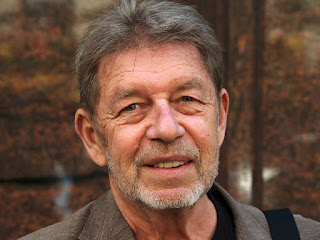
The year 2020 saw a grievous loss to the Hamill family, to Brooklyn, to New York City, to literature and journalism, and to the alumni of the Lion's Head, including me, in the deaths, in unseemly quick succession, of the brothers Pete Hamill and the much younger John Hamill. Pete had been in poor health for some years, so his death was not unexpected, but still felt deeply. I first met Pete in 1995, when I went to a midtown Barnes & Noble to buy a copy of his autobiography A Drinking Life and have it signed. As I handed him the book, I told him I'd started drinking at the Lion's Head about a year after he'd quit drinking, and that I knew his brothers John and Denis Hamill. This got a necessarily short conversation going - there were others in line to get their books signed - and Pete wrote in mine, "For Claude, who keeps the flame alive." About nine years later, having had no further personal contact with Pete. I saw that he would be on a panel discussion at Brooklyn Borough Hall, and I went because whatever they were discussing interested me and because Pete would be there. When the discussion ended, I went up to Pete, sure that I would have to re-introduce myself. Before I could say anything Pete held out his hand and said, "Claude, how are you?" I saw him again twice before he died. The first was at a memorial gathering for the late Lion's Head bartender Paul Schiffman, during which we had a longer conversation than we'd had at Barnes & Noble; one that left me laughing appreciatively. The last was at a panel discussion at the Brooklyn Historical Society (now the Center for Brooklyn History) about the Brooklyn Dodgers, roughly ten years ago. After this, he had to be helped off stage and put into a wheelchair. This done, I went to him and mentioned my name. He seemed to remember, and we simply exchanged best wishes. 

I got to know John when he became a bartender at the Lion's Head. Mixology was just one of John's many talents. As his obituary notes, he was a reporter for the New York Daily News, as was brother Pete, who later became its editor. Brother Denis is a Daily News columnist. Like Denis, John was also a screenwriter, co-authoring two Hollywood screenplays. Despite his having opposed the war in Vietnam, John served there as a combat medic, was awarded a Purple Heart and a Bronze Star, and is credited with having saved the lives of at least two fellow soldiers.

John and I quickly became friends when he started his Lion's Head gig. We shared two loves: the Mets and Irish music. We also had similar views on social, political, and economic issues. (At the time I was probably more "conservative," which is to say "liberal" in the classical sense, on the economic stuff.) We lost touch for a while after John moved to California, but re-connected through Facebook, where we became avid readers of, and commenters on, each other's posts. Our last Facebook exchange was a few days before his death from COVID-19, which must have come quite quickly. Before I started writing this, I looked at his Facebook page, which is still lively with reminiscences by family and friends. It was there that I found the image that I put at the head of this post, the Irish toast, "May we be alive at this time next year." It was posted there by his friend Chris Tracy.

Along with the one-two punch of the deaths of the Hamill brothers, there was another death that hit me hard, that of Judy Dyble. Like that of Pete Hamill, hers was not entirely unexpected. In my Remembrances and appreciations, 2018 and '19 I told of how I had fallen in love with her voice in 1970, when I acquired the first Fairport Convention album, how we had met, if only electronically, in 2008, and how this blossomed into a trans-Atlantic Facebook friendship that led to my learning of her lung cancer diagnosis in 2019. We stayed in touch through the first half of 2020, with her delighting me with news of the British music scene, photos of her rescued greyhound Jessie, and zany recipes that usually culminated in a kitchen-destroying explosion. There were few mentions of medical problems; nothing that seemed immediately dire. In early July she posted that Jessie had gone for a visit to her daughter's; this should have been a warning. After a few days silence came the announcement of her death.Above is a video of Judy, with Songs from the Blue House, doing Joni Mitchell's "I Don't Know Where I Stand." This is the song she sang on Fairport's first album that made me fall in love with her voice. Many years later, that voice was still lovely.

In earlier posts I've noted, ruefully, that with advancing age each year brings increasing numbers of losses of family and friends, as well as of people I've admired in various realms, such as art, literature, music, theater, politics, and sports. 2020 unsurprisingly proved no exception to this sad rule. Certainly the most consequential loss was that of Supreme Court Justice Ruth Bader Ginsburg. I consider the loss of singer and songwriter John Prine, for the beauty, incisiveness, and influence of his writing and singing, very significant. Others from the music world I mourn are Bob Shane, the last surviving founding member of the Kingston Trio; Bonnie Pointer of the Pointer Sisters; Rush drummer Neil Peart; Fleetwood Mac guitarist Peter Green; and bluegrass guitar ace Tony Rice. From showbiz, Sir Sean Connery left us shaken, if not stirred; Alex Trebek, game to the end, gave his final answer; and Terry Jones has made his last foray into medieval history. Baseball lost three great pitchers: Whitey Ford, the Yankees' "Chairman of the Board"; Cardinals' fireballer Bob Gibson; and Tom Seaver, "Tom Terrific" or "The Franchise" to long time Mets fans. Oh, yes; the Mets had a lousy season, but more about them in the "appreciations" below. Ailurophiles and existentialists mourned to loss of Henri, le Chat Noir.

In addition to the loss of the two Hamill brothers, the ranks of former Lion's Head regulars continued to be thinned. Those we mourn include jazz critic and "combative cultural gadfly" Stanley Crouch; Pulitzer winning journalist Jim Dwyer, poet Derek Mahon, and raconteurs par excellence Arthur Friedlander and Jerry Schindlinger. I'm sure to have missed a few; my apologies. My thanks to Dermot McEvoy for keeping us informed.

2020 was an unusually violent year. New York City suffered a large increase in homicides, though other serious crimes declined. The deaths of Breonna Taylor and George Floyd led to protests nationwide.

It was a very trying year for friend and fellow Robinson High alum Cheryle Cerezo-Gardiner, who had to witness the ravages of cancer on her oldest son, Martin Jacinto Cerezo, who finally succumbed in January. 

On, now, to the positive side of this long screed. In my remembrances and appreciations for 2019 and 2018 I paid my respects to two women whose courage I had found inspiring: Jennifer Garam and Lauren Jonik. Both are still well and flourishing. As a cancer survivor, Jennifer recently had a check-up to assure the cancer was not recurring. Everything proved OK. I'm sorry to know that, with the onset of the pandemic, she decided to leave Brooklyn. I regret no longer having her as a neighbor, though even before COVID our face-to-face, as opposed to on line, encounters were rare. Perennial optimist that I am, I don't share her outlook for the city's future, though I realize some things will never be the same. In any event, I respect her reasons for leaving.

Lauren, who lives with the ongoing effects of Lyme disease and who survived sexual assault, is continuing her work toward a master's in media management at The New School, and with her writing and photography. 

About those Mets: When Steve Cohen was announced as the new principal owner, I had some trepidation. I worried that, as a successful finance guy, he would assume he knew all he needed to know to get top performance from a baseball team, and would staff the baseball operations with sycophants. I was encouraged when he said he would make my fellow Harvard Law alum Sandy Alderson (we didn't overlap; I was class of 1970, he was of '76, but I got to meet him at an alumni gathering when he was the Mets' General Manager) as the team's President. During his tenure as GM (2010-18), which was cut short by a bout with cancer, many players who are mainstays of the current roster were acquired, and the Mets went to their fourth World Series (2015). I know little about Alderson's choice for GM, Jared Porter, but his record seems encouraging. I can't quibble with retaining Luis Rojas as manager; the Mets recent woes seem not to stem from inept field generalship but rather from uninspired, and sometimes inept, play. The trade that brought Francisco Lindor to the Mets has scribes wondering if this could make them at least divisional title contenders next season. As a long suffering Mets fan who once remarked on the team's "ability to rouse hopes, then smash them like cheap china," I'm leery of being too optimistic. Still, it's new ownership and management, and reason for hope. Update: Hardly had I written this than the news came out that Porter has been fired as GM after confessing to sending an "explicit" photo to a woman reporter several years ago. Trust the Mets to come up with some last minute drama.

There are many others I could praise for the encouragement they have given me along the way, including, as always, my wife, Martha Foley and my daughter, Cordelia Scales. (For those familiar with her as Elizabeth or Liz, she has decided to be known by her middle name. I think it's a fine name - ask Shakespeare - and I approve.)

Monday, March 24, 2014

Ken Radnofsky and Damien Francouer-Krzyzek play the third movement, "Christopher Street," of David Amram's Greenwich Village Portraits.

I've been fortunate to know David Amram since my Bells of Hell and Lion's Head days. Last month he presented a performance of his recent works at Le Poisson Rouge, a performance venue that occupies the space once belonging to Art d'Lugoff's Village Gate. My wife and I attended, along with a good number of other Lion's Head alums. One of the compositions on the program was Greenwich Village Portraits, with three movements dedicated, respectively, to Arthur Miller, Odetta, and Frank McCourt. The last of these, titled "Christopher Street," evokes the memory of the Lion's Head, which was Frank's favorite bar. It was performed by saxophonist Ken Radnofsky and by Damien Francouer-Krzyzek on piano. I made the video above from our table, some distance from the stage, which explains the people walking past and the unfortunate clattering of flatware. Nevertheless, I was pleasantly surprised that the sound came through as well as it did.

The movement begins with a sprightly Irish jig tune, the name of which escapes me (perhaps a reader can help) announced on piano, then developed in variations on sax. At 2:40, the piano announces the second theme, based on "Wild Mountain Thyme (Will Ye Go, Lassie, Go?)," picked up by the sax at 3:50. At 4:59, Radnofsky begins a variation at turns happy and mournful, but at 6:00 this gives way to a lively development that resolves back briefly to "Wild Mountain Thyme" at 7:50 before ending joyously.
 
"Wild Mountain Thyme" was a traditional closing song at the Lion's Head. The video above is of David playing it, and assembled Lion's Head veterans joining in voice, at the Cornelia Street Cafe two years ago.

Addendum: David offers the following news about future events:
They are presenting an evening of my chamber music, performed by members of the New York Philharmonic,  The Metropolitan Opera Orchestra and the Boston Symphony April 29th. Woody Guthrie's daughter , Nora Guthrie will also be there to speak about the   formal release of my new CD THIS LAND: Symphonic Variations on a Song by Woody Guthrie, which I conducted with the Colorado Symphony, based on her father's iconic song, and the evening will be dedicated in memory of Pete Seeger, with whom Amram often collaborated with for the past half century.

The opening event will be April 26th with a screening of Lawrence Kraman's new documentary film "David Amram:The First 80 Years".

following the Q.and A. after the screening, there will be an urban hike through the Upper West Side, where I will revisit many of the places where I have collaborated musically over the last  60 years with a great variety of gifted people

We'll begin our hike by visiting The Lincoln Center itself, where Leonard Bernstein appointed me as the New York Philharmonic's first-ever composer -in-residence, and go the the park outside near the fountains where i did concerts of every variety for years. 

We'll go to the old site where  Birdland once stood, as the final remaining landmark from the golden days of 52nd street, where i played with the jazz greats during the 1950s.

We will see some of the Broadway theaters where I composed incidental music for fifteen dramatic productions

We will walk by  Thelonious Monk's old dwelling (which now is landmarked by the city), where he took me under his wing and mentored me in the early 50s, when i was playing with Charles Mingus at night and studying composition at Manhattan school of /music during the day.

We will take a stroll to the old site where Shakespeare in the Park had their first season, before the Delecourt Theater was built, where Joseph Papp had me as the festival's first composer and musical director for 12 seasons, where i composed  scores for 30+ productions,

We will visit  the Lincoln Center Repertory Theater where i worked with Arthur Miller and Elia Kazan as their first composer for three years, while the building was being completed and many other venues in the neighborhood  where i conducted free out of doors Symphony concerts, played jazz.folk and world music concerts, performed for peace gatherings, political campaigns, jazz/poetry readings and all kinds of events. 

Programs, photographs, articles and videos of all of these endeavors are now documented in my archive which the Lincoln Center Library has acquired.

 I hope these activities and viewing of the archive itself  will be of value to young people who may come to any of the events this April and then check out the archive.

Hopefully it will make them feel that everyone of us can have a great life if we work hard, stay the course, refuse to accept career councilor's advice (which is usually to give up pursuing your path before you are even sure what that path is) and just go out start all over every day with renewed energy, share what blessings we have with others, show respect for every person who crosses our path, try to always do better than is expected and ENJOY life!!

Friday, May 20, 2011

Tom Paxton sings "Comedians and Angels", a song about the Lion's Head.


In the wake of Paul Schiffman's death, a lot of us Lion's Head veterans gathered to remember him at the Kettle of Fish, which now occupies the Lion's Head space. This inspired Dermot McEvoy to start an on-line discussion, via e-mail, about our recollections of the Head, which he means to use as the basis for a history of the place. One contributor to the discussion has been singer and songwriter Tom Paxton, who posted a link to the YouTube clip above, in which he sings "Comedians and Angels," a song he wrote about his old friends at the Head. As Tom admitted in the e-mail that included the link, he was mistaken in saying the Head never had a jukebox. It was installed sometime around the end of the 1970s, much to the consternation of many of the regulars, and no doubt of Paul, who objected to the mounting of TVs over the bar.


To round things off, here's Tom with another Head regular, Liam Clancy, who died a year and a half ago, doing one of my favorite of Tom's songs, "The Last Thing On My Mind."

Saturday, March 11, 2023

Malachy McCourt beats the Reaper


Laurie Gwen Shapiro, in this New York Times story, tells how Malachy McCourt, at age 91, was "kicked out of hospice for not dying quickly enough." He now looks forward to marching on St. Patrick's Day in his electric wheelchair. He also has, post hospice, "resumed his role as a co-host of a Sunday morning radio show on WBAI."

Ms. Shapiro tells of Malachy's long career as a bartender, bar owner, radio show host, actor, playwright, and autobiographical author. She doesn't mention his ownership, in the mid 1970s, of the Bells of Hell, which was my regular hangout from the summer of 1976, shortly after Malachy had sold it, until the fall of 1979, when it closed. I was told that during Malachy's ownership Con Ed had shut off the Bells' electricity several times because of overdue bills, which is why the Bells had an antiquated  mechanical cash register and a copious supply of candles. 

For many years, Malachy was an almost mythical figure to me. During my post Bells years of hanging out at the Lion's Head I got to know his brother Frank, from whom I heard, while we were sitting at the bar, some of the stories that later appeared in Angela's Ashes. I finally met Malachy, and enjoyed some pleasant conversation with him, about fifteen years ago at a party hosted by another Lion's Head alum, Jack Deacy, and his wife, Bonnie Stone.

In her reply to Dermot McEvoy's email yesterday to the listserv he maintains for Lion's Head alums, Mary Breasted Smyth told of how she met Malachy in 1972 at the Lion's Head when she and Malachy were being interviewed, on different subjects, by Ken Auletta. Mary's first book was Oh! Sex Education. Read the linked review and see how her book anticipated, from 1970, the controversies that political figures like Florida Governor Ron DeSantis are exploiting today. In her reply to Dermot's email Mary mentions how Malachy lost his job as host of a radio program on WMCA when a listener called and asked Malachy's opinion about President Nixon's firing of Watergate Special Prosecutor Archibald Cox (who was my Constitutional Law professor in 1968-69). Malachy's response was, "I'd say he's a right Cox-sacker!"

 Photo: David Shankbone, CC BY-SA 3.0 , via Wikimedia Commons

Sunday, January 06, 2013

New Year's remembrances and thanks.

It's been my custom, early in the New Year, to recognize those who have been helpful to my blogging venture in the past year, and before. This year I'm starting by remembering those whose loss I've felt especially strongly in the previous year. For me, the most significant loss was that of my mother, Marjorie Elizabeth Lane Scales, who died on August 31, just a month and two days shy of her 96th birthday. For the last four years of her life, following a hip fracture the day before her 92nd birthday, she was unable to walk and confined to a skilled nursing facility. The staff there praised her tenacity and sense of humor; these were among her many fine qualities I had known for my sixty plus years.

2012 took a heavy toll of musicians I admired, including Dave Brubeck, Earl "Speedo" Carroll, Levon Helm, Whitney Houston, Earl Scruggs, Donna Summer, Doc Watson, and Kitty Wells.  As a space exploration enthusiast, I mourned the loss of Neil Armstrong and Sally Ride. My second vote in a Presidential election was for George McGovern; I was sorry to see that good man gone.

I've also mourned the death of my law firm alma mater, LeBoeuf, Lamb, which after a mega-merger became Dewey & LeBoeuf. However, I celebrated the revival, in Italy, of my brief movie career that grew out of my time at LeBoeuf.

Now to the happier task of giving thanks. A special hat tip goes to The Reverend Stephen Muncie, Rector of Grace Church, for having shown me an image of Henry Ossawa Tanner's remarkable painting, The Annunciation, which was the basis for what has become the most popular post on this blog. I have a perennial debt of gratitude to Michael Simmons, my old Lion's Head companion who keeps in transcontinental touch and often feeds me material for posts, including this one about Dylan's album Tempest.

On the subject of the Lion's Head, I also must thank Dermot McEvoy for keeping me and other alumni of "Lion's Head University" in contact, with recollections of the past, as well as news, some of it, unfortunately, sad, but some of it welcome, like an invitation to a performance that featured Head alums David Amram and David Coles. Another Head veteran who inspired a post is Lucian K. Truscott IV.

Thanks also to Larry Kirwan of Black 47 for inviting me to a salon of the Irish American Writers & Artists, at which I met Honor Molloy and heard her read "Sixpence the Stars". I couldn't help but think of her delightful piece this morning at Grace Church as we celebrated Epiphany Sunday, recalling how the Dublin "shawlie" in Ms. Molloy's story described the gifts of the Magi as "golden frying pans and more," but said the infant Jesus' favorite was the poor boy's present, "the little oranges."

I'm grateful to Louise Crawford for asking me to review Peter M. Wheelwright's novel As It Is On Earth, and for directing me to the residence and studio of painter Simon Dinnerstein, after I had admired the work of her photographer husband Hugh Crawford, in preparation for what proved to be my "seven artists in two days" post.

On the subject of art, my post on Pierre Bonnard remains a perennial favorite, and for that I owe a continuing debt of gratitude to Mark Crawford (no relation to Hugh and Louise), who inspired my interest in that fascinating painter. I posted about Mark's art just over five years ago. Since then, he's produced many more paintings and his work has taken some new directions, so I will be writing another post about his art in the near future. I'm also working on a new post about Bonnard, based on some interesting material I've recently seen for the first time.

As always, I'm grateful to John Loscalzo and the rest of the Brooklyn Heights Blog staff for giving me an alternate forum on which to post about neighborhood news and issues, and for providing a permalink to this blog which produces much readership.

Thanks also to my faithful readers whom I haven't mentioned by name, but who make this enterprise worthwhile, and to my wife and daughter, who tolerate my obsession.

Wednesday, April 06, 2011

The Times' Clyde Haberman on chronicling the Lion's Head.

Clyde Haberman, who took a drink or two at 59 Christopher Street back in the day (I never had the pleasure of meeting him), had a piece in yesterday's New York Times about Dermot McEvoy's project to compile an "oral history" of the Head, and about the many Head regulars who have died in recent years. If you have a story or two, or more, to share, please send it to Dermot at dermotmcevoy@hotmail.com.

Update: It seems that Mr. Haberman's piece about the Lion's Head was one of the last of his NYC columns. On Thursday he issued his final column in the series. In it, he explained what he tried to do over the past sixteen years:
My goal was simply to make a desperate stab at explaining the maze called New York City. When I failed, people let me know. But the reward was the thousands of generous messages over the years from readers, many of whom accused me of having consistently made them laugh.
I was one of those, and I'll miss the column. He writes, "[t]here is time for a new adventure or two at this place." So, it seems, I'll be able to find his writing, and wit, elsewhere in the Times. But farewell to NYC, and thank you, Mr. Haberman, for years of stimulating reading, and for putting a link to my blog in the on-line version of your column about the Lion's Head.

Wednesday, March 16, 2022

Pete Hamill and the Clancy Brothers -- a St. Patrick's Day reflection.

I first met Pete Hamill in 1994, at a Barnes & Noble bookstore on Fifth Avenue in Midtown. He was there signing copies of his newly published autobiography, A Drinking Life. I handed him my copy and said I had started drinking at the Lion's Head, a Greenwich Village saloon Pete had loved, about a year after he had quit drinking, and had gotten to know his brothers Denis and John there. He signed my book, "For Claude, who keeps the flame alive." There was a line behind me, so our conversation was necessarily brief. 

I next saw him several years later, when he was in a panel discussion at Brooklyn Borough Hall on a topic I can't recall. When the talk ended, I went up to him, sure I would have to re-introduce myself. Before I could, he extended a hand and said, "Hello Claude, how are you?" I've mentioned this to several people who knew Pete well; the response was always to the effect of, "Yep, that's Pete."

Two years after our encounter at Barnes & Noble, the Lion's Head closed. Pete noted the occasion with a column in the New York Times, "A Whisky-Golden Time." He declined the opportunity to go there for the Head's final night farewell party, "because I didn't want to spend a night carousing with ghosts."
They would all be there, moving among the living, as if it were just another packed, dense night in the late 1960's. They would reach past shoulders for fresh drinks or curse some politician or wander to the big table in the back room where Tommy Clancy of the Clancy Brothers was singing, ''Castles are sacked in war, chieftains are scattered far/truth is a fixed star, Eileen Aroon . . .''

Pete, his brother John, and the Clancys are all gone now. I'm blessed to have known Pete and John, and cherish the memory of having, at the bar of the Lion's Head, sung a duet with Paddy Clancy without knowing who he was until I was told later. So I pass on to you, my reader, beannachtaí na féile Pádraig, "blessings of St. Patrick."

Saturday, August 13, 2011

Remembering George Kimball, Part 2, and re-encountering Niall Toibin

I've confessed in an earlier post that I wish I had gotten to know George Kimball better. Wednesday evening, I felt like I had, by dint of attending a memorial gathering for George in the ballroom of the old Edison Hotel near Times Square (the Edison was chosen, I'm told, because George was frequently there when it served as headquarters for the New York State Boxing Commission). During the course of an hour and a half, I heard recollections of George's life and wit, and selections from his writing, from family members, including his ninety year old mother, Dr. Sue Kimball, whose mellifluous Southern voice (I hadn't known of George's Dixie heritage on the distaff side) was sure and full as she recounted a childhood and youth marked by precocity and portents, as well as from fellow writers and other friends. Among the journalists who shared memories of their beloved colleague was Pete Hamill, who said he and George had met while fellow students at "the University of the Lion's Head."

One person I was surprised and delighted to find paying spoken tribute to George was the great Irish actor Niall Toibin, whom I had the pleasure, through the good offices of our mutual friend Jack Deacy, to meet while I was on vacation in Dublin in 1989. At the time, Niall was playing the part of the older, narrator Brendan Behan in Borstal Boy, Frank McMahon's dramatic adaptation of Behan's autobiographical novel, at the Gaiety Theater in Dublin. (He is doing a reprise of that part in the video clip above.) After I bought a ticket, a phone call to Niall's home and the invocation of Jack's name got me an invitation to join him backstage after the play for a drink, in the course of which we talked about Behan, the Irish theater, and friends and places we shared in New York. After the ceremonies for George, I approached Niall and renewed our acquaintance, and also met his daughter.

Along with the spoken reminiscences there was a slide show spanning George's life, and a video of a speech he gave while running for sheriff (unsuccessfully: the Lion's Head knew its share of quixotic political aspirants, including George, Norman Mailer, and Kinky Friedman) in Lawrence, Kansas. There was also music. First came a recording of folksinger Rosalie Sorrels, good friend of my late friend Cicely Nichols, doing a song that included the repeated line, "Love is like a lizard/ Nibbling at your gizzard." Next Tom Paxton took the stage and sang "Comedians and Angels", his reminiscence of old Lion's Head friends, which he followed with the Irish lament, "The Parting Glass".

Then another Head veteran, composer, conductor, multi-instrumentalist, and raconteur, as well as recently minted octogenarian (an event he celebrated at the Bowery Poetry Club with George and his wife in attendance; see the clip above) David Amram, on piano, played a duet arrangement of Gershwin's "Summertime" with the superb young trumpeter Nabaté Isles (who doubles as a sportswriter). For the final number, David was joined by Tom Paxton, and they did an eye-misting guitar and flute rendition of "Wild Mountain Thyme" ("Will Ye Go, Lassie, Go?").

Many thanks to George's family and friends for a heart-warming evening.

Wednesday, May 07, 2008

Cicely Nichols, 1937-2008

I can't remember when I first met her, except that it was some time in the late 1970s. I'm sure of where, though; the bar of the Lion's Head, a place that served mostly unmarried (in our instances, previously married) Villagers with a literary bent, as a sort of living room away from home. We may have been introduced by one of the many Head regulars we knew in common; just as likely, we may simply have found ourselves occupying adjacent stools and fallen into conversation.

Whatever was said that night, it was sufficient to establish a common desire to continue the conversation on other evenings. She was nine years my senior, and had been in the Village long enough to tell me about things that happened there when I was a college freshman in Florida thinking romantic thoughts about escaping to that fabled urban patch occupied by the likes of Bob Dylan and Peter, Paul and Mary. I was thrilled to hear that she had worked for Grove Press, the avant garde house that published Lady Chatterley's Lover and Tropic of Cancer, as well as works by Beckett, Ferlenghetti, Fanon, LeRoi Jones and The Autobiography of Malcolm X. More surprising was that she had led a strike against Grove and its publisher, Barney Rosset, demanding better conditions for editorial employees. Because of the strike, she had to take on freelance work, which in turn led her to become one of the founders of the Editorial Freelancers Association. At the top of the home page of the EFA website, you will find a link to a tribute to Cicely and her work in establishing and determining the character of that organization.

As the years passed, we became confidantes. She endured many a night of my maunderings about failed and longed-for romances, and I listened to such troubles as she had in the same department, hers being of a more sane and mature nature. Although I hadn't thought of it this way until now, she came to occupy a space in my psychic organizational chart, previously unfilled, marked "older sister". The night when I first brought the woman who is now my wife to meet my friends at the Head, Cicely said, with a sly smile at me, "This woman looks like trouble." She was right, of course. The "trouble" has lasted eighteen years (almost seventeen of them as spouses), and produced a daughter about to enter high school.

Marriage, work responsibilities and fatherhood combined to limit my time at the Lion's Head, and consequently my socializing with Cicely; later, illness limited her time at the Head even more. Still, she would find the strength, with some help from her daughters and friends, to put on magnificent combination Christmas and birthday (hers was December 27) parties. I last saw her this past December, during what may have been her last period of remission, bright and smiling and cut-the-crap smart as ever. That's how I'll remember her.

Sunday, May 14, 2023

Another friend gone: Anne Hagman McDermott


The photo above shows Anne Hagman McDermott as I most remember her, in the company of a group of friends. I'm at the right, in my Mets cap (Annie was a Mets fan); she is behind me and to my left in the photo, with a hand on Jeanine Flaherty's shoulder. Her husband, Joe McDermott, is to her left. Others in the photo are, left to right photo-wise, Jack Deacy, Barry Murphy, and Ethan Eldon. The occasion was a gathering of Lion's Head alums  several years ago at the White Horse Tavern, a Greenwich Village fixture known in its heyday, like the Head, for attracting writers and artists.

I was introduced to Annie by my friend Allen Sack sometime around the cusp of the 1970s and '80s and we maintained a friendship that was a steady source of joy for me. We were with friends at the Head watching a Mets game when she proposed a version of West Side Story featuring the Mets instead of the Jets. She suggested,"When you're a Met, you're a Met all the way, from your first training camp to your last ball in play." Allen came up with "Ojeda, I just met a lefty, Ojeda!" My contribution was to have the players' wives and girlfriends get together during preparations for the World Series and having them sing, "They don't know how to play in the American, pitchers don't bat in the American, etc." That's now obsolete with the unfortunate universalization of the designated hitter rule.

Annie once unwittingly almost got me into a fight at the Head. It was a bitterly cold night. I came in and took the only vacant stool, at the corner of the bar nearest the door. To my left was a man I'd never seen before. Annie was around the corner, seated next to the wall. The stranger kept giving Annie, who was single at the time, pick-up lines, to which she responded politely but noncommitally. After a while, Annie said good night to all around her and went out the door. The stranger followed her and held the door open while he implored her to stay or to go with him. Annie continued to respond politely, though negatively, while freezing air billowed into the bar. Someone, probably the bartender, yelled, "Close the goddamned door!" Annie, hearing this, skedaddled. The stranger slammed the door shut and confronted me with "F--- you!" I was about to give a response along the lines of, "Sir, I'm not the one who complained, but I'm grateful to whoever did." Just then Nancy Duggan, a tough as nails redhead, came in and took the seat Annie had vacated. It was a classic instance of drawing fire. The guy turned from me to Nancy and deployed a line of breathtaking sophistication: "Hey, babe, you ever think about using your equipment?" Nancy shot back, in a voice approaching a snarl, "Ye-e-eah, I use it ALL the TIME." I decided this was a terrific time to visit the men's room. When I came out two minutes or so later, the guy was gone.

Yes, Annie could be, as the saying goes, kind to a fault. I don't doubt that, if she or someone for whom she cared (which was just about anyone) was in danger, she would have responded appropriately. She was a vital component of the Lion's Head scene, which proved vital to her in that she met her husband, Joe McDermott, there.

Goodbye, Annie. You are sorely missed.


Thursday, January 20, 2011

Paul Schiffman

In my e-mail inbox this morning was the following message: "Paul Schiffman died last night in his apartment." I got to know Paul in the 1970s when he was a bartender at the Lion's Head and I was a young lawyer living in Greenwich Village. At the time, I was taking the waters at the Head, which was a few blocks from my apartment. I'd heard that Paul had been a captain in the Merchant Marine, so one night, after he'd gone off duty (Paul worked the early shift, from noon to eight in the evening) and taken a seat next to me at the bar, I told him of my four sea crossings of the Atlantic during my childhood and my continuing fascination with ships and the sea. After a while, he growled something about having made his living on the sea and not needing to hear about it from "landlubbers and bollard squatters." A few months later, I was once again sitting next to him and, undeterred by our previous encounter, I said I had read that the Liberté, on which I had crossed the Atlantic twice, had gone to the breakers. "When I read that I damn near cried," I said. "I loved that ship." He put an arm across my shoulders and said, "Claude, that's something you and I understand that landlubbers and bollard squatters never will."

Paul was emphatic in his likes and dislikes. Any drink with more than two ingredients was anathema. I was at the bar when four young men in suits came in. As one approached the bar, Paul said, "What can I get you, mate?" "Four tequila sunrises" was the answer. As Paul slammed four glasses down and was filling them with ice, the customer tried to make conversation, asking Paul what he thought about a scandal involving Bess Meyerson, a former Miss America who'd gotten involved in city politics. "None of my affair," Paul said, gruffly. "But did you see..." the man continued. "Look," Paul said, "I don't give a damn if they hang her or shoot her!" After the Head's owner installed TVs at each end of the bar, I was in one evening and got enthusiastic about a college basketball game. I noticed Paul glaring at me, and when our eyes met, he said, "We used to have a portable TV that we kept in the cabinet under the dry bar, and we brought it out once every year--for the Kentucky Derby!"

Over the years, Paul and I had many conversations. We never became close friends, but I came to cherish his company and his opinions. He was unsparing of any tendentiousness or bullshit. I last saw Paul about a year ago, at a reunion of Lion's Head alumni at the Kettle of Fish, the bar that now occupies the space formerly taken by the Head. As I was parting, I shook Paul's hand, and, sensing that it might be the last time, said something a bit awkward (I don't recall just what), and he gave me a sharp look. Just a few days ago, I was recalling this and wondering if I'd get the chance to see Paul again.

Update: there was a memorial gathering for Paul at the Kettle of Fish on Sunday, February 27. Read Dermot McEvoy's account of it here.

Monday, January 16, 2012

Lion's Head lament: Liam Clancy singing "Dirty Old Town"; Lucian Truscott on looking back.


In the continuing e-mail discussion of the history of the Lion's Head hosted by Dermot McEvoy, who is writing a book about it, Lucian K. Truscott IV made this observation:
I’ve been thinking about this, and I guess every generation goes through this same sort of geezer stage, when there are fewer and fewer people around who remember the good old…or bad old…days. It’s the natural order of things.

I remember one Saturday years and years ago, back in the late 80’s, after I had moved out of New York. I was back for a couple of days staying with a friend in the Village, and I was walking down Bedford Street, or one of those nice little streets over there west of 7th Avenue, and I saw this young woman walking down the street toward me. She was in her early 20’s, and dressed real cool, and she was gorgeous, and she was going somewhere important to do something important, almost bent forward with the energy of youth and Great Expectations. It came to me that she was exactly like the young women I lusted after when I was her age. We were all gorgeous and dressed real cool and headed someplace fast to see someone important or do something important, filled with Great Expectations that would come true, damn it, or we would die tryin’. All of a sudden I realized that we had been replaced. That the little studio apartments all around me were no longer filled with my friends and acquaintances, but hers. The street was hers now. The energy was hers. The important people she was going to see were her important people, not mine, and the important things she was going to do were different than our important things. The only things that remained pretty much the same were the street and her gorgeousness and Great Expectations.
Dermot replied that this made him think of the song "Dirty Old Town", as done by another, now deceased, Head regular, Liam Clancy, and gave a link to the YouTube clip above. This song was a favorite of another now departed Head stalwart, Dennis Duggan.

Dermot is quoted in this New York Observer article about the changes that have been wrought on Greenwich Village and New York City at large.

Friday, March 25, 2011

Remembering Lanford Wilson

I got to know Lanford Wilson, who died yesterday at 73, in the late 1980s when we both were taking the waters at the Lion's Head. He was bright, witty in a down-home way, with southern Missouri Ozark roots, and kind. Through him I met Tanya Berezin, artistic director of Circle Repertory Company, which occupied a playhouse across Sheridan Square from the Head. Through my introduction to Tanya I got involved with Circle Rep, serving on the board of their fund-raising group. I also got to meet some other playwrights, including Craig Lucas, Athol Fugard, A.R. "Pete" Gurney, and Terence McNally, and to see their plays. I saw Lanford's Burn This and Craig's Prelude to a Kiss on Broadway, Lanford's Redwood Curtain in a special performance while it was still in development, and a dramatic reading of his earlier play The Hot L Baltimore. I'll always be grateful to Lanford for this introduction to the world of theater.

Lanford had an amazing ability to enter the heads of different sorts of people and to write convincing dialogue for them. Seeing his plays made me empathize with characters I couldn't have imagined liking. His vision was unsparing, but ultimately forgiving, if not optimistic.

So the litany of old Lion's Head regulars departed continues. This past year we have lost David Markson, Paul Schiffman, and Vic Ziegel. Going back a few more years we have Liam Clancy, Dennis Duggan, Frank McCourt, Cicely Nichols, and Kurt Vonnegut Jr.. A hazard of getting older is having to say goodbye too many times.

Saturday, November 30, 2013

Sam Edwards, "In the Last Days of the Empire."

Sam Edwards, I'm told, was a bartender at "55," the joint next door to the Lion's Head. I seldom went into 55; whenever I did my nostrils were assailed by the smell of insecticide. There was good jazz there, but in those days I'd yet to develop an ear for it. My few visits were occasioned by hearing that someone I liked who'd been 86'd from the Head (which, despite its raffish reputation, maintained fairly strict standards of decorum) was having a drink there. It was owned by Bradley Cunnigham, who also owned Bradley's, an upscale bar and restaurant on University Place where my appreciation for jazz got a jolt one evening from listening to Joanne Brackeen. I heard that Bradley made more money off 55 than from Bradley's. Bradley's, like the Lion's Head, is long gone, but 55 survives.

Sam's video and poem, for which I must again offer thanks to Michael Simmons, is about Greenwich Village before I arrived; the Village of my high school and college aspirations that I, and others like me, unwittingly helped to destroy. Like Michael, I was delighted to see, in one of the photos in the montage that accompanies the reading of the poem, a poster for a concert by David Amram.

Wednesday, December 29, 2021

Rick Danko, Vince Martin, Erik Darling, and Blondie Chaplin: how many names can I drop in one post?

I had the good fortune, during my evenings of hanging out at the Lion's Head in Greenwich Village during the 1980s, to get to know Rick Danko. He had been a member of the Hawks, a Canadian group that became the backup band for Bob Dylan, and later evolved into The Band. Rick died in 1999 at the age of 56.

Rick was unpretentious and welcoming. When I went to hear him and his post-Band group at the Lone Star Cafe, I was invited to join him and the other musicians upstairs during their break. Rather than breaking from singing, Rick picked up an acoustic guitar and sang "Cindy, Oh Cindy", a song that had been popular in 1956, when I was in fifth grade. When Rick finished, I said, "That's a great old Vince Martin song." Vince had done it with the Tarriers, a group that included Erik Darling, whom I had met at a party on the Upper West Side about ten years before, but that's another story. When I mentioned Vince's name, the man next to me turned and said, "Hello; I'm Vince Martin." I told him I loved Tear Down the Walls, a folk album he'd done with Fred Neil. Vince invited me to sing a song from the album with him. Rick handed Vince his guitar and we sang "Dade County Jail", me struggling to try to match Fred's rich baritone.

The clip above has Rick singing and playing bass on "Stage Fright", one of my favorite Band songs. Here he does it with another now deceased musician I admire greatly, but never met, Paul Butterfield. Paul was a veteran of the Chicago blues scene. On this clip he plays harmonica and sings harmony.


This clip features another of my Lion's Head companions, Blondie Chaplin, from the time when he and Rick were playing together, along with Paul Butterfield. On "Semolina" Blondie has the lead vocal and guitar, with Rick and Butter harmonizing and playing bass and harp, respectively. Blondie, a South African, became a member of the Beach Boys in 1972 after Al Jardine and Carl Wilson spotted him performing in London with his band, the Flames. After the time I knew him at the Head, he toured with the Rolling Stones for several years, and more recently has toured with Brian Wilson. He also has a solo album, recorded in 1997, that he plans to have released soon.

Sunday, January 08, 2023

Remembrances and appreciations, 2022

 On June 2, 1953, Coronation Day, I was with my parents and Rex, the bull terrier mix puppy I had been given as a seventh birthday present, at Stile End, a cottage built, if you believed what was on the doorpost, in 1597. We occupied half of the cottage, located at the edge of the village of Rushden in Hertfordshire. The other half belonged to its owners, a farm family named Warner. They were lovely people, and their daughter, Peggy, single and in her thirties, was my caretaker whenever my parents were out for a play in London or an event at the Officers' Club at Chicksands, the small outpost in Bedfordshire where my father, a U.S. Air Force captain, was stationed. 

In 1953 BBC television's signal didn't extend beyond metropolitan London, so we listened to the coronation of Queen Elizabeth II on our radio. She had been Queen since February 6, 1952, the day her father, King George VI, died. Her ascension to the monarchy took place while she and Prince Phillip were on tour in Kenya. In the almost year and a half from then until the coronation I saw many newspaper and magazine articles with photos of the, I thought, beautiful young Queen. She was also a prominent subject of conversation at the Sandon County Council School, where I was the only American but, in the course of two and a half years, became thoroughly anglicized in habits and speech.

I would no doubt have been surprised to know, at age seven, that her reign would last until I was almost seventy seven. Indeed, I would have been surprised to know I would live that long. I was a military brat, and thought that my destiny was to die gloriously in battle, after uttering some phrase that would later resound in history. The Queen was not known for stirring quotes, but this one seems very characteristic: "It’s worth remembering that it is often the small steps, not the giant leaps, that bring about the most lasting change." 

As I've noted before, with my advancing age, every year brings a larger number of contemporaries and admired or influential elders who have died. This year I won't try to make a comprehensive list; I'll stick to those who were most important to me, either because I knew them personally or found them especially impressive or influential. Besides the Queen, among those who were influential worldwide that we lost were Mikhail Gorbachev and Madeleine Albright. Although I'm not a soccer fan, I can't not mention Pelé.

F. Donald Logan was Martha's professor, mentor, and history major adviser at Emmanuel College. I got to know him when Martha and I visited Boston on several occasions, and enjoyed his hospitality, cooking, and love for Bailey's Irish Cream. He was a superb raconteur with a great depth of knowledge about medieval Europe, Church politics, and contemporary controversies. I enjoyed reading his The Vikings in History. Once, when I was attending a convention in Boston and Martha was unable to join me, Don let me stay in his Brookline apartment alone while he was on one of his annual trips to London, thereby saving my clients a hotel bill.

Clark Green schooled me in the fine art of church ushering during his term as Head Usher at Grace Church. Another Grace parishioner I will miss is the always delightful Shirley Baldwin. A neighbor missed by Martha, me, and many is Lesley Carter, a charming Scottish woman whom I would often encounter during my daily walks as she walked Bear, her massive and placid brown Labrador. Whenever we stopped to chat, Bear would attract kids who would shower him with attention, which he received gladly. I lost a Facebook friend whom I never met in the flesh, Walter William Milner, whose intelligence and wry English wit I'll never forget.

Among the ever dwindling roster of Lion's Head alumni, ones I will keenly miss are former co-owner Al Koblin (the Kettle of Fish, which Al mentions in the linked interview, later moved into the spot at 59 Christopher Street previously occupied by the Head), Cheryl Floyd, Jules Kohn, Marie Murphy, and Virginia Lucy Zox, known to all as "Sha", who served on the waitstaff and was a constant source of joy. She became a character in Head alum Robert Ward's novel The Stone Carrier. Thanks to friend Dermot McEvoy for keeping me, and many others, abreast of news concerning former Head regulars.

Among the musicians lost were all-around wild man Jerry Lee Lewis (for a comprehensive biography see my late friend Nick Tosches' widely praised Hellfire), composer Ned Rorem, jazz saxophonist Pharoah Sanders, singer-songwriter and producer Thom Bell, singers Gary Brooker, Loretta Lynn, Christine Perfect McVie, Meat Loaf, Olivia Newton-John, Anita Pointer, Bobby Rydell, and Ronnie Spector, guitarists and singers Ronnie Hawkins and Danny Kalb,  mandolinist and singer Roland White, and drummer Dino Danelli. 

The stage and cinema world lost, among many others, actors Kristie Alley, Angela Lansbury, James Caan, William Hurt (whom I had the pleasure of seeing in 1989 when he played Augie-Jake in Joe Pintauro's "Beside Herself" at Circle Repertory Company, for which I then served on the Board of Advisors), and the incomparable Sidney Poitier; comedian and fellow USF alum Gallagher; and directors Peter Bogdanovich and Jean-Luc Godard.

The visual arts lost painters Carmen Herrera, Sam Gilliam, Jennifer Bartlett, and Paula Rego, along with sculptors Lee Bontecou and Claes Oldenburg and New Yorker cartoonist George Booth. Among those lost to the world of literature are my law school classmate John Jay Osborn, Jr., author of The Paper Chase; historian David McCullough; historical novelist Hilary Mantel; drama critic, biographer, and playwright Terry Teachout; satirist P.J. O'Rourke, with whose political views I didn't always agree but whose writing I often found delightful; Barbara Ehrenreich, author of the indispensable Nickel and Dimed; and restaurant critic Gael Greene, whose novel Blue Skies, No Candy. was once described as an exemplar of the "shopping and f---ing" genre. 

One writer lost last year with whom I was unfamiliar is Peter Straub, whose works are described in his linked New York Times obituary as "novels of terror, mystery and the supernatural" but who "insisted that his work transcended categorization". As he observed, "Adult human beings live with the certainty of grief, which deepens us and opens us to other people, who have been there, too." He was the father of Emma Straub, also a novelist, and the co-owner of Books Are Magic, which now has a location two blocks from where I live. 

Now I'll turn to appreciations. As always, I must start with my wife, Martha Foley. For those who don't know, I fractured my left ankle on November 24, 2021. Since then I have had two surgeries and periods of rehabilitation, and now face a third surgery this coming Thursday, January 12. This has been a most trying period for Martha, who has had to do household chores and shopping that I would otherwise do,  tend to my medical needs, and work for her clients as well as volunteering at the Brooklyn Women's Exchange. I'm hoping this coming surgery will resolve all remaining problems. My thanks to the physicians at NYU Langone Health, including Doctors Kenneth Egol, Pierre Saadeh, Mikel Sadek, and Mona Bashar, and the physicians' assistants, nurses, and technicians, who have provided me with the finest of care.

On to pleasant matters. Our daughter, Elizabeth Cordelia Scales, and her partner, Drew Rodkey, have presented us with a granddaughter, Ada Xiomara Rodkey. They live in Chester, Pennsylvania, just south of Philadelphia, and we have enjoyed two visits, the most recent over Christmas. We're also grateful to Drew for the work he did on our apartment and furniture during their visit. We look forward to seeing them again soon.

Finally, thanks to all my friends and readers for your support and encouragement. I wish you all the best of everything for 2023.